 Bird Album
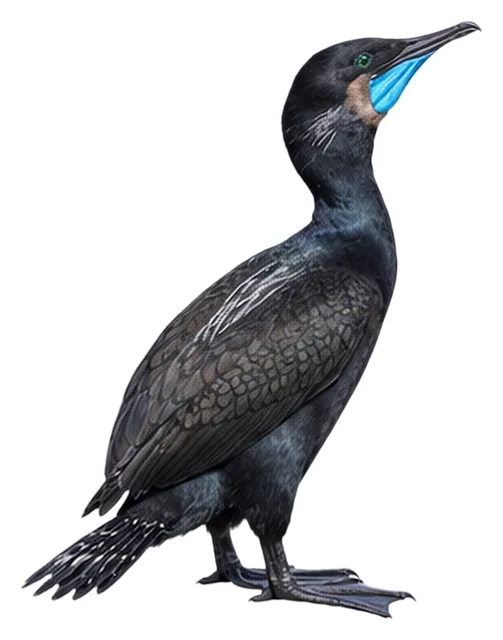
Brandt's Cormorant
Urile penicillatus (Brandt, JF, 1837)
2.2 kgWeight
Brandt's cormorant (Urile penicillatus) is a strictly marine bird of the cormorant family of seabirds that inhabits the Pacific coast of North America.
Busiest months: September and November · Most records: United States, Canada, Mexico
Where and when it's recorded

Brandt's Cormorant has been recorded at 80 of the 8,171 birding hotspots we track, in 3 countries and regions.
Records by month Northern Hemisphere
Where it's recorded most
- Southeast Farallon IslandUnited States16,742 records
- Pt. Pinos – seawatch onlyUnited States15,983 records
- Pillar Point HarborUnited States9,669 records
More places
- Rodeo LagoonUnited States5,751 records
- Moss Landing – Jetty Road, north jetty & State BeachUnited States5,557 records
- Pt. PinosUnited States5,126 records
- Billy Frank Jr. Nisqually NWRUnited States3,841 records
- Fort MasonUnited States3,193 records
- Natural Bridges SBUnited States2,894 records
- Point No PointUnited States2,644 records
Countries and regions with the most records
eBird records via GBIF up to 2024-12-31. A record means someone listed it; more records partly mean more birders, not more birds.
About
Brandt's cormorant (Urile penicillatus) is a strictly marine bird of the cormorant family of seabirds that inhabits the Pacific coast of North America. It ranges, in the summer, from Alaska to the Gulf of California, but the population north of Vancouver Island migrates south during the winter. Its specific name, penicillatus is Latin for a painter's brush (pencil of hairs), in reference to white plumes on its neck and back during the early breeding season.
Excerpt from Wikipedia, CC BY-SA 4.0 · authors · Read more on Wikipedia
Questions
How big is the Brandt's Cormorant?
The Brandt's Cormorant weighs around 2.2 kg.
Where does the Brandt's Cormorant live?
Its breeding range: North America, Middle America: temperate eastern North Pacific coast: southeastern Alaska to southwestern Baja California and central Gulf of California (northwestern Mexico). It is most often recorded in United States, Canada and Mexico.
When is the best time to see the Brandt's Cormorant?
At the hotspots we track, it is recorded most in September and November (Northern Hemisphere).
Is the Brandt's Cormorant endangered?
The IUCN Red List classifies the Brandt's Cormorant as Least Concern.
What does the Brandt's Cormorant eat?
Main food: Fish, shrimp & shellfish.
What family is the Brandt's Cormorant in?
It belongs to the family Cormorants, Shags (Phalacrocoracidae), order Suliformes.
At a glance
- Weight
- 2.2 kg
- Habitat
- Ocean
- Diet
- Fish, shrimp & shellfish
- Lifestyle
- On the water surface
- Migration
- Partial migrant
- Conservation
- Least Concern
More measurements
- Wing
- 281 mm
- Tail
- 115 mm
- Bill
- 76 mm
- Tarsus
- 66 mm
Averages from the AVONET dataset; length from field guides where available.
Range
North America, Middle America: temperate eastern North Pacific coast: southeastern Alaska to southwestern Baja California and central Gulf of California (northwestern Mexico)
Breeding range, IOC World Bird List 15.2
Classification
- Order
- Suliformes
- Family
- Cormorants, Shags Phalacrocoracidae
- Genus
- Urile
Other birds in the genus Urile
 Red-faced CormorantUrile urile
 Pelagic CormorantUrile pelagicus
 Pygmy CormorantMicrocarbo pygmaeus
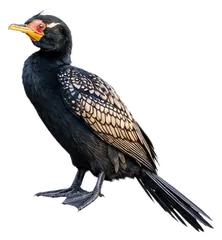 Reed CormorantMicrocarbo africanus
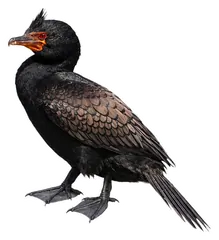 Crowned CormorantMicrocarbo coronatus
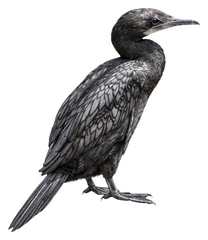 Little CormorantMicrocarbo niger
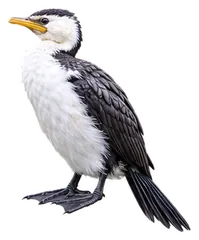 Little Pied CormorantMicrocarbo melanoleucos
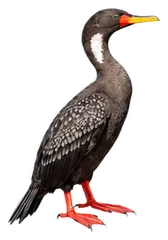 Red-legged CormorantPoikilocarbo gaimardi
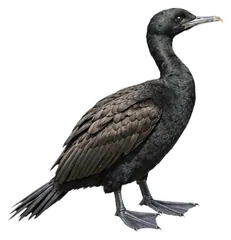 Bank CormorantPhalacrocorax neglectus
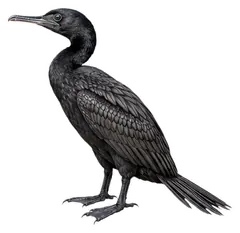 Socotra CormorantPhalacrocorax nigrogularis
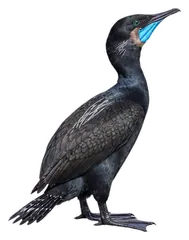
Download illustration
Free to use with credit: “Illustration: Bird Album (birdalbum.com)”. Drawn by AI from reference photos. ↗
Heard it but can't see it? Mingji identifies birds by sound and photo, on your phone.
In other languages
- EnglishBrandt's Cormorant
- 简体中文加州鸬鹚
- 繁體中文阿拉斯加鸕鷀
- 日本語アオノドヒメウ
- DeutschPinselscharbe
- FrançaisCormoran de Brandt
- EspañolCormorán sargento
- Portuguêscorvo-marinho-de-garganta-azul
- ItalianoCormorano di Brandt
- NederlandsBrandts Aalscholver
- РусскийСинегорлый баклан
- Svenskablåstrupig skarv
- DanskVestkystskarv
- Polskikormoran modrogardły