 Bird Album
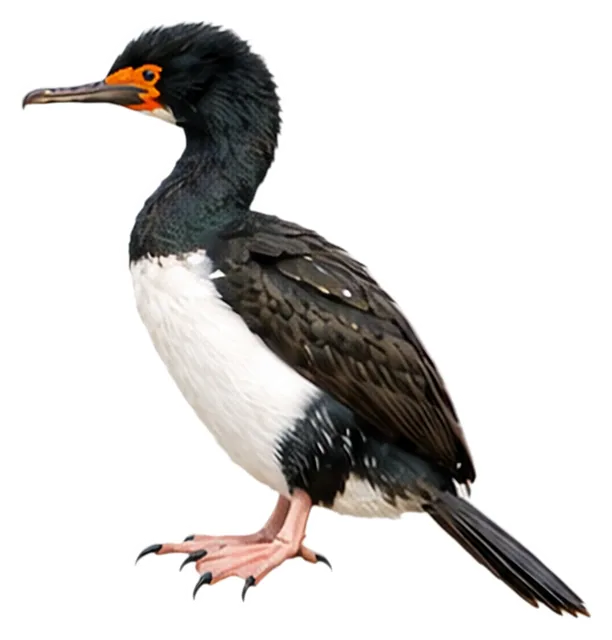
Rock Shag
Leucocarbo magellanicus (Gmelin, JF, 1789)
1.5 kgWeight
The rock shag (Leucocarbo magellanicus), also known as the Magellanic cormorant, is a marine cormorant found around the southernmost coasts of South America.
Busiest months: November · Most records: Falkland Islands, Argentina, Chile
Where and when it's recorded

Rock Shag has been recorded at 32 of the 8,171 birding hotspots we track, in 3 countries and regions.
Records by month Southern Hemisphere
Where it's recorded most
- Sea Lion IslandFalkland Islands857 records
- Cape PembrokeFalkland Islands686 records
- MN Islotes de PuñihuilChile631 records
More places
- Canal BeagleArgentina611 records
- Reserva Natural Urbana Bahía EncerradaArgentina469 records
- PN Tierra del Fuego ÁreaArgentina416 records
- Stanley – WaterfrontFalkland Islands413 records
- Transbordador Pargua-ChacaoChile403 records
- Gypsy CoveFalkland Islands367 records
- Carcass IslandFalkland Islands350 records
Countries and regions with the most records
eBird records via GBIF up to 2024-12-31. A record means someone listed it; more records partly mean more birders, not more birds.
About
The rock shag (Leucocarbo magellanicus), also known as the Magellanic cormorant, is a marine cormorant found around the southernmost coasts of South America. Its breeding range is from around Valdivia, Chile, south to Cape Horn and Tierra del Fuego, and north to Punta Tombo in Argentina. In winter it is seen further north, with individuals reaching as far as Santiago, Chile on the west coast and Uruguay on the east.
Excerpt from Wikipedia, CC BY-SA 4.0 · authors · Read more on Wikipedia
Questions
How big is the Rock Shag?
The Rock Shag weighs around 1.5 kg.
Where does the Rock Shag live?
Its breeding range: South America: coastal south-central Chile and south-central Argentina to Cape Horn and Falkland Islands. It is most often recorded in Falkland Islands, Argentina and Chile.
When is the best time to see the Rock Shag?
At the hotspots we track, it is recorded most in November (Southern Hemisphere).
Is the Rock Shag endangered?
The IUCN Red List classifies the Rock Shag as Least Concern.
What does the Rock Shag eat?
Main food: Fish, shrimp & shellfish.
What family is the Rock Shag in?
It belongs to the family Cormorants, Shags (Phalacrocoracidae), order Suliformes.
At a glance
- Weight
- 1.5 kg
- Habitat
- Ocean
- Diet
- Fish, shrimp & shellfish
- Lifestyle
- On the water surface
- Migration
- Resident (barely migrates)
- Conservation
- Least Concern
More measurements
- Wing
- 250 mm
- Tail
- 132 mm
- Bill
- 52 mm
- Tarsus
- 54 mm
Averages from the AVONET dataset; length from field guides where available.
Range
South America: coastal south-central Chile and south-central Argentina to Cape Horn and Falkland Islands
Breeding range, IOC World Bird List 15.2
Classification
- Order
- Suliformes
- Family
- Cormorants, Shags Phalacrocoracidae
- Genus
- Leucocarbo
Other birds in the genus Leucocarbo
 Guanay CormorantLeucocarbo bougainvilliorum
 Bounty ShagLeucocarbo ranfurlyi
 New Zealand King ShagLeucocarbo carunculatus
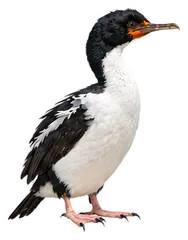 Chatham Islands ShagLeucocarbo onslowi
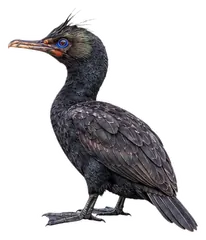 Stewart Island ShagLeucocarbo chalconotus
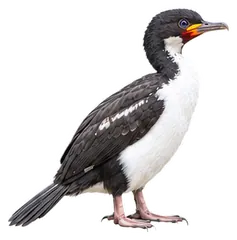 Auckland ShagLeucocarbo colensoi
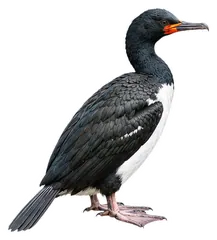 Campbell ShagLeucocarbo campbelli
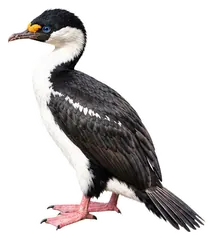 Imperial ShagLeucocarbo atriceps
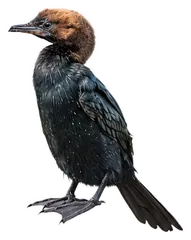 Pygmy CormorantMicrocarbo pygmaeus
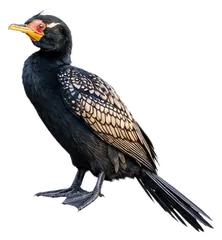 Reed CormorantMicrocarbo africanus
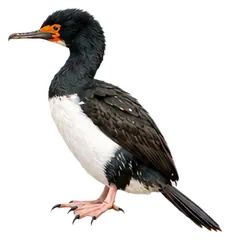
Download illustration
Free to use with credit: “Illustration: Bird Album (birdalbum.com)”. Drawn by AI from a reference photo by David Roche. ↗
Heard it but can't see it? Mingji identifies birds by sound and photo, on your phone.