 Bird Album
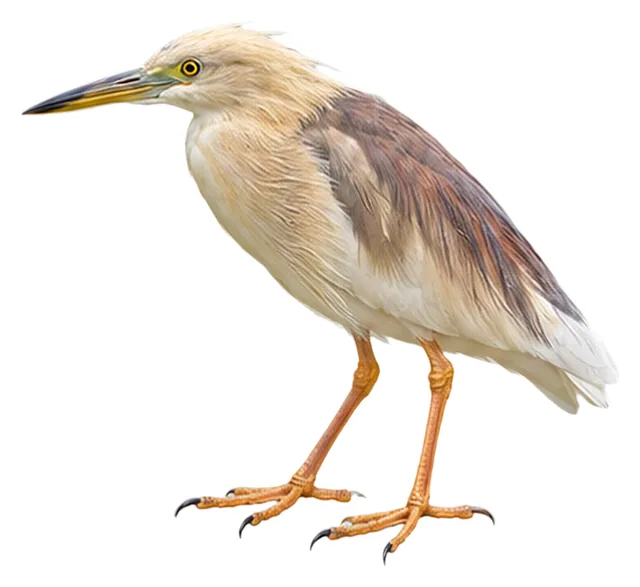
Indian Pond Heron
Ardeola grayii (Sykes, 1832)
≈38 cmLength83 cmWingspan253 gWeight
It is inconspicuous when sitting, with streaked olive-brown plumage, but its bright white wings stand out as it takes off.
Busiest months: February · Most records: India, Sri Lanka, Nepal
How to identify
Field marks
- Stocky shape; short neck
- Short, stout bill; yellowish-brown back
- Bright white wings revealed on takeoff
- Adult has long neck feathers in summer
Voice
Usually almost silent, but gives a grating squawk when alarmed or near the nest.
Where and when it's recorded
Busiest months: February · Most records: India, Sri Lanka, Nepal

Indian Pond Heron has been recorded at 482 of the 8,276 birding hotspots we track, in 20 countries and regions.
Records by month Northern Hemisphere
Where it's recorded most
- Changaram Wetlands – EzhupunnaIndia5,574 records
- Bharatpur – Keoladeo Ghana NPIndia4,156 records
- Saul Kere / Sowl KereIndia4,149 records
More places
- Kanha NP – Mukki ZoneIndia3,978 records
- GKVK CampusIndia3,132 records
- Hoskote / Hosakote KereIndia2,893 records
- Krishnampathi Lake, SeeranaickenpalayamIndia2,500 records
- Doddanekundi KereIndia2,356 records
- Sultanpur National ParkIndia2,254 records
- IIT BombayIndia2,181 records
Countries and regions with the most records
eBird records via GBIF up to 2024-12-31. A record means someone listed it; more records partly mean more birders, not more birds.
About
The Indian pond heron or paddybird (Ardeola grayii) is a small heron. It is of Old World origins, breeding in southern Iran and east to the Indian subcontinent, Burma, and Sri Lanka. They are widespread and common but can be easily missed when they stalk prey at the edge of small water-bodies or even when they roost close to human habitations.
Excerpt from Wikipedia, CC BY-SA 4.0 · authors · Read more on Wikipedia
Questions
How big is the Indian Pond Heron?
The Indian Pond Heron is about ≈38 cm long, with a wingspan of 83 cm and weighs around 253 g.
Where does the Indian Pond Heron live?
Its breeding range: Palearctic, Oriental: Persian Gulf to Myanmar and Maldives. It is most often recorded in India, Sri Lanka and Nepal.
When is the best time to see the Indian Pond Heron?
At the hotspots we track, it is recorded most in February (Northern Hemisphere).
Is the Indian Pond Heron endangered?
The IUCN Red List classifies the Indian Pond Heron as Least Concern.
What does the Indian Pond Heron eat?
Main food: Fish, shrimp & shellfish.
What family is the Indian Pond Heron in?
It belongs to the family Herons, Bitterns (Ardeidae), order Pelecaniformes.
At a glance
- Length
- ≈38 cm
- Wingspan
- 83 cm
- Weight
- 253 g
- Habitat
- Wetland
- Diet
- Fish, shrimp & shellfish
- Lifestyle
- Active on the ground
- Migration
- Partial migrant
- Conservation
- Least Concern
More measurements
- Wing
- 207 mm
- Tail
- 74 mm
- Bill
- 72 mm
- Tarsus
- 57 mm
Averages from the AVONET dataset; length from field guides where available.
Range
Palearctic, Oriental: Persian Gulf to Myanmar and Maldives
Breeding range, IOC World Bird List 15.2
Classification
- Order
- Pelecaniformes
- Family
- Herons, Bitterns Ardeidae
- Genus
- Ardeola
Other birds in the genus Ardeola
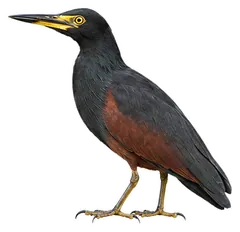 Rufous-bellied HeronArdeola rufiventris
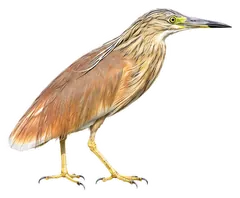 Squacco HeronArdeola ralloides
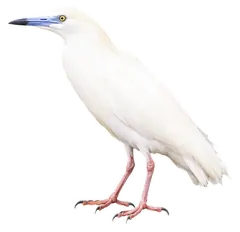 Malagasy Pond HeronArdeola idae
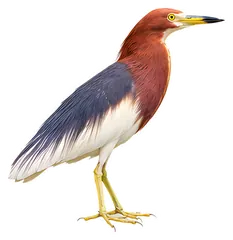 Chinese Pond HeronArdeola bacchus
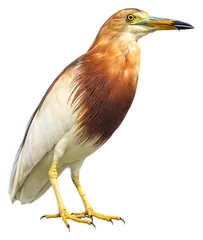 Javan Pond HeronArdeola speciosa
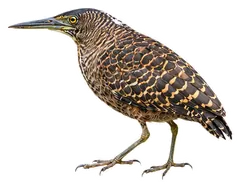 White-crested Tiger HeronTigriornis leucolopha
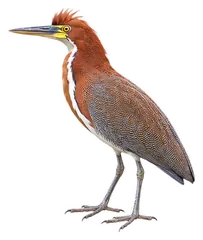 Rufescent Tiger HeronTigrisoma lineatum
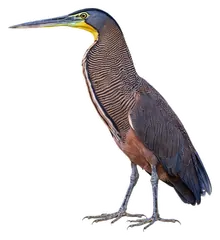 Bare-throated Tiger HeronTigrisoma mexicanum
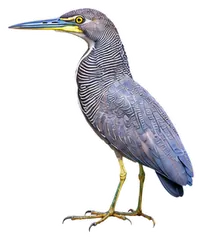 Fasciated Tiger HeronTigrisoma fasciatum
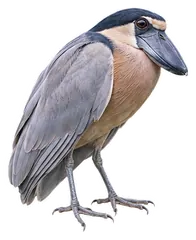 Boat-billed HeronCochlearius cochlearius
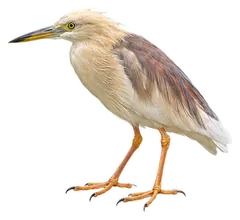
Download illustration
Free to use with credit: “Illustration: Bird Album (birdalbum.com)”. Drawn by AI from a reference photo by Jeff Harding. ↗
Heard it but can't see it? Mingji identifies birds by sound and photo, on your phone.