 Bird Album
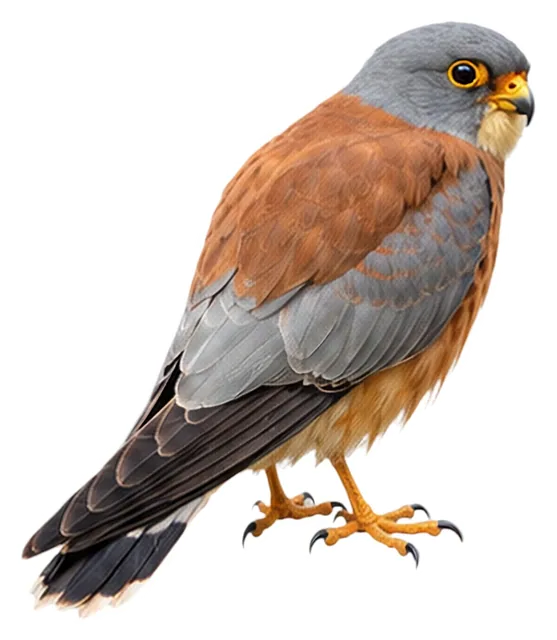
Lesser Kestrel
Falco naumanni Fleischer, JG, 1818
27–33 cmLength65 cmWingspan152 gWeight
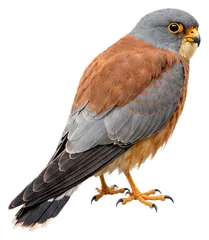
The male has a gray head and tail and lacks the black “moustache” of Common Kestrel.
Busiest months: April and September · Most records: Spain, Portugal, Tanzania
Looks like Common Kestrel
How to identify
Field marks
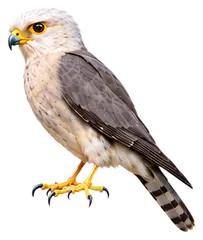
- Male has gray head and tail
- Male lacks a black moustachial stripe on the face
- Male lacks dark spots on the back
- Male has gray patches on the wings
Male, female and young
The male has a gray head and tail and gray wing patches; females and juveniles closely resemble those of Common Kestrel, but are slightly paler.
Voice
A rough “chay-chay-chay”, unlike the “kee-kee-kee” of Common Kestrel.
Similar species
Where and when it's recorded
Busiest months: April and September · Most records: Spain, Portugal, Tanzania

Lesser Kestrel has been recorded at 643 of the 8,276 birding hotspots we track, in 77 countries and regions.
Records by month Northern Hemisphere
Where it's recorded most
- Azud de RiolobosSpain1,270 records
- Observatorio de CazallaSpain935 records
- Algeciras – Observatorio de AlgarroboSpain933 records
More places
- Casares – CastilloSpain739 records
- Lagunas de Villafáfila RNat – ÁreaSpain721 records
- Bardena – Galugah Raptor Count SiteIran662 records
- Wamm FarmsUnited Arab Emirates578 records
- ZPE Castro Verde – Vale GonçalinhoPortugal577 records
- Fuente de Piedra – Centro de VisitantesSpain491 records
- PN Vale do Guadiana – MértolaPortugal476 records
Countries and regions with the most records
eBird records via GBIF up to 2024-12-31. A record means someone listed it; more records partly mean more birders, not more birds.
About
The lesser kestrel (Falco naumanni) is a small falcon. This species breeds from the Mediterranean across Afghanistan and Central Asia, to China and Mongolia. It is a summer migrant, wintering in Africa and Pakistan and sometimes even to India and Iraq.
Excerpt from Wikipedia, CC BY-SA 4.0 · authors · Read more on Wikipedia
Questions
How big is the Lesser Kestrel?
The Lesser Kestrel is about 27–33 cm long, with a wingspan of 65 cm and weighs around 152 g.
Where does the Lesser Kestrel live?
Its breeding range: Palearctic: southern Europe and northwestern Africa to northern China. It is most often recorded in Spain, Portugal and Tanzania.
When is the best time to see the Lesser Kestrel?
At the hotspots we track, it is recorded most in April and September (Northern Hemisphere).
Is the Lesser Kestrel endangered?
The IUCN Red List classifies the Lesser Kestrel as Least Concern.
What does the Lesser Kestrel eat?
Main food: Insects & other invertebrates.
What family is the Lesser Kestrel in?
It belongs to the family Caracaras, Falcons (Falconidae), order Falconiformes.
At a glance
- Length
- 27–33 cm
- Wingspan
- 65 cm
- Weight
- 152 g
- Habitat
- Grassland
- Diet
- Insects & other invertebrates
- Lifestyle
- Varied
- Migration
- Migratory
- Conservation
- Least Concern
More measurements
- Wing
- 229 mm
- Tail
- 132 mm
- Bill
- 20 mm
- Tarsus
- 30 mm
Averages from the AVONET dataset; length from field guides where available.
Range
Palearctic: southern Europe and northwestern Africa to northern China
Breeding range, IOC World Bird List 15.2
Classification
- Order
- Falconiformes
- Family
- Caracaras, Falcons Falconidae
- Genus
- Falco
Other birds in the genus Falco
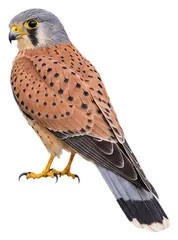 Common KestrelFalco tinnunculus
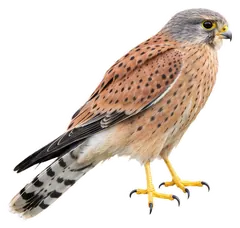 Rock KestrelFalco rupicolus
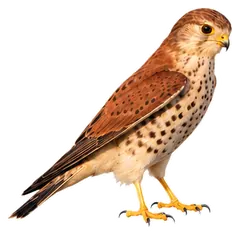 Malagasy KestrelFalco newtoni
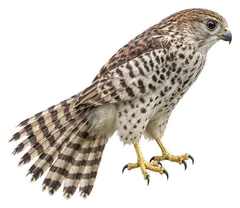 Mauritius KestrelFalco punctatus
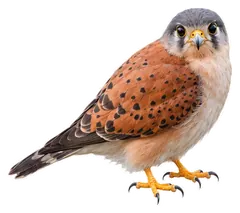 Seychelles KestrelFalco araeus
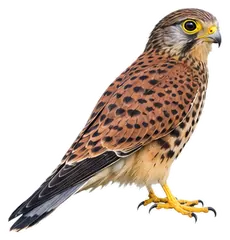 Spotted KestrelFalco moluccensis
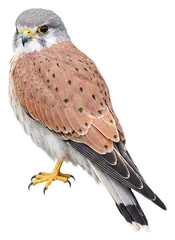 Nankeen KestrelFalco cenchroides
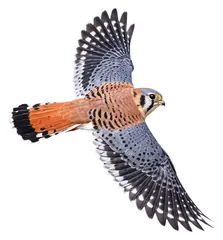 American KestrelFalco sparverius
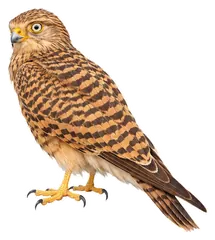 Greater KestrelFalco rupicoloides
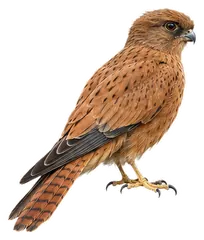 Fox KestrelFalco alopex
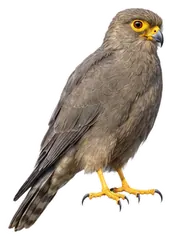 Grey KestrelFalco ardosiaceus
 Dickinson's KestrelFalco dickinsoni
Download illustration
Free to use with credit: “Illustration: Bird Album (birdalbum.com)”. Drawn by AI from a reference photo by ZhenningLiu. ↗
Heard it but can't see it? Mingji identifies birds by sound and photo, on your phone.