 Bird Album
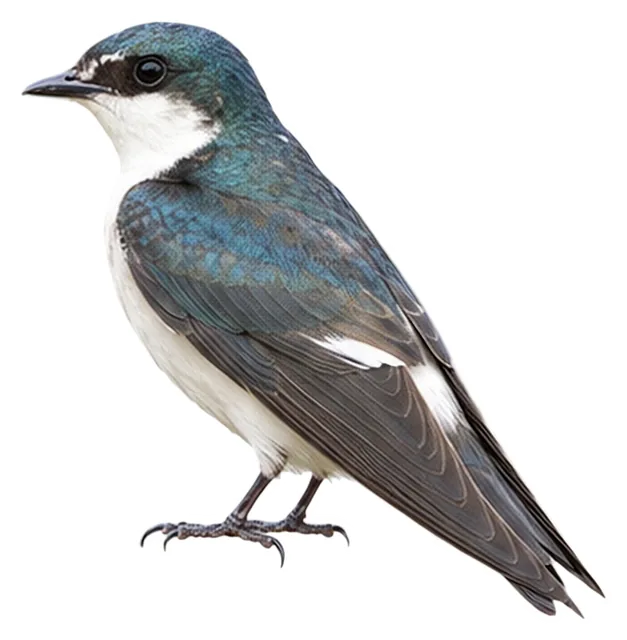
Mangrove Swallow
Tachycineta albilinea (Lawrence, 1863)
11–12 cmLength17 gWeight
The mangrove swallow (Tachycineta albilinea) is a passerine bird in the swallow family that breeds in coastal regions from Mexico through Central America to Panama.
Busiest months: January–March · Most records: Costa Rica, Belize, Panama
Where and when it's recorded

Mangrove Swallow has been recorded at 227 of the 8,171 birding hotspots we track, in 9 countries and regions.
Records by month Northern Hemisphere
Where it's recorded most
- Tárcoles – Tour en BoteCosta Rica4,573 records
- Refugio mixto Caño NegroCosta Rica4,335 records
- Ammo Dump PondsPanama3,695 records
More places
- Cattle Landing – waterfrontBelize2,677 records
- Black Rock LodgeBelize2,555 records
- Crooked Tree Wildlife Sanctuary – Bird's Eye View LodgeBelize2,448 records
- Crooked Tree Wildlife SanctuaryBelize1,650 records
- New RiverBelize1,634 records
- Rio Rincón bridge & environsCosta Rica1,519 records
- Maquenque Eco-LodgeCosta Rica1,304 records
Countries and regions with the most records
eBird records via GBIF up to 2024-12-31. A record means someone listed it; more records partly mean more birders, not more birds.
About
The mangrove swallow (Tachycineta albilinea) is a passerine bird in the swallow family that breeds in coastal regions from Mexico through Central America to Panama. It has blue-green upperparts, blackish flight feathers, a white rump, a black tail, and white underparts. It can be identified by the supraloral white streak, the white line near its eye, which only occurs in two other species of Tachycineta: the violet-green swallow and the white-rumped swallow.
Excerpt from Wikipedia, CC BY-SA 4.0 · authors · Read more on Wikipedia
Questions
How big is the Mangrove Swallow?
The Mangrove Swallow is about 11–12 cm long and weighs around 17 g.
Where does the Mangrove Swallow live?
Its breeding range: Middle America: eastern and western coast of Mexico to Panama. It is most often recorded in Costa Rica, Belize and Panama.
When is the best time to see the Mangrove Swallow?
At the hotspots we track, it is recorded most in January, February and March (Northern Hemisphere).
Is the Mangrove Swallow endangered?
The IUCN Red List classifies the Mangrove Swallow as Least Concern.
What does the Mangrove Swallow eat?
Main food: Insects & other invertebrates.
What family is the Mangrove Swallow in?
It belongs to the family Swallows, Martins (Hirundinidae), order Passerines (Passeriformes).
At a glance
- Length
- 11–12 cm
- Weight
- 17 g
- Habitat
- Woodland
- Diet
- Insects & other invertebrates
- Lifestyle
- Feeds in the air
- Migration
- Resident (barely migrates)
- Conservation
- Least Concern
More measurements
- Wing
- 99 mm
- Tail
- 41 mm
- Bill
- 12 mm
- Tarsus
- 11 mm
Averages from the AVONET dataset; length from field guides where available.
Range
Middle America: eastern and western coast of Mexico to Panama
Breeding range, IOC World Bird List 15.2
Classification
- Order
- Passerines Passeriformes
- Family
- Swallows, Martins Hirundinidae
- Genus
- Tachycineta
Other birds in the genus Tachycineta
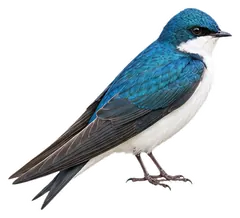 Tree SwallowTachycineta bicolor
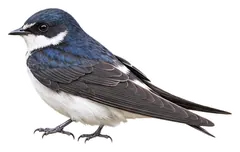 White-rumped SwallowTachycineta leucorrhoa
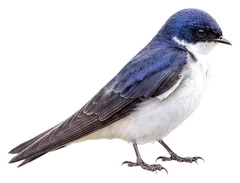 Chilean SwallowTachycineta leucopyga
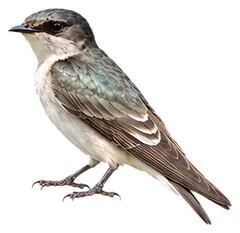 Tumbes SwallowTachycineta stolzmanni
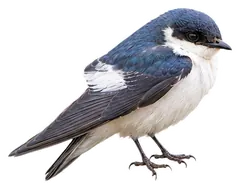 White-winged SwallowTachycineta albiventer
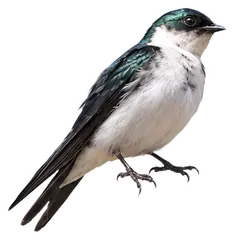 Golden SwallowTachycineta euchrysea
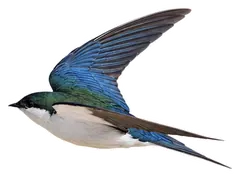 Bahama SwallowTachycineta cyaneoviridis
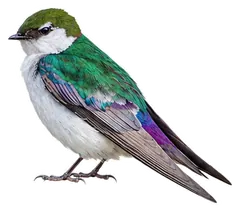 Violet-green SwallowTachycineta thalassina
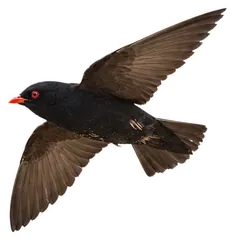 African River MartinPseudochelidon eurystomina
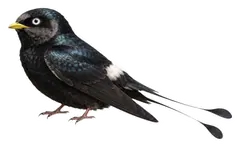 White-eyed River MartinPseudochelidon sirintarae
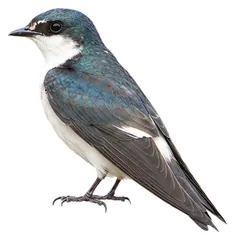
Download illustration
Free to use with credit: “Illustration: Bird Album (birdalbum.com)”. Drawn by AI from a reference photo by David Beadle. ↗
Heard it but can't see it? Mingji identifies birds by sound and photo, on your phone.
In other languages
- EnglishMangrove Swallow
- 简体中文红树燕
- 繁體中文紅樹燕
- 日本語シロオビミドリツバメ
- DeutschMangroveschwalbe
- FrançaisHirondelle des mangroves
- EspañolGolondrina de manglar
- Portuguêsandorinha-dos-mangais
- ItalianoRondine delle mangrovie
- NederlandsMangrovezwaluw
- РусскийМангровая ласточка
- Svenskamangrovesvala
- DanskMangrovesvale
- Polskinadobniczka namorzynowa