 Bird Album
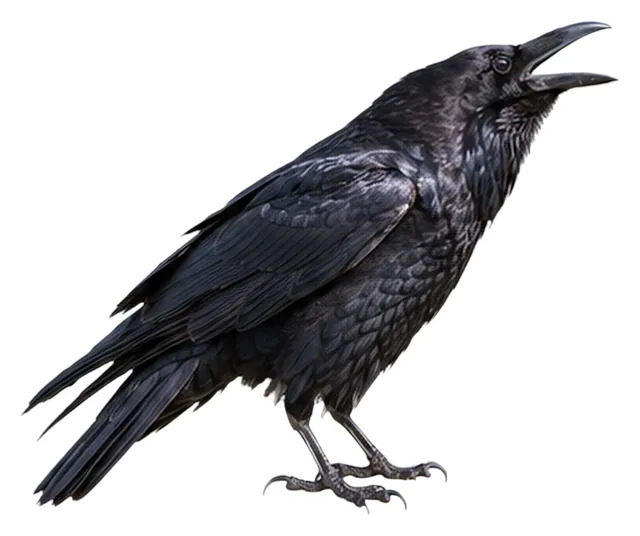
Northern Raven
Corvus corax Linnaeus, 1758
60–69 cmLength120–150 cmWingspan928 gWeight
This large crow is black overall, with a large bill, a wedge-shaped tail and a low call.
Busiest months: April–May and September–October · Most records: United States, Canada, Spain
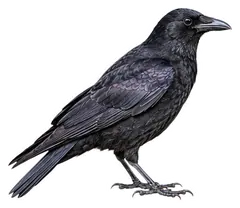
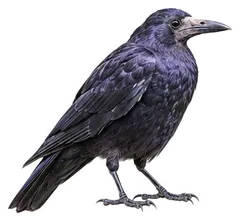
Looks like Carrion Crow, Rook
How to identify
Field marks
- Black overall, with a metallic gloss to the feathers
- Very large, slightly decurved bill
- Long, shaggy throat feathers
- Tail feathers form a wedge shape
Male, female and young
Juveniles have similar but darker plumage and a blue-gray iris.
Voice
A deep, loud “prruk-prruk-prruk”, as well as a high-pitched, tapping “toc-toc-toc”.
Similar species
Where and when it's recorded
Busiest months: April–May and September–October · Most records: United States, Canada, Spain

Northern Raven has been recorded at 2,042 of the 8,276 birding hotspots we track, in 82 countries and regions.
Records by month Northern Hemisphere
Where it's recorded most
- Paton Center for HummingbirdsUnited States15,346 records
- RNF du Cap-TourmenteCanada13,763 records
- Arcata Marsh and Wildlife SanctuaryUnited States9,248 records
More places
- Canoa Ranch Conservation ParkUnited States8,634 records
- Calgary – Carburn ParkCanada8,422 records
- Whitefish PointUnited States8,404 records
- Anza Trail – TubacUnited States8,361 records
- Irvine Regional ParkUnited States7,891 records
- Rodeo LagoonUnited States7,890 records
- Pt. Reyes Bird Observatory – PalomarinUnited States7,577 records
Countries and regions with the most records
eBird records via GBIF up to 2024-12-31. A record means someone listed it; more records partly mean more birders, not more birds.
About
The common raven or northern raven (Corvus corax) is a large all-black passerine bird. It is the most widely distributed of all corvids, found across the Northern Hemisphere. There are 11 accepted subspecies with little variation in appearance, although recent research has demonstrated significant genetic differences among populations from various regions.
Excerpt from Wikipedia, CC BY-SA 4.0 · authors · Read more on Wikipedia
Questions
How big is the Northern Raven?
The Northern Raven is about 60–69 cm long, with a wingspan of 120–150 cm and weighs around 928 g.
Where does the Northern Raven live?
Its breeding range: North America, Middle America, Palearctic: widespread. It is most often recorded in United States, Canada and Spain.
When is the best time to see the Northern Raven?
At the hotspots we track, it is recorded most in April, May, September and October (Northern Hemisphere).
Is the Northern Raven endangered?
The IUCN Red List classifies the Northern Raven as Least Concern.
What does the Northern Raven eat?
Main food: Omnivore.
What family is the Northern Raven in?
It belongs to the family Crows, Jays (Corvidae), order Passerines (Passeriformes).
At a glance
- Length
- 60–69 cm
- Wingspan
- 120–150 cm
- Weight
- 928 g
- Habitat
- Forest
- Diet
- Omnivore
- Lifestyle
- Active on the ground
- Migration
- Partial migrant
- Conservation
- Least Concern
More measurements
- Wing
- 420 mm
- Tail
- 229 mm
- Bill
- 77 mm
- Tarsus
- 67 mm
Averages from the AVONET dataset; length from field guides where available.
Range
North America, Middle America, Palearctic: widespread
Breeding range, IOC World Bird List 15.2
Subspecies · 2
- Corvus corax laurencei Greece, Cyprus and Turkey to w China and n India
- Corvus corax kamtschaticus w Mongolia, e Siberia, ne China, n Japan and nearby islands
Classification
- Order
- Passerines Passeriformes
- Family
- Crows, Jays Corvidae
- Genus
- Corvus
Other birds in the genus Corvus
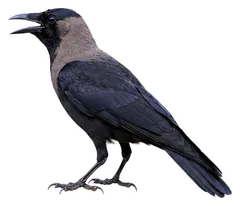 House CrowCorvus splendens
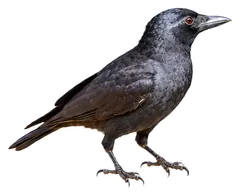 New Caledonian CrowCorvus moneduloides
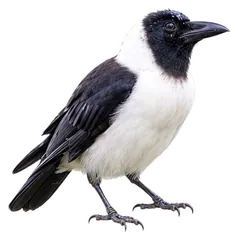 Piping CrowCorvus typicus
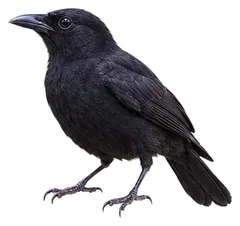 Banggai CrowCorvus unicolor
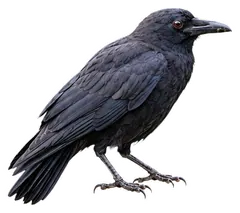 Sunda CrowCorvus enca
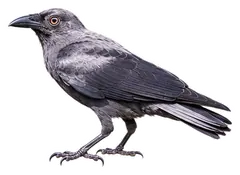 Sulawesi CrowCorvus celebensis
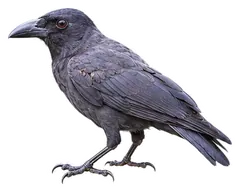 Samar CrowCorvus samarensis
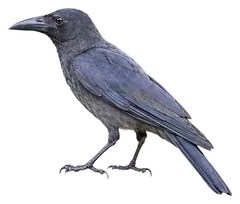 Sierra Madre CrowCorvus sierramadrensis
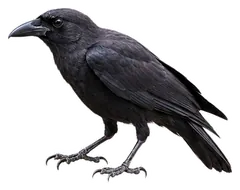 Palawan CrowCorvus pusillus
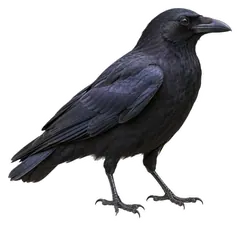 Violet CrowCorvus violaceus
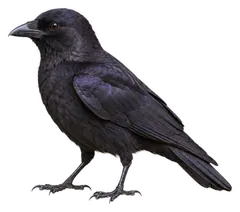 Flores CrowCorvus florensis
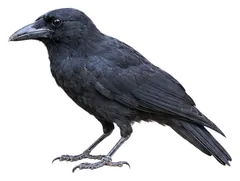 Mariana CrowCorvus kubaryi
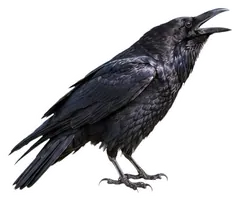
Download illustration
Free to use with credit: “Illustration: Bird Album (birdalbum.com)”. Drawn by AI from a reference photo by Frank Schulenburg. ↗

Heard it but can't see it? Mingji identifies birds by sound and photo, on your phone.