 Bird Album
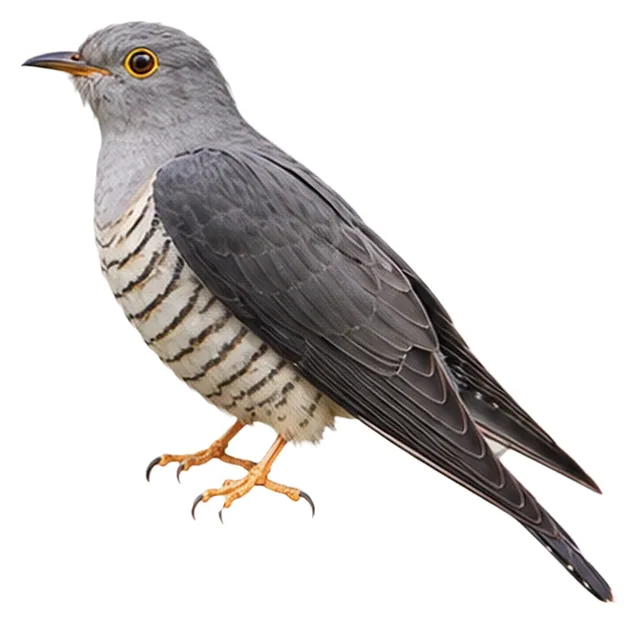
Oriental Cuckoo
Cuculus optatus Gould, 1845
≈30 cmLength87 gWeight
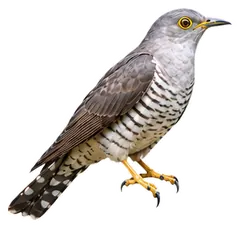
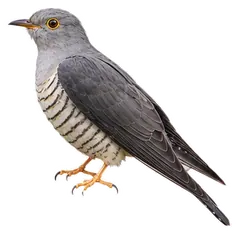
The male has a gray head and back, a barred belly and a low, paired “poo-poo” call.
Busiest months: April–May · Most records: China, Australia, Japan
Looks like Common Cuckoo, Himalayan Cuckoo
How to identify
Field marks
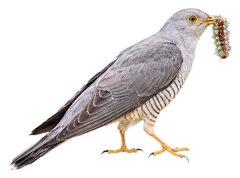
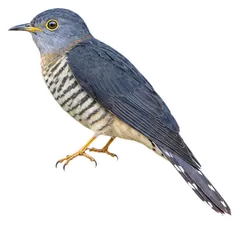
- Male has gray head, breast and upperparts
- Belly creamy white, with dark barring
- A yellow eye-ring of bare skin surrounds the eye
- Legs and feet orange-yellow
Male, female and young
Adult females and juveniles occur in gray and rufous color morphs; the gray morph resembles the male, with brown on the breast.
Voice
The male gives a series of low, paired “poo-poo” notes, equally stressed; the female gives a deep, gurgling trill.
Similar species
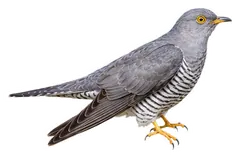
Common Cuckoo is slightly stouter, with longer wings and tail, a slightly smaller head and bill, slightly paler gray plumage and slightly narrower barring on the belly.
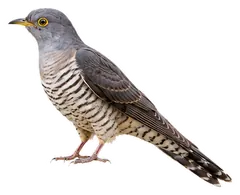
Himalayan Cuckoo is very similar, but slightly smaller with slightly shorter wings; the male's call consists of groups of three or four notes.
Where and when it's recorded

Oriental Cuckoo has been recorded at 395 of the 8,171 birding hotspots we track, in 18 countries and regions.
Records by month Northern Hemisphere
Where it's recorded most
- Yilan – Dingliao Ecological ParkTaiwan (China)477 records
- Taipei – Tianliaoyang WetlandTaiwan (China)420 records
- Dasyueshan IBA – Xiaoxueshan Lodge (50K)Taiwan (China)354 records
More places
- Taipei – Gongliao Dexin TempleTaiwan (China)188 records
- Yushan NP – TatakaTaiwan (China)160 records
- Kinmen – Doumen Hiking TrailChina135 records
- Wajima – Hegurajima (island)Japan119 records
- Anstead Bushland ReserveAustralia115 records
- Po ToiHong Kong (China)113 records
- Taichung – Taichung Metropolitan ParkTaiwan (China)106 records
Countries and regions with the most records
eBird records via GBIF up to 2024-12-31. A record means someone listed it; more records partly mean more birders, not more birds.
About
The Oriental cuckoo or Horsfield's cuckoo (Cuculus optatus) is a bird belonging to the genus Cuculus in the cuckoo family Cuculidae. It was formerly classified as a subspecies of the Himalayan cuckoo (C. saturatus), with the name 'Oriental cuckoo' used for the combined species. Differences in voice and size suggest that it should be treated as a separate species.
Excerpt from Wikipedia, CC BY-SA 4.0 · authors · Read more on Wikipedia
Questions
How big is the Oriental Cuckoo?
The Oriental Cuckoo is about ≈30 cm long and weighs around 87 g.
Where does the Oriental Cuckoo live?
Its breeding range: Palearctic: western Russia and Kazakhstan through northeastern Russia to Japan. It is most often recorded in China, Australia and Japan.
When is the best time to see the Oriental Cuckoo?
At the hotspots we track, it is recorded most in April and May (Northern Hemisphere).
Is the Oriental Cuckoo endangered?
The IUCN Red List classifies the Oriental Cuckoo as Least Concern.
What does the Oriental Cuckoo eat?
Main food: Insects & other invertebrates.
What family is the Oriental Cuckoo in?
It belongs to the family Cuckoos (Cuculidae), order Cuculiformes.
At a glance
- Length
- ≈30 cm
- Weight
- 87 g
- Habitat
- Forest
- Diet
- Insects & other invertebrates
- Lifestyle
- Perches in trees
- Migration
- Migratory
- Conservation
- Least Concern
More measurements
- Wing
- 183 mm
- Tail
- 146 mm
- Bill
- 25 mm
- Tarsus
- 22 mm
Averages from the AVONET dataset; length from field guides where available.
Range
Palearctic: western Russia and Kazakhstan through northeastern Russia to Japan
Breeding range, IOC World Bird List 15.2
Classification
- Order
- Cuculiformes
- Family
- Cuckoos Cuculidae
- Genus
- Cuculus
Other birds in the genus Cuculus
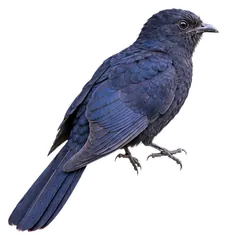 Black CuckooCuculus clamosus
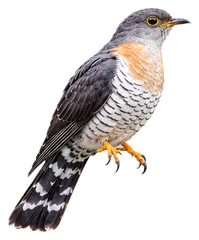 Red-chested CuckooCuculus solitarius
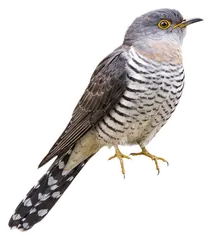 Lesser CuckooCuculus poliocephalus
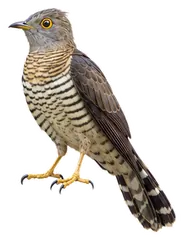 Sulawesi CuckooCuculus crassirostris
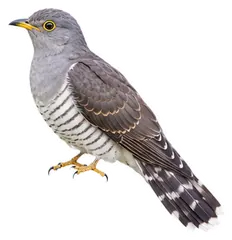 Indian CuckooCuculus micropterus
 Madagascar CuckooCuculus rochii
 African CuckooCuculus gularisHimalayan CuckooCuculus saturatus
 Sunda CuckooCuculus lepidusCommon CuckooCuculus canorus
Download illustration
Free to use with credit: “Illustration: Bird Album (birdalbum.com)”. Drawn by AI from a reference photo by petersimple. ↗
Heard it but can't see it? Mingji identifies birds by sound and photo, on your phone.