 Bird Album
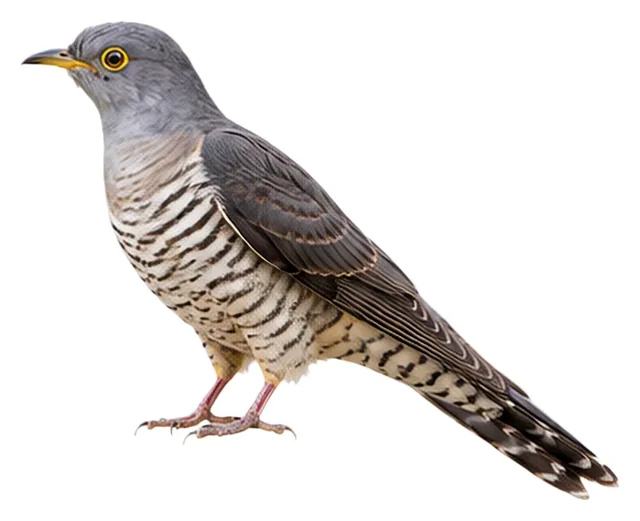
Himalayan Cuckoo
Cuculus saturatus Blyth, 1843
≈30 cmLength87 gWeight
The adult male of the gray morph has a gray head and breast and a white belly with black barring.
Busiest months: April–May · Most records: China, Bhutan, Nepal
Looks like Oriental Cuckoo
How to identify
Field marks
- Adult male of the gray morph has dark gray upperparts
- Male of the gray morph has white lower breast and belly with black barring
- Male of the gray morph has blackish tail with white patches and a white tip
- Eye-ring yellow
Male, female and young
The gray-morph female resembles the male but has a rufous wash on the breast; juveniles have a black throat with white barring.
Voice
The female gives a bubbling “quick-quick-quick”.
Similar species
Where and when it's recorded
Busiest months: April–May · Most records: China, Bhutan, Nepal

Himalayan Cuckoo has been recorded at 360 of the 8,276 birding hotspots we track, in 13 countries and regions.
Records by month Northern Hemisphere
Where it's recorded most
- Mt. Phulchowki - Lowest Few Miles of RoadNepal202 records
- Longcanggou [General Area]China162 records
- Mt. PhulchowkiNepal115 records
More places
- Lingshan Scenic AreaChina98 records
- Dochula – Royal Botanical ParkBhutan95 records
- Yongkhola campBhutan92 records
- PangotIndia92 records
- Man Nai IslandThailand90 records
- Xiaolongmen National Forest ParkChina89 records
- PelelaBhutan82 records
Countries and regions with the most records
eBird records via GBIF up to 2024-12-31. A record means someone listed it; more records partly mean more birders, not more birds.
About
The Himalayan cuckoo or Oriental cuckoo (Cuculus saturatus) is a brooding parasitic bird that is part of the Cuculidae family. The species breeds from the Himalayas eastward to southern China and Taiwan (China). It migrates to southeast Asia and the Greater Sunda Islands for the winter.
Excerpt from Wikipedia, CC BY-SA 4.0 · authors · Read more on Wikipedia
Questions
How big is the Himalayan Cuckoo?
The Himalayan Cuckoo is about ≈30 cm long and weighs around 87 g.
Where does the Himalayan Cuckoo live?
Its breeding range: Oriental: Himalayas through Southeast Asia to eastern China and Taiwan (China). It is most often recorded in China, Bhutan and Nepal.
When is the best time to see the Himalayan Cuckoo?
At the hotspots we track, it is recorded most in April and May (Northern Hemisphere).
Is the Himalayan Cuckoo endangered?
The IUCN Red List classifies the Himalayan Cuckoo as Least Concern.
What does the Himalayan Cuckoo eat?
Main food: Insects & other invertebrates.
What family is the Himalayan Cuckoo in?
It belongs to the family Cuckoos (Cuculidae), order Cuculiformes.
At a glance
- Length
- ≈30 cm
- Weight
- 87 g
- Habitat
- Forest
- Diet
- Insects & other invertebrates
- Lifestyle
- Perches in trees
- Migration
- Migratory
- Conservation
- Least Concern
More measurements
- Wing
- 183 mm
- Tail
- 146 mm
- Bill
- 25 mm
- Tarsus
- 22 mm
Averages from the AVONET dataset; length from field guides where available.
Range
Oriental: Himalayas through Southeast Asia to eastern China and Taiwan (China)
Breeding range, IOC World Bird List 15.2
Classification
- Order
- Cuculiformes
- Family
- Cuckoos Cuculidae
- Genus
- Cuculus
Other birds in the genus Cuculus
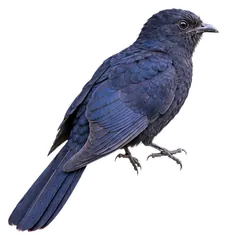 Black CuckooCuculus clamosus
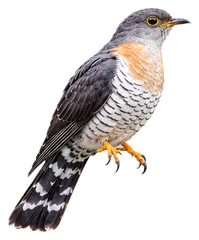 Red-chested CuckooCuculus solitarius
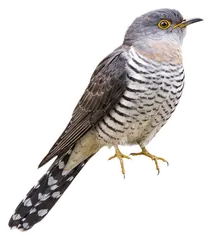 Lesser CuckooCuculus poliocephalus
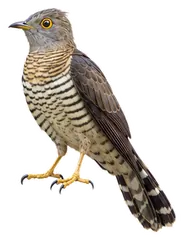 Sulawesi CuckooCuculus crassirostris
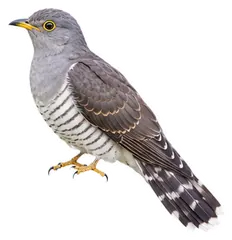 Indian CuckooCuculus micropterus
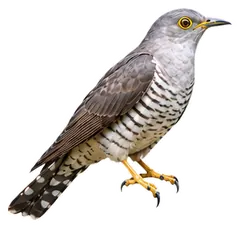 Madagascar CuckooCuculus rochii
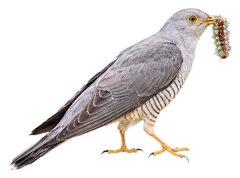 African CuckooCuculus gularis
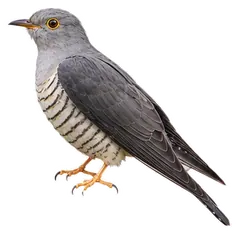 Oriental CuckooCuculus optatus
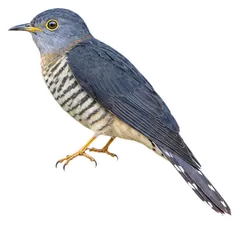 Sunda CuckooCuculus lepidus
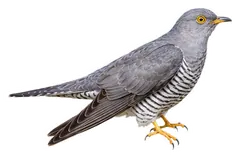 Common CuckooCuculus canorus
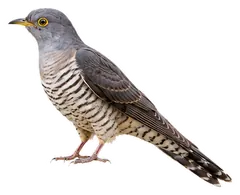
Download illustration
Free to use with credit: “Illustration: Bird Album (birdalbum.com)”. Drawn by AI from a reference photo by budak. ↗
Heard it but can't see it? Mingji identifies birds by sound and photo, on your phone.