 Bird Album
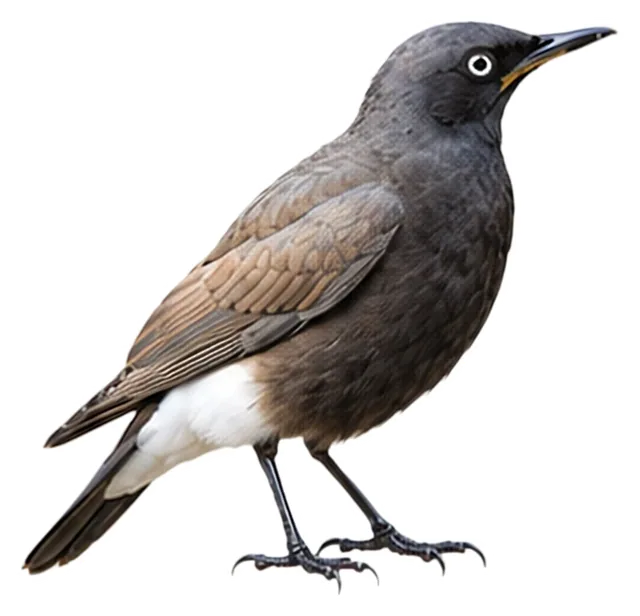
Pied Starling
Lamprotornis bicolor (Gmelin, JF, 1789)
104 gWeight
The pied starling or African pied starling (Lamprotornis bicolor) is a bird endemic to South Africa, Lesotho and Eswatini.
Busiest months: October–November · Most records: South Africa, Lesotho, Eswatini
Where and when it's recorded
Busiest months: October–November · Most records: South Africa, Lesotho, Eswatini

Pied Starling has been recorded at 55 of the 8,276 birding hotspots we track, in 3 countries and regions.
Records by month Southern Hemisphere
Where it's recorded most
- Rietvlei NRSouth Africa936 records
- West Coast NPSouth Africa636 records
- De Hoop Nature ReserveSouth Africa329 records
More places
- West Coast NP – Geelbek hides vicinitySouth Africa284 records
- Wakkerstroom areaSouth Africa279 records
- Darling Hills/Groote Post RoadSouth Africa272 records
- Marievale Bird SanctuarySouth Africa256 records
- Wakkerstroom Wetland NR – bridge/causewaySouth Africa198 records
- Wakkerstroom Wetland NRSouth Africa179 records
- Suikerbosrand NRSouth Africa111 records
Countries and regions with the most records
eBird records via GBIF up to 2024-12-31. A record means someone listed it; more records partly mean more birders, not more birds.
About
The pied starling or African pied starling (Lamprotornis bicolor) is a bird endemic to South Africa, Lesotho and Eswatini. It is common in most of its range, but largely absent from the arid northwest and the eastern lowlands of South Africa. It is found in open habitats such as grassland, karoo scrub, thornbush and agricultural land, and often associates with farm animals.
Excerpt from Wikipedia, CC BY-SA 4.0 · authors · Read more on Wikipedia
Questions
How big is the Pied Starling?
The Pied Starling weighs around 104 g.
Where does the Pied Starling live?
Its breeding range: Africa: southern Botswana through Lesotho and South Africa. It is most often recorded in South Africa, Lesotho and Eswatini.
When is the best time to see the Pied Starling?
At the hotspots we track, it is recorded most in October and November (Southern Hemisphere).
Is the Pied Starling endangered?
The IUCN Red List classifies the Pied Starling as Least Concern.
What does the Pied Starling eat?
Main food: Omnivore.
What family is the Pied Starling in?
It belongs to the family Starlings, Rhabdornises (Sturnidae), order Passerines (Passeriformes).
At a glance
- Weight
- 104 g
- Habitat
- Grassland
- Diet
- Omnivore
- Lifestyle
- Varied
- Migration
- Resident (barely migrates)
- Conservation
- Least Concern
More measurements
- Wing
- 109 mm
- Tail
- 95 mm
- Bill
- 28 mm
- Tarsus
- 32 mm
Averages from the AVONET dataset; length from field guides where available.
Range
Africa: southern Botswana through Lesotho and South Africa
Breeding range, IOC World Bird List 15.2
Classification
- Order
- Passerines Passeriformes
- Family
- Starlings, Rhabdornises Sturnidae
- Genus
- Lamprotornis
Other birds in the genus Lamprotornis
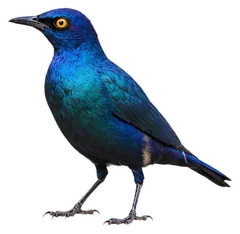 Cape StarlingLamprotornis nitens
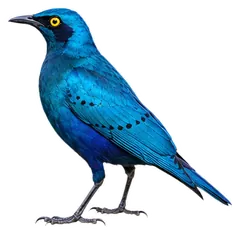 Greater Blue-eared StarlingLamprotornis chalybaeus
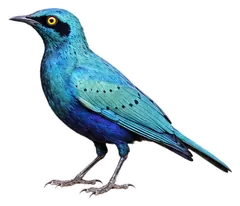 Lesser Blue-eared StarlingLamprotornis chloropterus
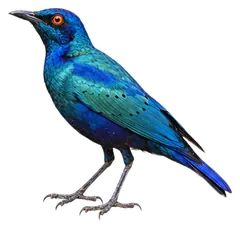 Bronze-tailed StarlingLamprotornis chalcurus
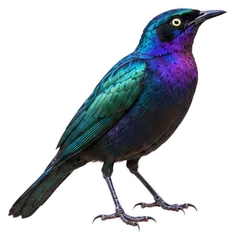 Splendid StarlingLamprotornis splendidus
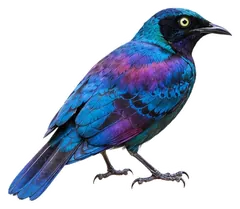 Principe StarlingLamprotornis ornatus
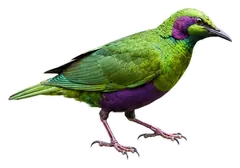 Emerald StarlingLamprotornis iris
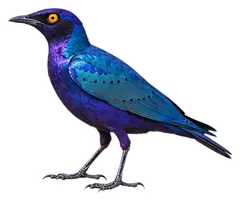 Purple StarlingLamprotornis purpureus
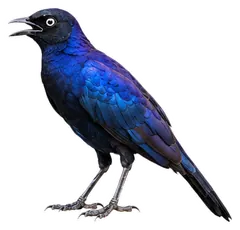 Rüppell's StarlingLamprotornis purpuroptera
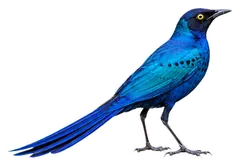 Long-tailed Glossy StarlingLamprotornis caudatus
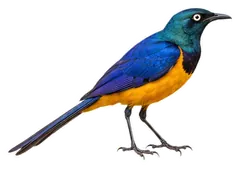 Golden-breasted StarlingLamprotornis regius
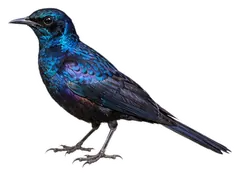 Meves's StarlingLamprotornis mevesii
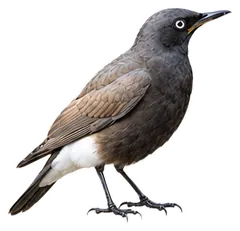
Download illustration
Free to use with credit: “Illustration: Bird Album (birdalbum.com)”. Drawn by AI from a reference photo by ianlouw. ↗
Heard it but can't see it? Mingji identifies birds by sound and photo, on your phone.
In other languages
- EnglishPied Starling
- 简体中文非洲丽椋鸟
- 繁體中文雜色麗椋鳥
- 日本語シロハラチャムクドリ
- DeutschZweifarb-Glanzstar
- FrançaisSpréo bicolore
- EspañolEstornino bicolor
- Portuguêsestorninho-de-crisso-branco
- ItalianoStorno bianconero africano
- NederlandsTweekleurige Glansspreeuw
- РусскийБелогузый спрео
- Svenskavitgumpad glansstare
- DanskTofarvet Stær
- Polskibłyszczak brunatny