 Bird Album
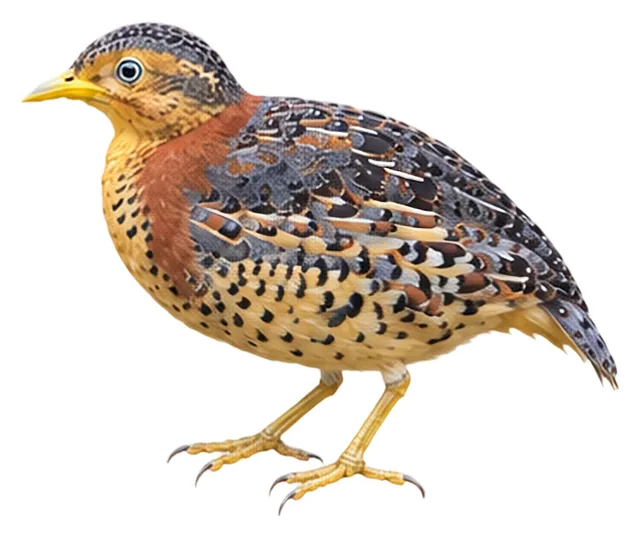
Red-backed Buttonquail
Turnix maculosus (Temminck, 1815)
12–16 cmLength39 gWeight
The red-backed buttonquail (Turnix maculosus) is a species of bird in the family Turnicidae.
Busiest months: October–January · Most records: Australia, Papua New Guinea, Indonesia
Where and when it's recorded
Busiest months: October–January · Most records: Australia, Papua New Guinea, Indonesia

Red-backed Buttonquail has been recorded at 50 of the 8,276 birding hotspots we track, in 5 countries and regions.
Records by month Southern Hemisphere
Where it's recorded most
- Lake Samsonvale – Golds Scrub LaneAustralia158 records
- Tyto WetlandsAustralia46 records
- Lake Samsonvale – Postmans TrackAustralia45 records
More places
- Priors PocketAustralia28 records
- Roebuck Plains StationAustralia21 records
- Holmes Jungle Nature ReserveAustralia19 records
- Atkinsons DamAustralia17 records
- Oxley Creek CommonAustralia10 records
- Finland Road, Paradise WatersAustralia9 records
- Townsville Town Common Conservation ParkAustralia9 records
Countries and regions with the most records
eBird records via GBIF up to 2024-12-31. A record means someone listed it; more records partly mean more birders, not more birds.
About
The red-backed buttonquail (Turnix maculosus) is a species of bird in the family Turnicidae. It is found in Australia, Indonesia, Papua New Guinea, the Philippines and the Solomon Islands. Other names by which it is known in different parts of its range include black-backed, black-spotted and orange-breasted buttonquail.
Excerpt from Wikipedia, CC BY-SA 4.0 · authors · Read more on Wikipedia
Questions
How big is the Red-backed Buttonquail?
The Red-backed Buttonquail is about 12–16 cm long and weighs around 39 g.
Where does the Red-backed Buttonquail live?
Its breeding range: Australasia: Sulawesi and Lesser Sundas to south-central, northeastern, southeastern New Guinea, northern, eastern Australia and eastern Bismarck Archipelago. It is most often recorded in Australia, Papua New Guinea and Indonesia.
When is the best time to see the Red-backed Buttonquail?
At the hotspots we track, it is recorded most in January, October, November and December (Southern Hemisphere).
Is the Red-backed Buttonquail endangered?
The IUCN Red List classifies the Red-backed Buttonquail as Least Concern.
What does the Red-backed Buttonquail eat?
Main food: Omnivore.
What family is the Red-backed Buttonquail in?
It belongs to the family Buttonquail (Turnicidae), order Charadriiformes.
At a glance
- Length
- 12–16 cm
- Weight
- 39 g
- Habitat
- Grassland
- Diet
- Omnivore
- Lifestyle
- Active on the ground
- Migration
- Resident (barely migrates)
- Conservation
- Least Concern
More measurements
- Wing
- 74 mm
- Tail
- 26 mm
- Bill
- 12 mm
- Tarsus
- 18 mm
Averages from the AVONET dataset; length from field guides where available.
Range
Australasia: Sulawesi and Lesser Sundas to south-central, northeastern, southeastern New Guinea, northern, eastern Australia and eastern Bismarck Archipelago
Breeding range, IOC World Bird List 15.2
Classification
- Order
- Charadriiformes
- Family
- Buttonquail Turnicidae
- Genus
- Turnix
Other birds in the genus Turnix
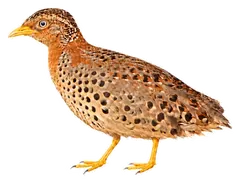 Yellow-legged ButtonquailTurnix tanki
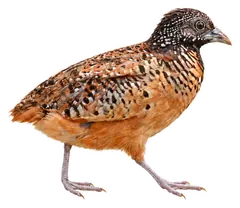 Barred ButtonquailTurnix suscitator
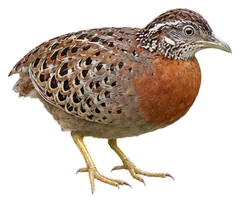 Spotted ButtonquailTurnix ocellatus
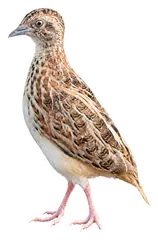 Common ButtonquailTurnix sylvaticus
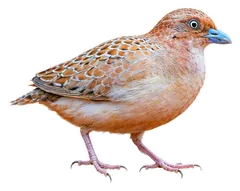 Little ButtonquailTurnix velox
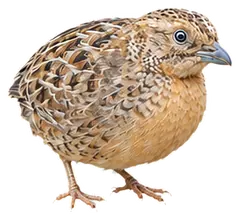 Red-chested ButtonquailTurnix pyrrhothorax
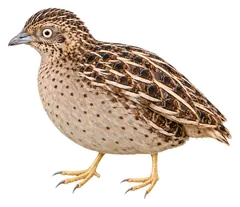 Luzon ButtonquailTurnix worcesteri
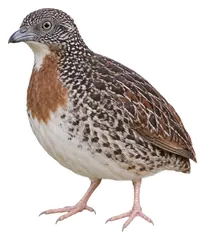 Sumba ButtonquailTurnix everetti
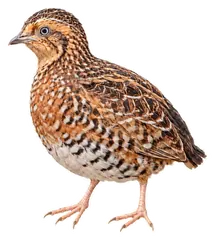 Black-rumped ButtonquailTurnix nanus
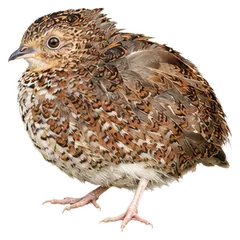 Fynbos ButtonquailTurnix hottentottus
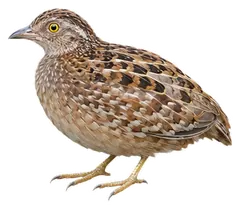 Chestnut-backed ButtonquailTurnix castanotus
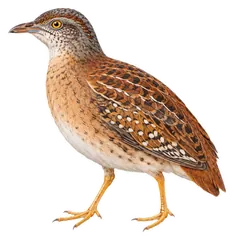 Buff-breasted ButtonquailTurnix olivii
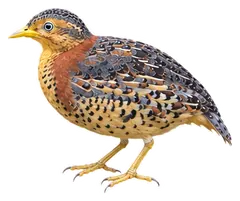
Download illustration
Free to use with credit: “Illustration: Bird Album (birdalbum.com)”. Drawn by AI from a reference photo by Charles Dove. ↗
Heard it but can't see it? Mingji identifies birds by sound and photo, on your phone.
In other languages
- EnglishRed-backed Buttonquail
- 简体中文红背三趾鹑
- 繁體中文紅背三趾鶉
- 日本語アカエリミフウズラ
- DeutschFleckenlaufhühnchen
- FrançaisTurnix moucheté
- EspañolTorillo moteado
- Portuguêstoirão-malhado
- ItalianoQuaglia tridattila dorsorosso
- NederlandsRoodrugvechtkwartel
- РусскийКрасноспинная трёхперстка
- Svenskagråryggig springhöna
- DanskGrårygget Løbehøne
- Polskiprzepiórnik cienkodzioby