 Bird Album
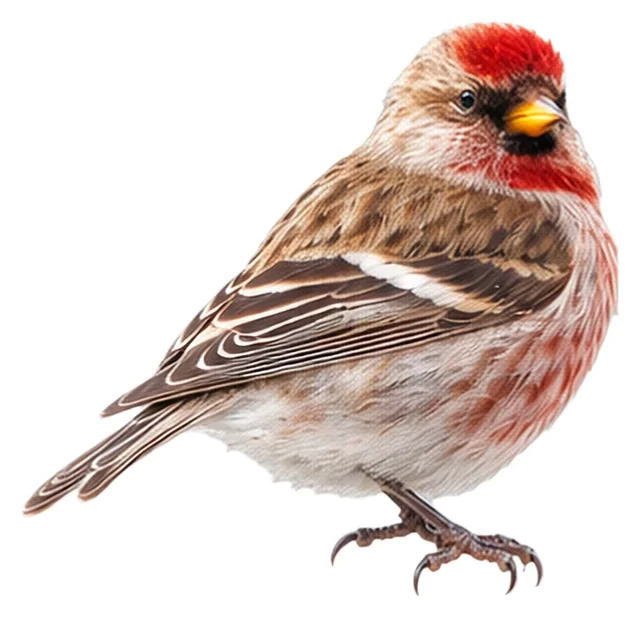
Redpoll
Acanthis flammea (Linnaeus, 1758)
12–14 cmLength23 cmWingspan13 gWeight
This small rufous-gray finch has dark markings, a small bright red spot on the forehead and a black throat.
Busiest months: January–March and November · Most records: Canada, United States, United Kingdom
How to identify
Field marks
- Bright red spots on the forehead
- Throat black
- Two pale wing patches
- Bill pale yellow with a dark tip
Male, female and young
The male often has a reddish wash on the breast.
Where and when it's recorded
Busiest months: January–March and November · Most records: Canada, United States, United Kingdom

Redpoll has been recorded at 1,241 of the 8,276 birding hotspots we track, in 50 countries and regions.
Records by month Northern Hemisphere
Where it's recorded most
- KaldbakstjarnirIceland4,597 records
- GambellUnited States4,041 records
- St. Paul IslandUnited States3,377 records
More places
- RNF du Cap-TourmenteCanada2,484 records
- Algonquin Provincial Park – Visitor CentreCanada2,276 records
- Pointe-au-PèreCanada2,222 records
- Whitefish PointUnited States2,178 records
- Le nichoir des Fréchette!Canada1,807 records
- Jardin botanique de MontréalCanada1,478 records
- La PocatièreCanada1,451 records
Countries and regions with the most records
eBird records via GBIF up to 2024-12-31. A record means someone listed it; more records partly mean more birders, not more birds.
About
The redpoll (Acanthis flammea) is a species of small passerine bird in the finch family Fringillidae. It is the only species placed in the genus Acanthis. It breeds in the Arctic and north temperate Holarctic tundra and taiga.
Excerpt from Wikipedia, CC BY-SA 4.0 · authors · Read more on Wikipedia
Questions
How big is the Redpoll?
The Redpoll is about 12–14 cm long, with a wingspan of 23 cm and weighs around 13 g.
Where does the Redpoll live?
Its breeding range: Palearctic, North America: low (locally high) Arctic to northern temperate Holarctic tundra and taiga: southwestern, southeastern Greenland, Iceland, northern Scandinavia east through northern Russia to Chukotskiy Peninsula, Kamchatka and Sakhalin (eastern Russia). Also temperate western, west-central Palearctic lowland (montane in southern) birch and larch woods: British Isles, southwestern Scandinavia east to northern Germany and southern Poland; southern to southeastern France, Austria and Czech Republic. It is most often recorded in Canada, United States and United Kingdom.
When is the best time to see the Redpoll?
At the hotspots we track, it is recorded most in January, February, March and November (Northern Hemisphere).
Is the Redpoll endangered?
The IUCN Red List classifies the Redpoll as Least Concern.
What does the Redpoll eat?
Main food: Seeds.
What family is the Redpoll in?
It belongs to the family Finches, Euphonias (Fringillidae), order Passerines (Passeriformes).
At a glance
- Length
- 12–14 cm
- Wingspan
- 23 cm
- Weight
- 13 g
- Habitat
- Forest
- Diet
- Seeds
- Lifestyle
- Varied
- Migration
- Partial migrant
- Conservation
- Least Concern
More measurements
- Wing
- 76 mm
- Tail
- 59 mm
- Bill
- 11 mm
- Tarsus
- 16 mm
Averages from the AVONET dataset; length from field guides where available.
Range
Palearctic, North America: low (locally high) Arctic to northern temperate Holarctic tundra and taiga: southwestern, southeastern Greenland, Iceland, northern Scandinavia east through northern Russia to Chukotskiy Peninsula, Kamchatka and Sakhalin (eastern Russia). Also temperate western, west-central Palearctic lowland (montane in southern) birch and larch woods: British Isles, southwestern Scandinavia east to northern Germany and southern Poland; southern to southeastern France, Austria and Czech Republic
Breeding range, IOC World Bird List 15.2
Subspecies · 1
- Acanthis flammea exilipes low (locally high) Arctic tundra birch and willow of n Eurasia, n Alaska and nw Canada | non-breeding: irruptive to c Europe, n China and n USA
Classification
- Order
- Passerines Passeriformes
- Family
- Finches, Euphonias Fringillidae
- Genus
- Acanthis
More from the family Finches, Euphonias
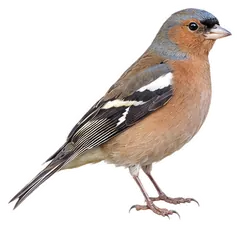 Eurasian ChaffinchFringilla coelebs
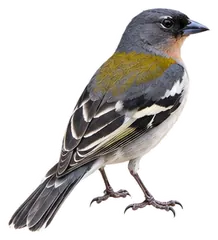 African ChaffinchFringilla spodiogenys
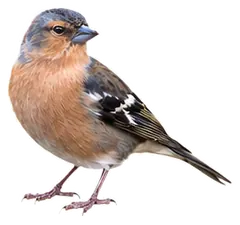 Azores ChaffinchFringilla moreletti
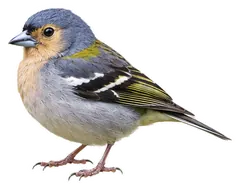 Madeira ChaffinchFringilla maderensis
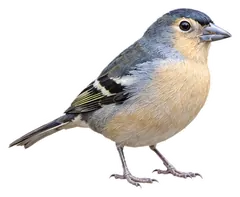 Canary Islands ChaffinchFringilla canariensis
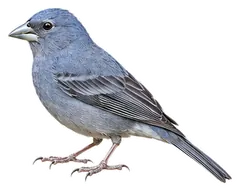 Tenerife Blue ChaffinchFringilla teydea
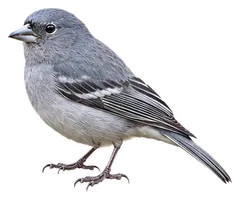 Gran Canaria Blue ChaffinchFringilla polatzeki
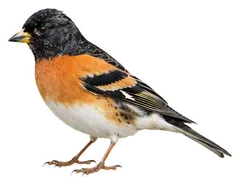 BramblingFringilla montifringilla
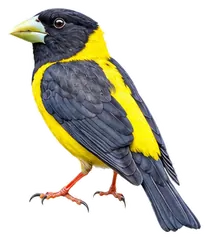 Black-and-yellow GrosbeakMycerobas icterioides
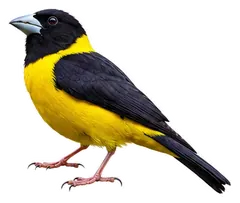 Collared GrosbeakMycerobas affinis
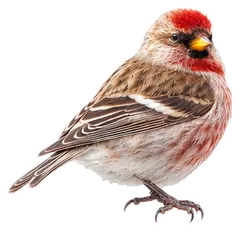
Download illustration
Free to use with credit: “Illustration: Bird Album (birdalbum.com)”. Drawn by AI from a reference photo by Vladimir Kharuk. ↗
Heard it but can't see it? Mingji identifies birds by sound and photo, on your phone.