 Bird Album
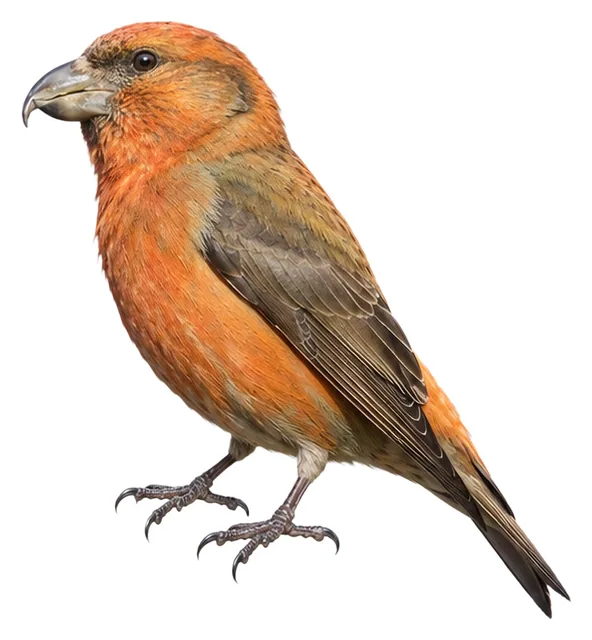
Parrot Crossbill
Loxia pytyopsittacus Borkhausen, 1793
53 gWeight
The parrot crossbill (Loxia pytyopsittacus) is a small passerine bird in the finch family Fringillidae.
Busiest months: October · Most records: Sweden, Finland, Norway
Where and when it's recorded

Parrot Crossbill has been recorded at 87 of the 8,171 birding hotspots we track, in 12 countries and regions.
Records by month Northern Hemisphere
Where it's recorded most
- Falsterbonäset – NabbenSweden71 records
- SkatuddenSweden56 records
- Hel – CypelPoland42 records
More places
- Raahe – PattijokisuuFinland38 records
- UtsiraNorway37 records
- Kirkkonummi – Porkkala PampskatanFinland36 records
- Grenen, SkagenDenmark33 records
- Lista FyrNorway32 records
- Falsterbonäset – Falsterbo fyrSweden30 records
- Kirkkonummi – Porkkala LuotsikärkiFinland28 records
Countries and regions with the most records
eBird records via GBIF up to 2024-12-31. A record means someone listed it; more records partly mean more birders, not more birds.
About
The parrot crossbill (Loxia pytyopsittacus) is a small passerine bird in the finch family Fringillidae. It breeds in pine forests in northern and northeastern Europe.
Excerpt from Wikipedia, CC BY-SA 4.0 · authors · Read more on Wikipedia
Questions
How big is the Parrot Crossbill?
The Parrot Crossbill weighs around 53 g.
Where does the Parrot Crossbill live?
Its breeding range: Palearctic: subarctic to northern temperate northwestern Palearctic in conifers: Scotland (northern British Isles), Scandinavia to and Baltic countries northern Europe to Petchora River region (western Siberia), in southern Lithuania to southwestern Siberia. It is most often recorded in Sweden, Finland and Norway.
When is the best time to see the Parrot Crossbill?
At the hotspots we track, it is recorded most in October (Northern Hemisphere).
Is the Parrot Crossbill endangered?
The IUCN Red List classifies the Parrot Crossbill as Least Concern.
What does the Parrot Crossbill eat?
Main food: Seeds.
What family is the Parrot Crossbill in?
It belongs to the family Finches, Euphonias (Fringillidae), order Passerines (Passeriformes).
At a glance
- Weight
- 53 g
- Habitat
- Forest
- Diet
- Seeds
- Lifestyle
- Perches in trees
- Migration
- Partial migrant
- Conservation
- Least Concern
More measurements
- Wing
- 103 mm
- Tail
- 66 mm
- Bill
- 21 mm
- Tarsus
- 17 mm
Averages from the AVONET dataset; length from field guides where available.
Range
Palearctic: subarctic to northern temperate northwestern Palearctic in conifers: Scotland (northern British Isles), Scandinavia to and Baltic countries northern Europe to Petchora River region (western Siberia), in southern Lithuania to southwestern Siberia
Breeding range, IOC World Bird List 15.2
Classification
- Order
- Passerines Passeriformes
- Family
- Finches, Euphonias Fringillidae
- Genus
- Loxia
Other birds in the genus Loxia
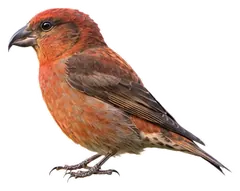 Scottish CrossbillLoxia scotica
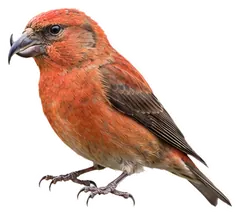 Red CrossbillLoxia curvirostra
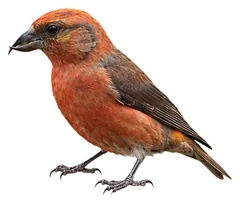 Cassia CrossbillLoxia sinesciuris
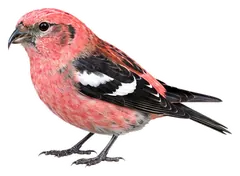 Two-barred CrossbillLoxia leucoptera
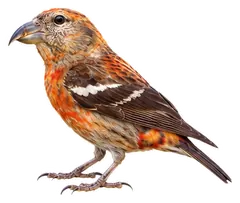 Hispaniolan CrossbillLoxia megaplaga
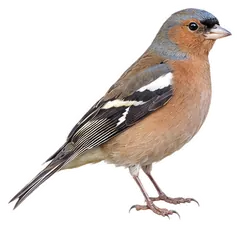 Eurasian ChaffinchFringilla coelebs
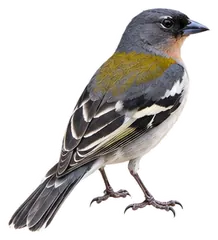 African ChaffinchFringilla spodiogenys
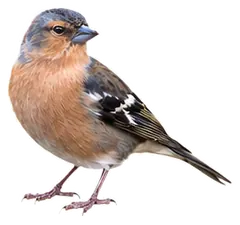 Azores ChaffinchFringilla moreletti
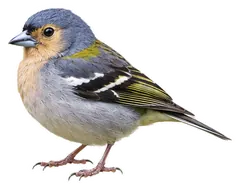 Madeira ChaffinchFringilla maderensis
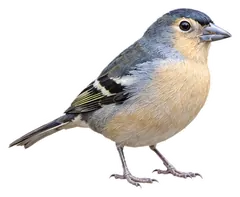 Canary Islands ChaffinchFringilla canariensis
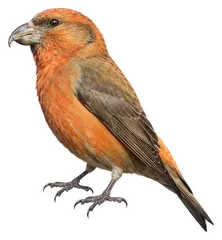
Download illustration
Free to use with credit: “Illustration: Bird Album (birdalbum.com)”. Drawn by AI from a reference photo by Mark Schellekens. ↗
Heard it but can't see it? Mingji identifies birds by sound and photo, on your phone.