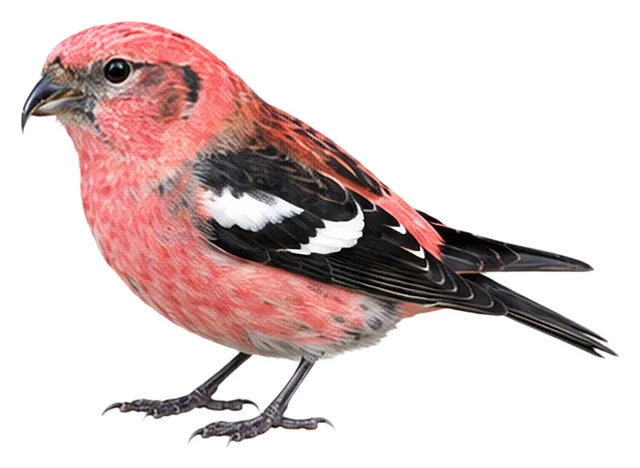
Two-barred Crossbill
Loxia leucoptera Gmelin, JF, 1789
14–17 cmLength29 gWeight
It has crossed upper and lower mandibles and 2 conspicuous white bars on the wings.
Busiest months: August and November · Most records: Canada, United States, China
How to identify
Field marks
- Upper and lower mandibles crossed
- 2 conspicuous white bars on the wings
- Forked tail and short legs and feet
- Tertials have white tips
Male, female and young
Male of the nominate subspecies has a bright raspberry-red head and back; the corresponding areas on the female are greenish-yellow.
Voice
The “chip” call is softer and higher-pitched than that of Red Crossbill.
Where and when it's recorded
Busiest months: August and November · Most records: Canada, United States, China

Two-barred Crossbill has been recorded at 383 of the 8,276 birding hotspots we track, in 17 countries and regions.
Records by month Northern Hemisphere
Where it's recorded most
- Teslin Lake – Teslin Lake Bird ObservatoryCanada1,622 records
- Longridge PointCanada1,506 records
- Dunes de TadoussacCanada1,380 records
More places
- Algonquin Provincial Park – Visitor CentreCanada1,278 records
- TadoussacCanada1,018 records
- Whitefish PointUnited States982 records
- RNF du Cap-TourmenteCanada954 records
- Salisbury Beach State ReservationUnited States922 records
- Little Piskwamish PointCanada897 records
- La PocatièreCanada837 records
Countries and regions with the most records
eBird records via GBIF up to 2024-12-31. A record means someone listed it; more records partly mean more birders, not more birds.
About
The two-barred crossbill or white-winged crossbill (Loxia leucoptera) is a small passerine bird in the finch family Fringillidae. It breeds in the coniferous forests of North America and the Palearctic.
Excerpt from Wikipedia, CC BY-SA 4.0 · authors · Read more on Wikipedia
Questions
How big is the Two-barred Crossbill?
The Two-barred Crossbill is about 14–17 cm long and weighs around 29 g.
Where does the Two-barred Crossbill live?
Its breeding range: Palearctic, North America: subarctic to northern temperate Holarctic conifer forest: eastern Scandinavia through Russia to Sea of Okhotsk, south through south-central Russia, northeastern Mongolia and probably Heilongjiang (far northeastern China); Alaska and Canada (except northern), Rocky Mountains and northern tier of contiguous US states. It is most often recorded in Canada, United States and China.
When is the best time to see the Two-barred Crossbill?
At the hotspots we track, it is recorded most in August and November (Northern Hemisphere).
Is the Two-barred Crossbill endangered?
The IUCN Red List classifies the Two-barred Crossbill as Least Concern.
What does the Two-barred Crossbill eat?
Main food: Omnivore.
What family is the Two-barred Crossbill in?
It belongs to the family Finches, Euphonias (Fringillidae), order Passerines (Passeriformes).
At a glance
- Length
- 14–17 cm
- Weight
- 29 g
- Habitat
- Forest
- Diet
- Omnivore
- Lifestyle
- Perches in trees
- Migration
- Migratory
- Conservation
- Least Concern
More measurements
- Wing
- 89 mm
- Tail
- 59 mm
- Bill
- 19 mm
- Tarsus
- 16 mm
Averages from the AVONET dataset; length from field guides where available.
Range
Palearctic, North America: subarctic to northern temperate Holarctic conifer forest: eastern Scandinavia through Russia to Sea of Okhotsk, south through south-central Russia, northeastern Mongolia and probably Heilongjiang (far northeastern China); Alaska and Canada (except northern), Rocky Mountains and northern tier of contiguous US states
Breeding range, IOC World Bird List 15.2
Subspecies · 1
- Loxia leucoptera bifasciata n Europe to e Siberia and ne China
Classification
- Order
- Passerines Passeriformes
- Family
- Finches, Euphonias Fringillidae
- Genus
- Loxia
Other birds in the genus Loxia
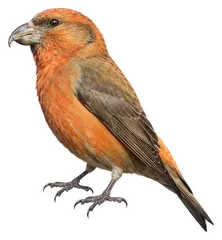 Parrot CrossbillLoxia pytyopsittacus
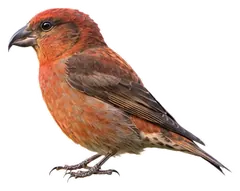 Scottish CrossbillLoxia scotica
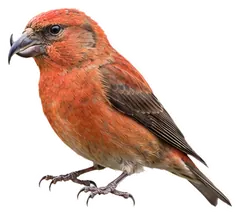 Red CrossbillLoxia curvirostra
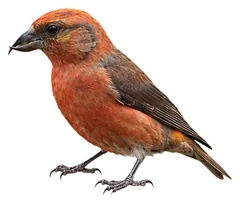 Cassia CrossbillLoxia sinesciuris
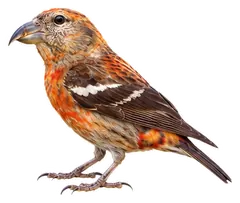 Hispaniolan CrossbillLoxia megaplaga
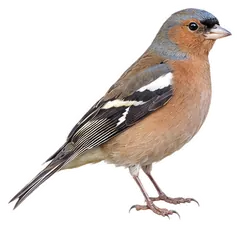 Eurasian ChaffinchFringilla coelebs
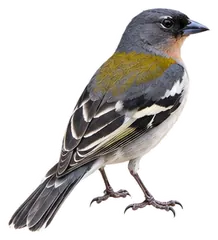 African ChaffinchFringilla spodiogenys
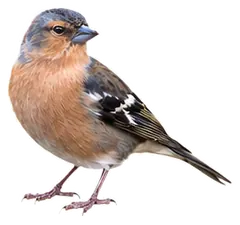 Azores ChaffinchFringilla moreletti
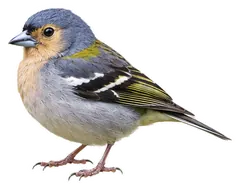 Madeira ChaffinchFringilla maderensis
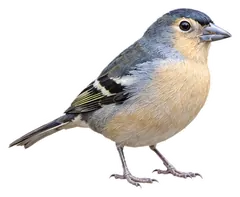 Canary Islands ChaffinchFringilla canariensis
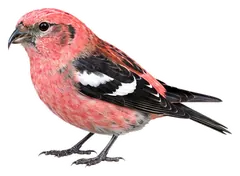
Download illustration
Free to use with credit: “Illustration: Bird Album (birdalbum.com)”. Drawn by AI from a reference photo by edporopat. ↗
Heard it but can't see it? Mingji identifies birds by sound and photo, on your phone.
In other languages
- EnglishTwo-barred Crossbill
- 简体中文白翅交嘴雀
- 繁體中文白翅交嘴雀
- 日本語ナキイスカ
- 한국어흰죽지솔잣새
- DeutschBindenkreuzschnabel
- FrançaisBec-croisé bifascié
- EspañolPiquituerto aliblanco
- Portuguêscruza-bico-listado
- ItalianoCrociere fasciato
- NederlandsWitbandkruisbek
- РусскийБелокрылый клёст
- Svenskabändelkorsnäbb
- DanskHvidvinget Korsnæb
- Polskikrzyżodziób modrzewiowy