 Bird Album
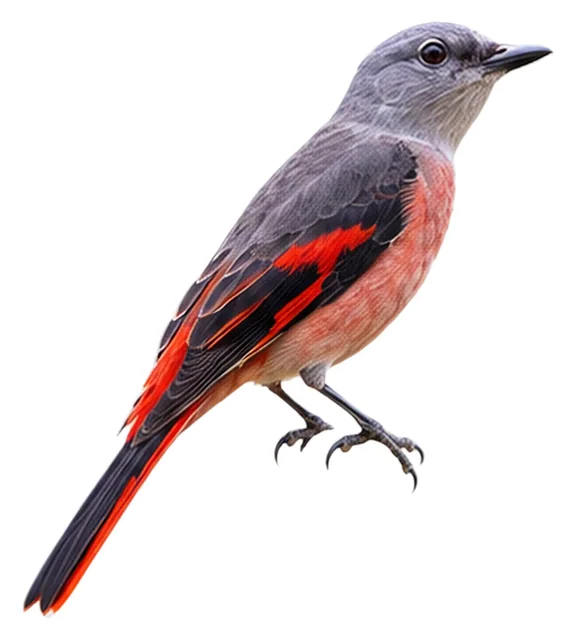
Rosy Minivet
Pericrocotus roseus (Vieillot, 1818)
≈17 cmLength19 gWeight
The male has deep pink on the wings and tail, unlike other minivets.
Busiest months: December–March · Most records: Thailand, India, China
How to identify
Field marks
- Male has deep pink or pale red on the wings and tail
- Female has an olive or olive-yellow rump
- Both sexes have a gray back
Male, female and young
The male has deep pink on the wings and tail; the female has an olive-yellow rump, whereas females of other minivets have a bright yellow rump.
Where and when it's recorded

Rosy Minivet has been recorded at 218 of the 8,171 birding hotspots we track, in 10 countries and regions.
Records by month Northern Hemisphere
Where it's recorded most
- Wildlife Institute of IndiaIndia280 records
- Manas NP – BanasbariIndia263 records
- Khao Yai NPThailand184 records
More places
- Kaeng Krachan NPThailand138 records
- Khao Yai NP – headquarters vicinityThailand127 records
- Satchari NPBangladesh123 records
- Doi Inthanon NPThailand98 records
- Taksin Maharat NP – headquarters vicinityThailand91 records
- Wildlife Institute of India (WII) – Nature Trail & LakeIndia91 records
- Nam Nao NPThailand89 records
Countries and regions with the most records
eBird records via GBIF up to 2024-12-31. A record means someone listed it; more records partly mean more birders, not more birds.
Questions
How big is the Rosy Minivet?
The Rosy Minivet is about ≈17 cm long and weighs around 19 g.
Where does the Rosy Minivet live?
Its breeding range: Oriental: Himalayas to southern China, Myanmar and northwestern Vietnam. It is most often recorded in Thailand, India and China.
When is the best time to see the Rosy Minivet?
At the hotspots we track, it is recorded most in January, February, March and December (Northern Hemisphere).
Is the Rosy Minivet endangered?
The IUCN Red List classifies the Rosy Minivet as Least Concern.
What does the Rosy Minivet eat?
Main food: Insects & other invertebrates.
What family is the Rosy Minivet in?
It belongs to the family Cuckooshrikes (Campephagidae), order Passerines (Passeriformes).
At a glance
- Length
- ≈17 cm
- Weight
- 19 g
- Habitat
- Forest
- Diet
- Insects & other invertebrates
- Lifestyle
- Perches in trees
- Migration
- Resident (barely migrates)
- Conservation
- Least Concern
More measurements
- Wing
- 88 mm
- Tail
- 90 mm
- Bill
- 16 mm
- Tarsus
- 15 mm
Averages from the AVONET dataset; length from field guides where available.
Range
Oriental: Himalayas to southern China, Myanmar and northwestern Vietnam
Breeding range, IOC World Bird List 15.2
Classification
- Order
- Passerines Passeriformes
- Family
- Cuckooshrikes Campephagidae
- Genus
- Pericrocotus
Other birds in the genus Pericrocotus
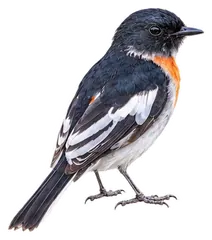 White-bellied MinivetPericrocotus erythropygius
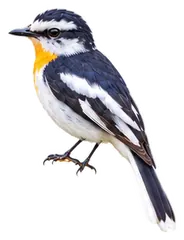 Jerdon's MinivetPericrocotus albifrons
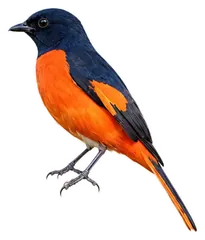 Fiery MinivetPericrocotus igneus
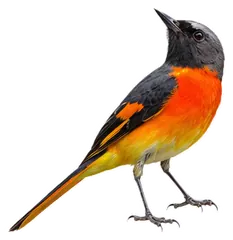 Small MinivetPericrocotus cinnamomeus
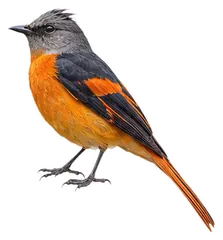 Grey-chinned MinivetPericrocotus solaris
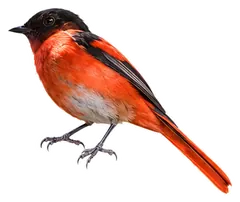 Sunda MinivetPericrocotus miniatus
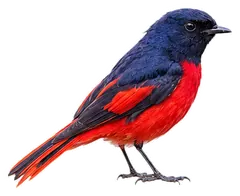 Short-billed MinivetPericrocotus brevirostris
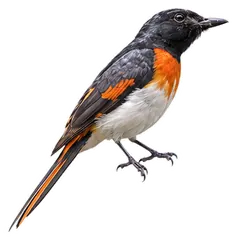 Little MinivetPericrocotus lansbergei
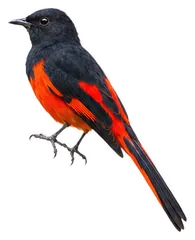 Long-tailed MinivetPericrocotus ethologus
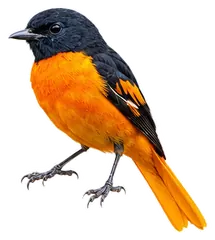 Orange MinivetPericrocotus flammeus
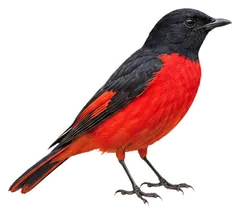 Scarlet MinivetPericrocotus speciosus
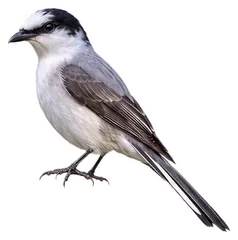 Ashy MinivetPericrocotus divaricatus
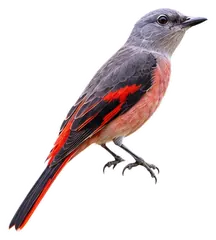
Download illustration
Free to use with credit: “Illustration: Bird Album (birdalbum.com)”. Drawn by AI from reference photos. ↗
Heard it but can't see it? Mingji identifies birds by sound and photo, on your phone.