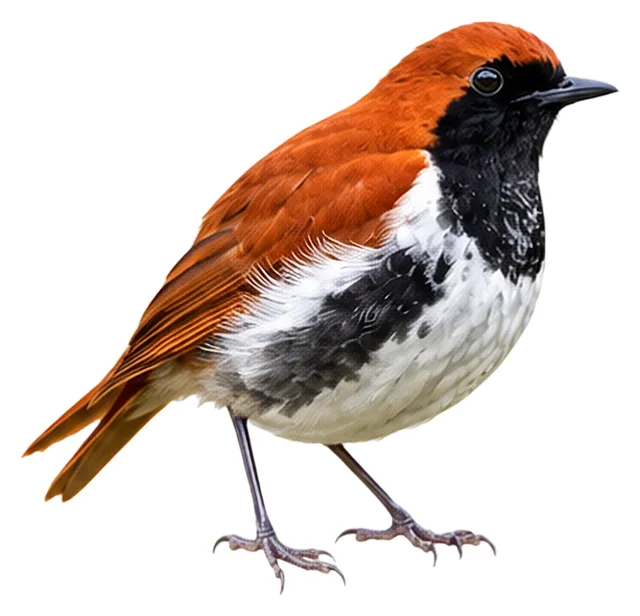
Ryukyu Robin
Larvivora komadori (Temminck, 1835)
≈15 cmLength24 gWeight
The Ryukyu robin (Larvivora komadori) is a bird endemic to the Ryūkyū Islands, of Japan.
Busiest months: April–May · Most records: Japan, China
How to identify
Where and when it's recorded
Busiest months: April–May · Most records: Japan, China

Ryukyu Robin has been recorded at 2 of the 8,276 birding hotspots we track, in 2 countries and regions.
Records by month Northern Hemisphere
Where it's recorded most
- Amami – Tatsugo – Amami Nature ForestJapan355 records
- Yeliu IBATaiwan (China)169 records
Countries and regions with the most records
eBird records via GBIF up to 2024-12-31. A record means someone listed it; more records partly mean more birders, not more birds.
About
The Ryukyu robin (Larvivora komadori) is a bird endemic to the Ryūkyū Islands, of Japan. The Okinawa robin (Larvivora namiyei) previously was considered a subspecies.
Excerpt from Wikipedia, CC BY-SA 4.0 · authors · Read more on Wikipedia
Questions
How big is the Ryukyu Robin?
The Ryukyu Robin is about ≈15 cm long and weighs around 24 g.
Where does the Ryukyu Robin live?
Its breeding range: Palearctic: southwestern Kyushu islets, Tokara Islands, Amami Oshima to Tokumoshima, northern Ryukyu Islands (southern Japan). It is most often recorded in Japan and China.
When is the best time to see the Ryukyu Robin?
At the hotspots we track, it is recorded most in April and May (Northern Hemisphere).
Is the Ryukyu Robin endangered?
The IUCN Red List classifies the Ryukyu Robin as Near Threatened.
What does the Ryukyu Robin eat?
Main food: Omnivore.
What family is the Ryukyu Robin in?
It belongs to the family Chats, Old World Flycatchers (Muscicapidae), order Passerines (Passeriformes).
At a glance
- Length
- ≈15 cm
- Weight
- 24 g
- Habitat
- Forest
- Diet
- Omnivore
- Lifestyle
- Active on the ground
- Migration
- Resident (barely migrates)
- Conservation
- Near Threatened
More measurements
- Wing
- 72 mm
- Tail
- 49 mm
- Bill
- 16 mm
- Tarsus
- 26 mm
Averages from the AVONET dataset; length from field guides where available.
Range
Palearctic: southwestern Kyushu islets, Tokara Islands, Amami Oshima to Tokumoshima, northern Ryukyu Islands (southern Japan)
Breeding range, IOC World Bird List 15.2
Classification
- Order
- Passerines Passeriformes
- Family
- Chats, Old World Flycatchers Muscicapidae
- Genus
- Larvivora
Other birds in the genus Larvivora
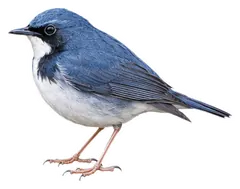 Siberian Blue RobinLarvivora cyane
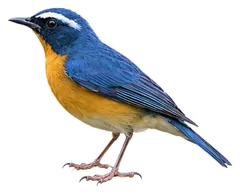 Indian Blue RobinLarvivora brunnea
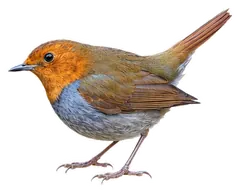 Japanese RobinLarvivora akahige
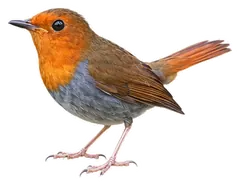 Izu RobinLarvivora tanensis
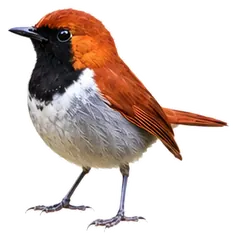 Okinawa RobinLarvivora namiyei
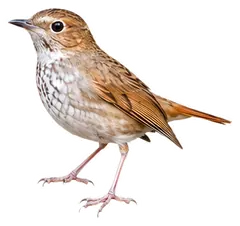 Rufous-tailed RobinLarvivora sibilans
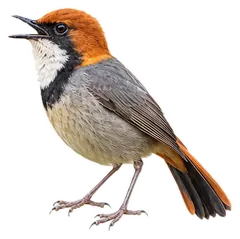 Rufous-headed RobinLarvivora ruficeps
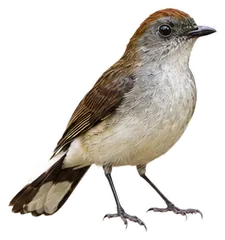 White-tailed AletheAlethe diademata
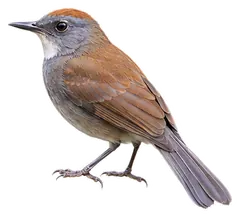 Fire-crested AletheAlethe castanea
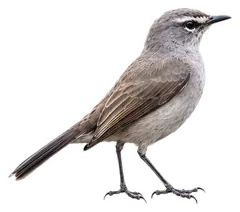 Karoo Scrub RobinTychaedon coryphoeus
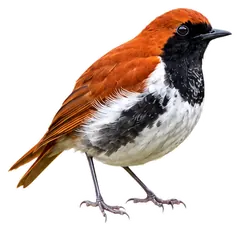
Download illustration
Free to use with credit: “Illustration: Bird Album (birdalbum.com)”. Drawn by AI from a reference photo by nhm_ex. ↗
Heard it but can't see it? Mingji identifies birds by sound and photo, on your phone.