 Bird Album
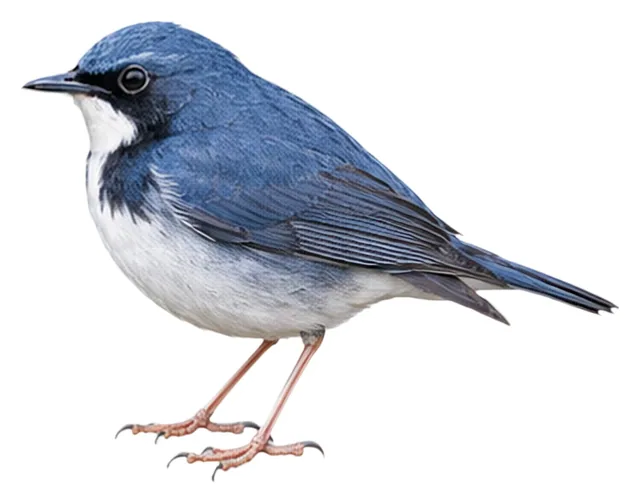
Siberian Blue Robin
Larvivora cyane (Pallas, 1776)
≈13 cmLength15 gWeight
The male has blue upperparts and white underparts during the breeding season, and often hides in scrub at ground level, moving secretively.
Busiest months: May · Most records: Thailand, China, Vietnam
How to identify
Field marks
- Male has blue upperparts and white underparts during the breeding season
- Female has rufous upperparts and nearly white underparts
- Female's dark eyes stand out on a pale rufous face
Male, female and young
Male has blue upperparts and white underparts during the breeding season; female is duller, with rufous upperparts and nearly white underparts.
Where and when it's recorded

Siberian Blue Robin has been recorded at 522 of the 8,171 birding hotspots we track, in 17 countries and regions.
Records by month Northern Hemisphere
Where it's recorded most
- Man Nai IslandThailand484 records
- Cat Tien NPVietnam462 records
- Nanhui DongtanChina379 records
More places
- Khao Yai NPThailand324 records
- Kaeng Krachan NP – Bird's hideThailand269 records
- Deo Nui San passVietnam263 records
- Kaeng Krachan NP – Lung Sin's hideThailand241 records
- Cat Tien National Park – HQVietnam219 records
- Khao Pra – Bang Khram Wildlife Sanctuary / Khao Nor Chu ChiThailand210 records
- Taksin Maharat NP – headquarters vicinityThailand195 records
Countries and regions with the most records
eBird records via GBIF up to 2024-12-31. A record means someone listed it; more records partly mean more birders, not more birds.
About
The Siberian blue robin (Larvivora cyane) is a small passerine bird that was formerly classified as a member of the thrush family, Turdidae, but is now more generally considered to belong to the Old World flycatcher family, Muscicapidae. It and similar small European species are often called chats. Recent research suggests that this species and some other East Asian members of Luscinia should be classified in a new genus, together with the Japanese and Ryūkyū robins.
Excerpt from Wikipedia, CC BY-SA 4.0 · authors · Read more on Wikipedia
Questions
How big is the Siberian Blue Robin?
The Siberian Blue Robin is about ≈13 cm long and weighs around 15 g.
Where does the Siberian Blue Robin live?
Its breeding range: Palearctic: eastern. It is most often recorded in Thailand, China and Vietnam.
When is the best time to see the Siberian Blue Robin?
At the hotspots we track, it is recorded most in May (Northern Hemisphere).
Is the Siberian Blue Robin endangered?
The IUCN Red List classifies the Siberian Blue Robin as Least Concern.
What does the Siberian Blue Robin eat?
Main food: Insects & other invertebrates.
What family is the Siberian Blue Robin in?
It belongs to the family Chats, Old World Flycatchers (Muscicapidae), order Passerines (Passeriformes).
At a glance
- Length
- ≈13 cm
- Weight
- 15 g
- Habitat
- Forest
- Diet
- Insects & other invertebrates
- Lifestyle
- Varied
- Migration
- Migratory
- Conservation
- Least Concern
More measurements
- Wing
- 74 mm
- Tail
- 46 mm
- Bill
- 15 mm
- Tarsus
- 25 mm
Averages from the AVONET dataset; length from field guides where available.
Range
Palearctic: eastern
Breeding range, IOC World Bird List 15.2
Subspecies · 1
- Larvivora cyane cyane e Siberia, ne China and Korea | non-breeding: to Greater Sundas
Classification
- Order
- Passerines Passeriformes
- Family
- Chats, Old World Flycatchers Muscicapidae
- Genus
- Larvivora
Other birds in the genus Larvivora
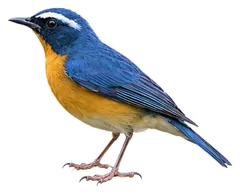 Indian Blue RobinLarvivora brunnea
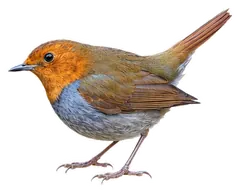 Japanese RobinLarvivora akahige
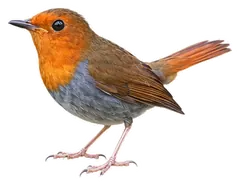 Izu RobinLarvivora tanensis
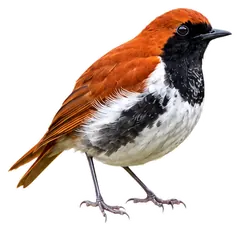 Ryukyu RobinLarvivora komadori
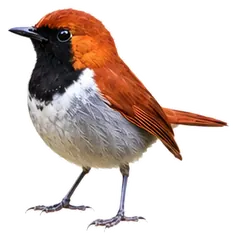 Okinawa RobinLarvivora namiyei
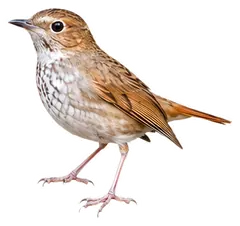 Rufous-tailed RobinLarvivora sibilans
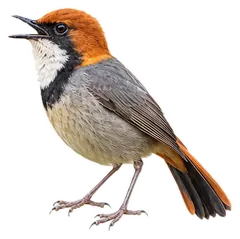 Rufous-headed RobinLarvivora ruficeps
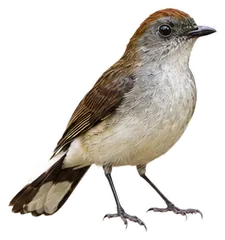 White-tailed AletheAlethe diademata
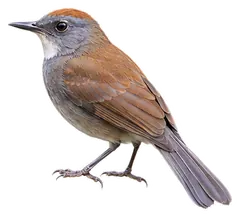 Fire-crested AletheAlethe castanea
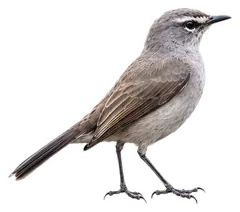 Karoo Scrub RobinTychaedon coryphoeus
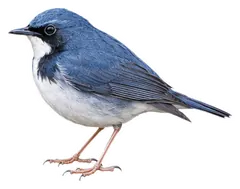
Download illustration
Free to use with credit: “Illustration: Bird Album (birdalbum.com)”. Drawn by AI from a reference photo by JJ Harrison (https://www.jjharrison.com.au/). ↗

Heard it but can't see it? Mingji identifies birds by sound and photo, on your phone.