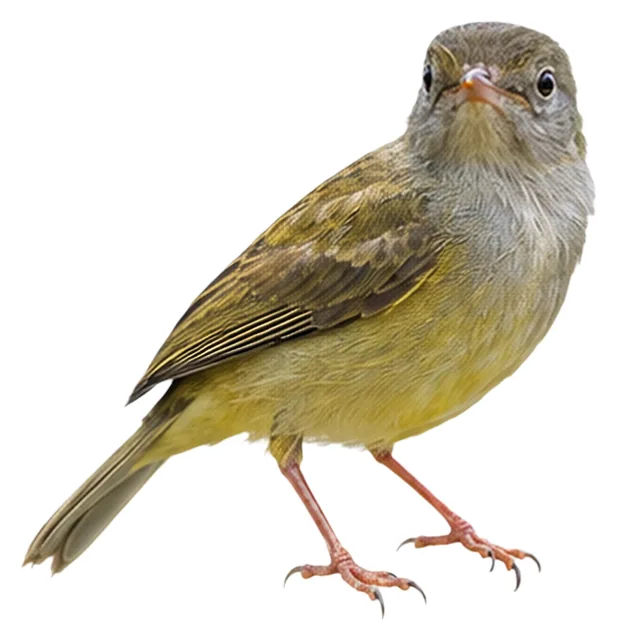
Scrub Greenlet
Hylophilus flavipes Lafresnaye, 1845
10–12 cmLength12 gWeight
The scrub greenlet (Hylophilus flavipes) is a small passerine bird in the family Vireonidae, the vireos, greenlets, and shrike-babblers.
Busiest months: March · Most records: Colombia, Panama, Venezuela
Where and when it's recorded
Busiest months: March · Most records: Colombia, Panama, Venezuela

Scrub Greenlet has been recorded at 161 of the 8,276 birding hotspots we track, in 5 countries and regions.
Records by month Northern Hemisphere
Where it's recorded most
- Ammo Dump PondsPanama1,792 records
- Quebrada grande san antonio del tequendamaColombia840 records
- Hacienda El Escobal, TolimaColombia800 records
More places
- Laguna El TabacalColombia560 records
- PandionColombia469 records
- Paraíso Birding ParadisePanama450 records
- CaicaguanaVenezuela422 records
- El EncantadoVenezuela334 records
- Carretera a Juan HombrónPanama334 records
- Refugio de las aves - La PiñuelaColombia323 records
Countries and regions with the most records
eBird records via GBIF up to 2024-12-31. A record means someone listed it; more records partly mean more birders, not more birds.
About
The scrub greenlet (Hylophilus flavipes) is a small passerine bird in the family Vireonidae, the vireos, greenlets, and shrike-babblers. It is found in Colombia, Costa Rica, Panama, Tobago, and Venezuela.
Excerpt from Wikipedia, CC BY-SA 4.0 · authors · Read more on Wikipedia
Questions
How big is the Scrub Greenlet?
The Scrub Greenlet is about 10–12 cm long and weighs around 12 g.
Where does the Scrub Greenlet live?
Its breeding range: Middle America, South America: Costa Rica to northern Venezuela. It is most often recorded in Colombia, Panama and Venezuela.
When is the best time to see the Scrub Greenlet?
At the hotspots we track, it is recorded most in March (Northern Hemisphere).
Is the Scrub Greenlet endangered?
The IUCN Red List classifies the Scrub Greenlet as Least Concern.
What does the Scrub Greenlet eat?
Main food: Insects & other invertebrates.
What family is the Scrub Greenlet in?
It belongs to the family Vireos, Greenlets, Shrike-babblers (Vireonidae), order Passerines (Passeriformes).
At a glance
- Length
- 10–12 cm
- Weight
- 12 g
- Habitat
- Shrubland
- Diet
- Insects & other invertebrates
- Lifestyle
- Perches in trees
- Migration
- Resident (barely migrates)
- Conservation
- Least Concern
More measurements
- Wing
- 56 mm
- Tail
- 45 mm
- Bill
- 14 mm
- Tarsus
- 20 mm
Averages from the AVONET dataset; length from field guides where available.
Range
Middle America, South America: Costa Rica to northern Venezuela
Breeding range, IOC World Bird List 15.2
Classification
- Order
- Passerines Passeriformes
- Family
- Vireos, Greenlets, Shrike-babblers Vireonidae
- Genus
- Hylophilus
Other birds in the genus Hylophilus
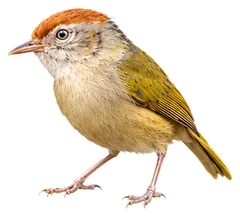 Grey-eyed GreenletHylophilus amaurocephalus
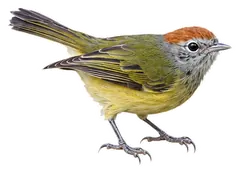 Rufous-crowned GreenletHylophilus poicilotis
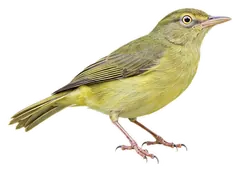 Olivaceous GreenletHylophilus olivaceus
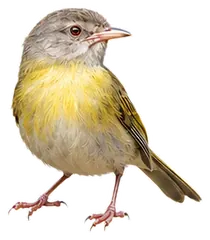 Ashy-headed GreenletHylophilus pectoralis
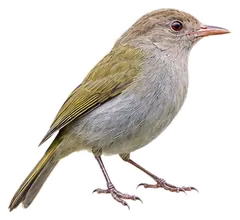 Brown-headed GreenletHylophilus brunneiceps
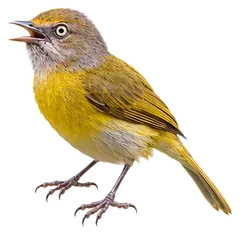 Lemon-chested GreenletHylophilus thoracicus
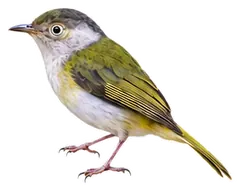 Grey-chested GreenletHylophilus semicinereus
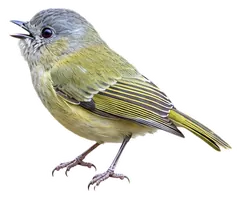 Green Shrike-babblerPteruthius xanthochlorus
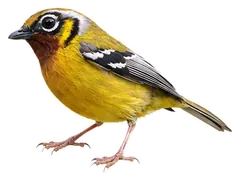 Black-eared Shrike-babblerPteruthius melanotis
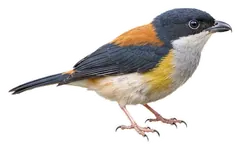 Black-headed Shrike-babblerPteruthius rufiventer
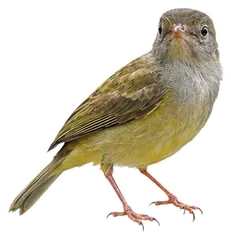
Download illustration
Free to use with credit: “Illustration: Bird Album (birdalbum.com)”. Drawn by AI from a reference photo by Christoph Moning. ↗
Heard it but can't see it? Mingji identifies birds by sound and photo, on your phone.