Siberian Sand Plover
Anarhynchus mongolus (Pallas, 1776)
52 cmWingspan
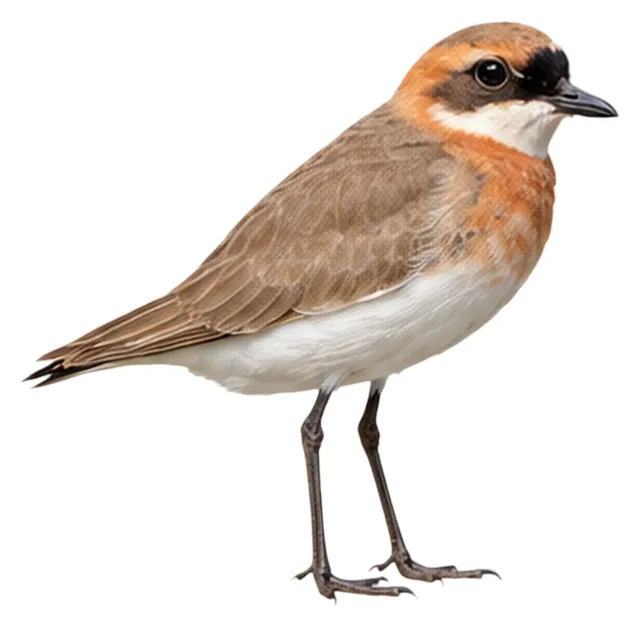
This stout, long-legged sand plover has a chestnut breast and nape and a black mask in the male during the breeding season.
Looks like Greater Sand Plover
How to identify
Field marks
- Male has a chestnut breast and nape in the breeding season
- Male has a black mask in the breeding season
- Gray back and white belly
- Dark legs and feet; black bill
Male, female and young
The female is duller; winter plumage and juveniles lack chestnut, with only a slight reddish-brown tinge on the head.
Voice
A hard trill in flight.
Similar species
Where and when it's recorded
No records at the public birding hotspots we track. It may be rare, remote, or its locations protected.
Questions
Where does the Siberian Sand Plover live?
Its breeding range: Palearctic: eastern Russia (southern, southeastern Siberia).
Is the Siberian Sand Plover endangered?
The IUCN Red List classifies the Siberian Sand Plover as Endangered.
What family is the Siberian Sand Plover in?
It belongs to the family Plovers (Charadriidae), order Charadriiformes.
At a glance
- Wingspan
- 52 cm
- Conservation
- Endangered
Range
Palearctic: eastern Russia (southern, southeastern Siberia)
Breeding range, IOC World Bird List 15.2
Subspecies · 1
- Anarhynchus mongolus mongolus Sea of Okhotsk to Ussuriland (se Siberia) | non-breeding: coastal Taiwan (China), Vietnam to New Guinea region and Australia (except s and Tasmania)
Classification
- Order
- Charadriiformes
- Family
- Plovers Charadriidae
- Genus
- Anarhynchus
Other birds in the genus Anarhynchus
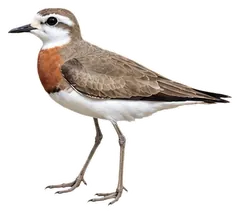 Caspian PloverAnarhynchus asiaticus
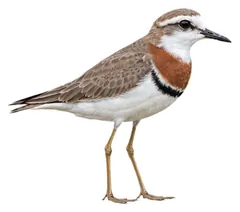 Oriental PloverAnarhynchus veredus
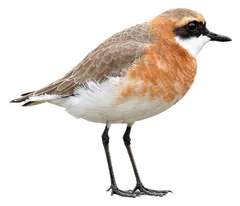 Tibetan Sand PloverAnarhynchus atrifrons
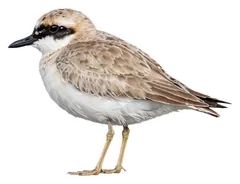 Greater Sand PloverAnarhynchus leschenaultii
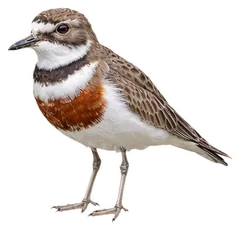 Double-banded PloverAnarhynchus bicinctus
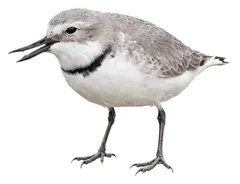 WrybillAnarhynchus frontalis
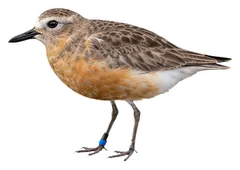 New Zealand PloverAnarhynchus obscurus
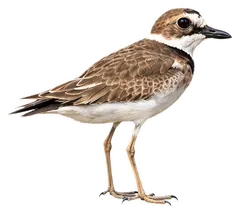 Wilson's PloverAnarhynchus wilsonia
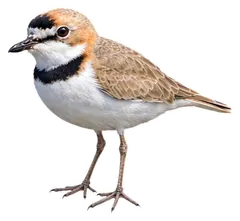 Collared PloverAnarhynchus collaris
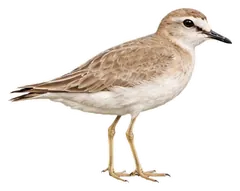 Mountain PloverAnarhynchus montanus
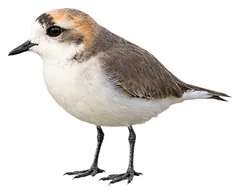 Puna PloverAnarhynchus alticola
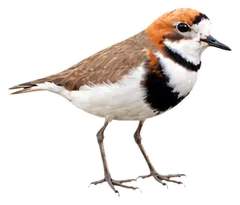 Two-banded PloverAnarhynchus falklandicus
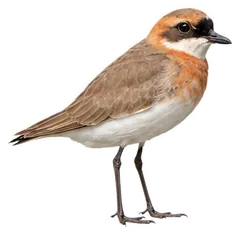
Download illustration
Free to use with credit: “Illustration: Bird Album (birdalbum.com)”. Drawn by AI from a reference photo by Vedant Raju Kasambe. ↗

Heard it but can't see it? Mingji identifies birds by sound and photo, on your phone.
In other languages
- EnglishSiberian Sand Plover
- 简体中文蒙古沙鸻
- 繁體中文蒙古鴴
- 日本語メダイチドリ
- 한국어왕눈물떼새
- DeutschMongolenregenpfeifer
- FrançaisPluvier de Mongolie
- EspañolChorlitejo mongol chico
- Portuguêsborrelho-mongol
- ItalianoCorriere mongolo
- NederlandsMongoolse Plevier
- РусскийМонгольский зуёк
- Svenskakamtjatkapipare
- DanskMongolsk Præstekrave
- Polskisieweczka syberyjska