 Bird Album
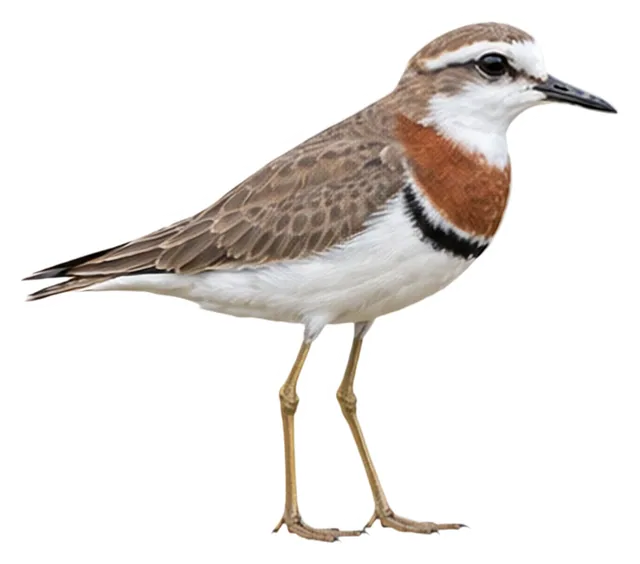
Oriental Plover
Anarhynchus veredus (Gould, 1848)
50 cmWingspan
It is rather large among red-breasted plovers, with relatively long legs and wings and a broad chestnut breast-band in the breeding male.
Most records: China, Australia, Indonesia
How to identify
Field marks
- Breeding male has a white face, throat and forecrown
- Gray-rufous hindcrown, nape and back
- Breeding male has a narrow black band below the chestnut breast-band
- Relatively long legs and wings
Male, female and young
Females, juveniles and non-breeding males have gray-rufous upperparts, a white belly, a pale face and a white stripe above the eye.
Where and when it's recorded

Oriental Plover has been recorded at 211 of the 8,171 birding hotspots we track, in 19 countries and regions.
Records by month Northern Hemisphere
Where it's recorded most
- Roebuck Plains StationAustralia145 records
- Taylors LagoonAustralia138 records
- Katherine Wastewater Treatment PlantAustralia95 records
More places
- Lake EdaAustralia94 records
- Mai Po Nature ReserveHong Kong (China)89 records
- Matsu – Dongyin PlaygroundChina77 records
- Penghu – Jibei IslandTaiwan (China)71 records
- Matsu – DongyinChina68 records
- Ma ChangChina66 records
- Taipei – Tianliaoyang WetlandTaiwan (China)60 records
Countries and regions with the most records
eBird records via GBIF up to 2024-12-31. A record means someone listed it; more records partly mean more birders, not more birds.
About
The oriental plover (Anarhynchus veredus), also known as the oriental dotterel, is a medium-sized plover closely related to the Caspian plover. It breeds in parts of Mongolia and China, migrating southwards each year to spend its non-breeding season in Indonesia, New Guinea and northern Australia.
Excerpt from Wikipedia, CC BY-SA 4.0 · authors · Read more on Wikipedia
Questions
Where does the Oriental Plover live?
Its breeding range: Palearctic: temperate inland East Asia: southern Tuva and southern Transbaikalia (north of Mongolia, south-central Siberia), Mongolia (except far western, southern) and western Inner Mongolia (north-central China). It is most often recorded in China, Australia and Indonesia.
Is the Oriental Plover endangered?
The IUCN Red List classifies the Oriental Plover as Least Concern.
What family is the Oriental Plover in?
It belongs to the family Plovers (Charadriidae), order Charadriiformes.
At a glance
- Wingspan
- 50 cm
- Conservation
- Least Concern
Range
Palearctic: temperate inland East Asia: southern Tuva and southern Transbaikalia (north of Mongolia, south-central Siberia), Mongolia (except far western, southern) and western Inner Mongolia (north-central China)
Breeding range, IOC World Bird List 15.2
Classification
- Order
- Charadriiformes
- Family
- Plovers Charadriidae
- Genus
- Anarhynchus
Other birds in the genus Anarhynchus
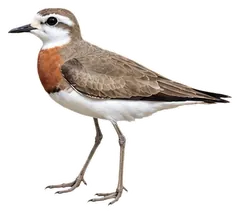 Caspian PloverAnarhynchus asiaticus
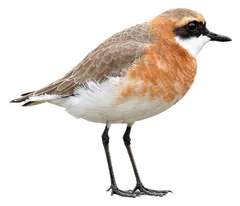 Tibetan Sand PloverAnarhynchus atrifrons
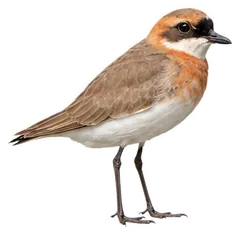 Siberian Sand PloverAnarhynchus mongolus
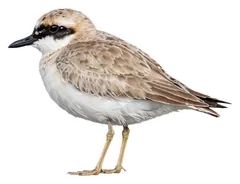 Greater Sand PloverAnarhynchus leschenaultii
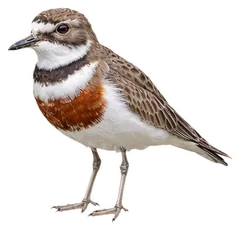 Double-banded PloverAnarhynchus bicinctus
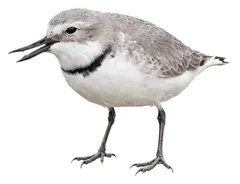 WrybillAnarhynchus frontalis
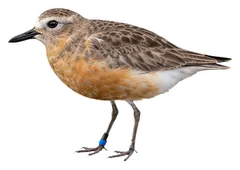 New Zealand PloverAnarhynchus obscurus
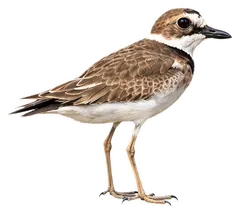 Wilson's PloverAnarhynchus wilsonia
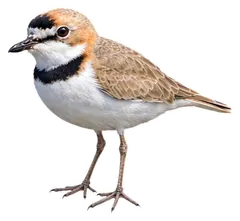 Collared PloverAnarhynchus collaris
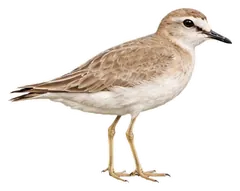 Mountain PloverAnarhynchus montanus
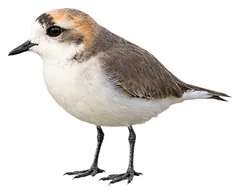 Puna PloverAnarhynchus alticola
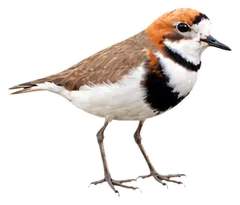 Two-banded PloverAnarhynchus falklandicus
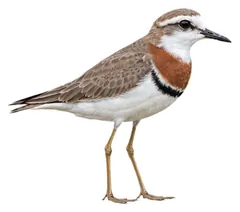
Download illustration
Free to use with credit: “Illustration: Bird Album (birdalbum.com)”. Drawn by AI from a reference photo by Ron Knight. ↗

Heard it but can't see it? Mingji identifies birds by sound and photo, on your phone.