 Bird Album
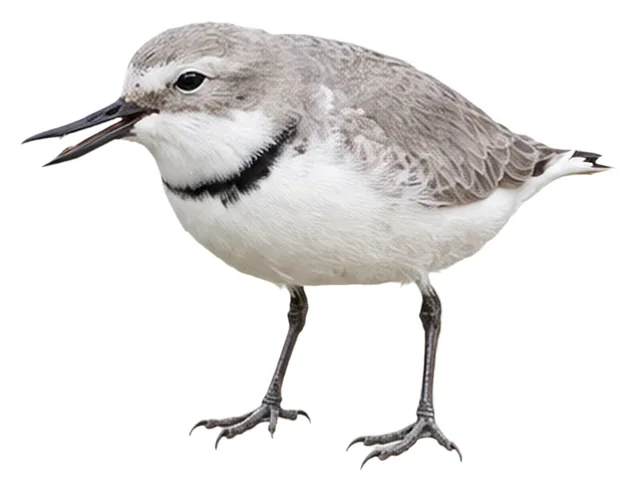
Wrybill
Anarhynchus frontalis Quoy & Gaimard, 1832
58 gWeight
The wrybill or wrybill plover (Anarhynchus frontalis) (Māori: ngutuparore) is a species of plover endemic to New Zealand.
Busiest months: January · Most records: New Zealand
Where and when it's recorded

Wrybill has been recorded at 46 of the 8,171 birding hotspots we track, in 1 country or region.
Records by month Southern Hemisphere
Where it's recorded most
- Miranda – main hide/LimeworksNew Zealand1,384 records
- Miranda Shorebird CentreNew Zealand897 records
- Miranda – 'Stilt Hide' & poolsNew Zealand667 records
More places
- Foxton Beach – Manawatu estuaryNew Zealand507 records
- Manukau Harbour – Kidd's ShellbanksNew Zealand463 records
- Ambury Regional Park – Shell IslandNew Zealand427 records
- Miranda – Ray's Rest/Taramaire Creek mouthNew Zealand421 records
- Lake Ellesmere (Te Waihora) – Embankment RoadNew Zealand410 records
- Ambury Regional Park – Viewing Hide shellbankNew Zealand385 records
- Ashley Estuary south endNew Zealand346 records
Countries and regions with the most records
eBird records via GBIF up to 2024-12-31. A record means someone listed it; more records partly mean more birders, not more birds.
About
The wrybill or wrybill plover (Anarhynchus frontalis) (Māori: ngutuparore) is a species of plover endemic to New Zealand. It is the only species of bird in the world with a beak that is bent sideways in one direction, always to the right (in the crossbills, e.g. Loxia pytyopsittacus, the tips of the upper and lower mandibles cross because they are bent sideways in opposite directions, sometimes left over right and sometimes right over left).
Excerpt from Wikipedia, CC BY-SA 4.0 · authors · Read more on Wikipedia
Questions
How big is the Wrybill?
The Wrybill weighs around 58 g.
Where does the Wrybill live?
Its breeding range: Australasia: rivers of South Island (New Zealand). It is most often recorded in New Zealand.
When is the best time to see the Wrybill?
At the hotspots we track, it is recorded most in January (Southern Hemisphere).
Is the Wrybill endangered?
The IUCN Red List classifies the Wrybill as Vulnerable.
What does the Wrybill eat?
Main food: Fish, shrimp & shellfish.
What family is the Wrybill in?
It belongs to the family Plovers (Charadriidae), order Charadriiformes.
At a glance
- Weight
- 58 g
- Habitat
- Rivers & streams
- Diet
- Fish, shrimp & shellfish
- Lifestyle
- Active on the ground
- Migration
- Partial migrant
- Conservation
- Vulnerable
More measurements
- Wing
- 120 mm
- Tail
- 46 mm
- Bill
- 32 mm
- Tarsus
- 32 mm
Averages from the AVONET dataset; length from field guides where available.
Range
Australasia: rivers of South Island (New Zealand)
Breeding range, IOC World Bird List 15.2
Classification
- Order
- Charadriiformes
- Family
- Plovers Charadriidae
- Genus
- Anarhynchus
Other birds in the genus Anarhynchus
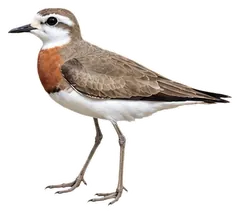 Caspian PloverAnarhynchus asiaticus
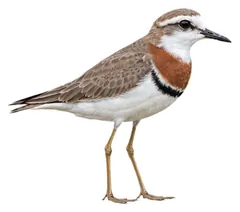 Oriental PloverAnarhynchus veredus
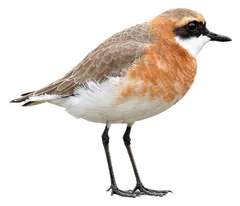 Tibetan Sand PloverAnarhynchus atrifrons
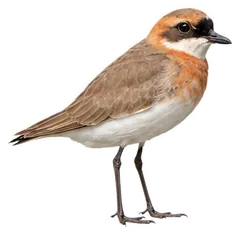 Siberian Sand PloverAnarhynchus mongolus
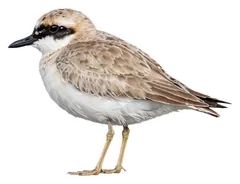 Greater Sand PloverAnarhynchus leschenaultii
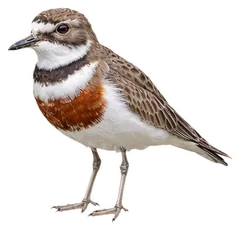 Double-banded PloverAnarhynchus bicinctus
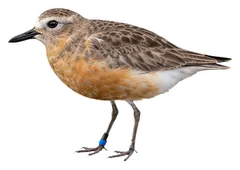 New Zealand PloverAnarhynchus obscurus
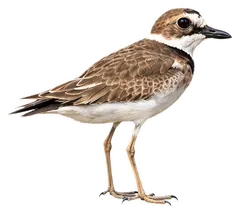 Wilson's PloverAnarhynchus wilsonia
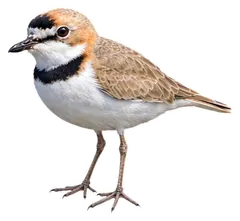 Collared PloverAnarhynchus collaris
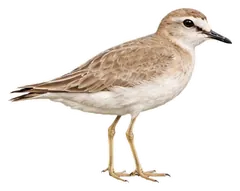 Mountain PloverAnarhynchus montanus
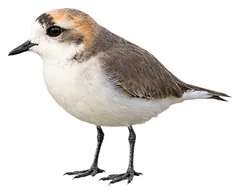 Puna PloverAnarhynchus alticola
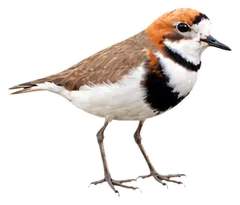 Two-banded PloverAnarhynchus falklandicus
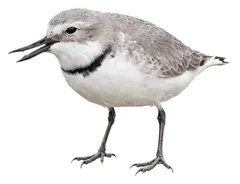
Download illustration
Free to use with credit: “Illustration: Bird Album (birdalbum.com)”. Drawn by AI from a reference photo by Ben Ackerley. ↗
Heard it but can't see it? Mingji identifies birds by sound and photo, on your phone.