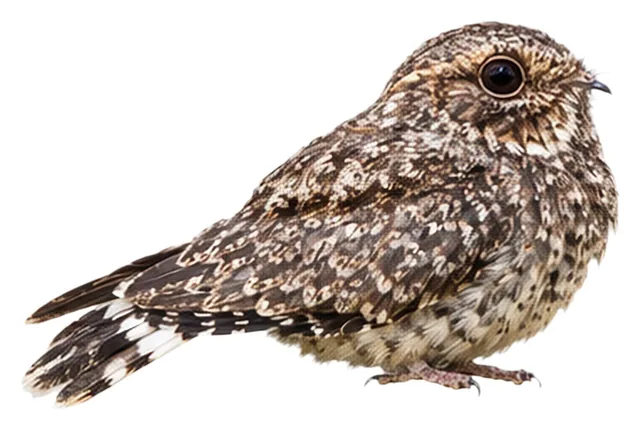
Sickle-winged Nightjar
Eleothreptus anomalus (Gould, 1838)
44 gWeight
The sickle-winged nightjar (Eleothreptus anomalus) is a species of nightjar in the family Caprimulgidae.
Busiest months: October · Most records: Argentina, Paraguay, Brazil
Where and when it's recorded
Busiest months: October · Most records: Argentina, Paraguay, Brazil

Sickle-winged Nightjar has been recorded at 10 of the 8,276 birding hotspots we track, in 3 countries and regions.
Records by month Southern Hemisphere
Where it's recorded most
- Parque Federal Campo San JuanArgentina51 records
- Yacyreta, ItapúaParaguay33 records
- PN Serra da CanastraBrazil18 records
More places
- Reserva Natural Don LuisArgentina17 records
- Fazenda Água LimpaBrazil14 records
- PN MburucuyáArgentina8 records
- Reserva UrutaúArgentina8 records
- Parque Nacional San Rafael, Dptos. Itapúa y CaazapáParaguay6 records
- PN Iberá – Portal CambyretáArgentina2 records
- Ea. Rincón del SocorroArgentina1 record
Countries and regions with the most records
eBird records via GBIF up to 2024-12-31. A record means someone listed it; more records partly mean more birders, not more birds.
About
The sickle-winged nightjar (Eleothreptus anomalus) is a species of nightjar in the family Caprimulgidae. It is found in Argentina, Brazil, Paraguay and possibly Uruguay.
Excerpt from Wikipedia, CC BY-SA 4.0 · authors · Read more on Wikipedia
Questions
How big is the Sickle-winged Nightjar?
The Sickle-winged Nightjar weighs around 44 g.
Where does the Sickle-winged Nightjar live?
Its breeding range: South America: southeastern Brazil; southeastern Paraguay to central Argentina and Uruguay. It is most often recorded in Argentina, Paraguay and Brazil.
When is the best time to see the Sickle-winged Nightjar?
At the hotspots we track, it is recorded most in October (Southern Hemisphere).
Is the Sickle-winged Nightjar endangered?
The IUCN Red List classifies the Sickle-winged Nightjar as Vulnerable.
What does the Sickle-winged Nightjar eat?
Main food: Insects & other invertebrates.
What family is the Sickle-winged Nightjar in?
It belongs to the family Nightjars (Caprimulgidae), order Caprimulgiformes.
At a glance
- Weight
- 44 g
- Habitat
- Woodland
- Diet
- Insects & other invertebrates
- Lifestyle
- Feeds in the air
- Migration
- Resident (barely migrates)
- Conservation
- Vulnerable
More measurements
- Wing
- 129 mm
- Tail
- 72 mm
- Bill
- 20 mm
- Tarsus
- 19 mm
Averages from the AVONET dataset; length from field guides where available.
Range
South America: southeastern Brazil; southeastern Paraguay to central Argentina and Uruguay
Breeding range, IOC World Bird List 15.2
Classification
- Order
- Caprimulgiformes
- Family
- Nightjars Caprimulgidae
- Genus
- Eleothreptus
Other birds in the genus Eleothreptus
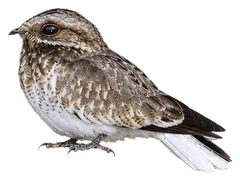 White-winged NightjarEleothreptus candicans
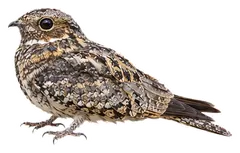 Spotted NightjarEurostopodus argus
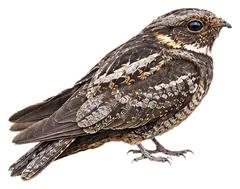 White-throated NightjarEurostopodus mystacalis
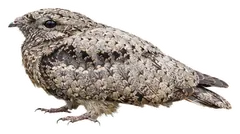 Solomons NightjarEurostopodus nigripennis
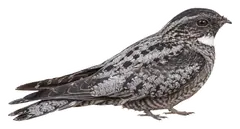 New Caledonian NightjarEurostopodus exul
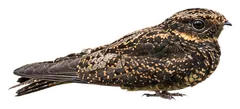 Satanic NightjarEurostopodus diabolicus
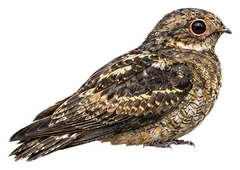 Papuan NightjarEurostopodus papuensis
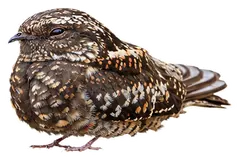 Archbold's NightjarEurostopodus archboldi
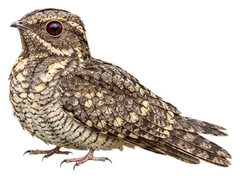 Malaysian Eared NightjarLyncornis temminckii
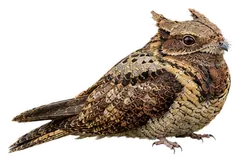 Great Eared NightjarLyncornis macrotis
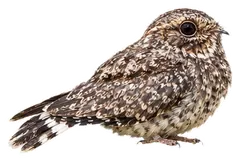
Download illustration
Free to use with credit: “Illustration: Bird Album (birdalbum.com)”. Drawn by AI from a reference photo by PALUDO, Francisco. ↗
Heard it but can't see it? Mingji identifies birds by sound and photo, on your phone.
In other languages
- EnglishSickle-winged Nightjar
- 简体中文镰翅夜鹰
- 繁體中文鐮翅夜鷹
- 日本語カマバネヨタカ
- DeutschSichelschwingen-Nachtschwalbe
- FrançaisEngoulevent à faucilles
- EspañolChotacabras pantanero
- Portuguêscuriango-do-banhado
- ItalianoSucciacapre alifalcate
- NederlandsSikkelvleugelnachtzwaluw
- РусскийСерпокрылый козодой
- Svenskalievingad nattskärra
- DanskSeglvinge
- Polskilelkowiec sierposkrzydły