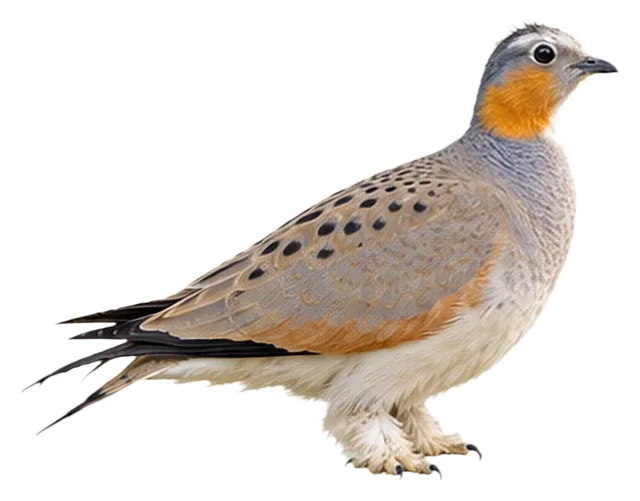
Tibetan Sandgrouse
Syrrhaptes tibetanus Gould, 1850
30–41 cmLength344 gWeight
It has an orange face and white belly, revealing black underwings in flight.
Most records: China
Looks like Pallas's Sandgrouse
How to identify
Field marks
- Face orange
- Breast, neck and crown gray with fine barring
- Belly white, underwings black
- Wings long and pointed, tail tip slender
Male, female and young
Male wings pale yellowish-brown and unmarked; female wing coverts barred. Juvenile lacks the slender tail tip and has less orange on the face.
Voice
Repeated ringing, two-syllable calls in flight.
Similar species
Where and when it's recorded
Most records: China

Tibetan Sandgrouse has been recorded at 7 of the 8,276 birding hotspots we track, in 1 country or region.
Records by month Northern Hemisphere
Where it's recorded most
- E'La Mountain PassChina15 records
- Wild Yak GorgeChina9 records
- Bayankala PassChina2 records
More places
- Namtso LakeChina2 records
- Przevalski’s SiteChina2 records
- Yushu Airport & VicinityChina1 record
- AngsaiChina1 record
Countries and regions with the most records
eBird records via GBIF up to 2024-12-31. A record means someone listed it; more records partly mean more birders, not more birds.
About
The Tibetan sandgrouse (Syrrhaptes tibetanus) is a large bird in the sandgrouse family. The genus name Syrrhaptes is from Ancient Greek surrhaptos, "sewn together" (the feathered toes of this sandgrouse are fused together) and tibetanus is from the type locality, Tibet.
Excerpt from Wikipedia, CC BY-SA 4.0 · authors · Read more on Wikipedia
Questions
How big is the Tibetan Sandgrouse?
The Tibetan Sandgrouse is about 30–41 cm long and weighs around 344 g.
Where does the Tibetan Sandgrouse live?
Its breeding range: Palearctic: Tajikistan through Tibet to west-central China. It is most often recorded in China.
Is the Tibetan Sandgrouse endangered?
The IUCN Red List classifies the Tibetan Sandgrouse as Least Concern.
What does the Tibetan Sandgrouse eat?
Main food: Land plants.
What family is the Tibetan Sandgrouse in?
It belongs to the family Sandgrouse (Pteroclidae), order Pterocliformes.
At a glance
- Length
- 30–41 cm
- Weight
- 344 g
- Habitat
- Desert
- Diet
- Land plants
- Lifestyle
- Active on the ground
- Migration
- Partial migrant
- Conservation
- Least Concern
More measurements
- Wing
- 249 mm
- Tail
- 174 mm
- Bill
- 17 mm
- Tarsus
- 23 mm
Averages from the AVONET dataset; length from field guides where available.
Range
Palearctic: Tajikistan through Tibet to west-central China
Breeding range, IOC World Bird List 15.2
Classification
- Order
- Pterocliformes
- Family
- Sandgrouse Pteroclidae
- Genus
- Syrrhaptes
Other birds in the genus Syrrhaptes
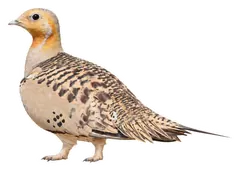 Pallas's SandgrouseSyrrhaptes paradoxus
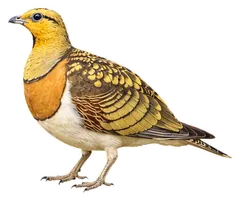 Pin-tailed SandgrousePterocles alchata
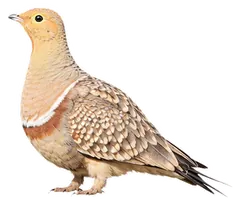 Namaqua SandgrousePterocles namaqua
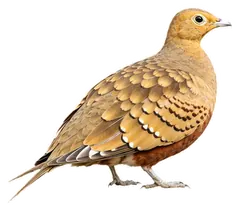 Chestnut-bellied SandgrousePterocles exustus
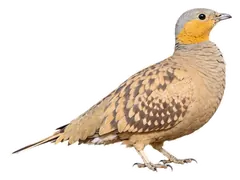 Spotted SandgrousePterocles senegallus
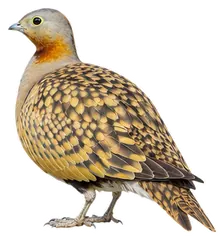 Black-bellied SandgrousePterocles orientalis
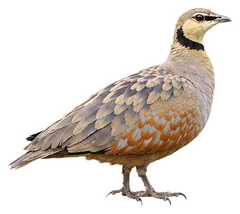 Yellow-throated SandgrousePterocles gutturalis
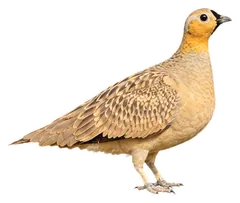 Crowned SandgrousePterocles coronatus
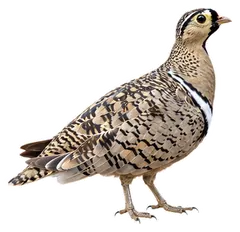 Black-faced SandgrousePterocles decoratus
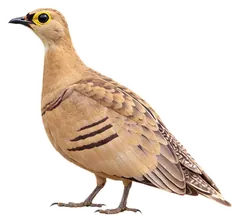 Madagascar SandgrousePterocles personatus
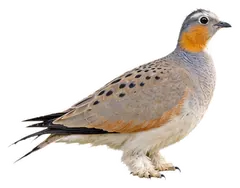
Download illustration
Free to use with credit: “Illustration: Bird Album (birdalbum.com)”. Drawn by AI from a reference photo by Sourav Halder. ↗
Heard it but can't see it? Mingji identifies birds by sound and photo, on your phone.