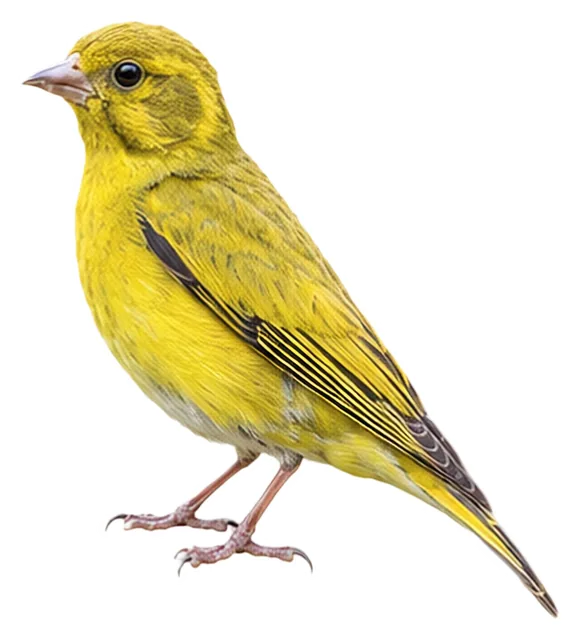
Tibetan Serin
Spinus thibetanus (Hume, 1872)
10–12 cmLength10 gWeight
The male has olive upperparts, yellow underparts and a yellow supercilium, with no yellow wing patches.
Busiest months: May–June · Most records: China, Bhutan, Nepal
How to identify
Field marks
- Male has olive upperparts and yellow underparts
- Yellow supercilium and yellow rear edge to the ear-coverts
- Rump yellow-green
- No yellow patches on the wings
Male, female and young
Female has gray-green upperparts with black streaks, clearer wing-bars than the male, and a pale yellowish throat; juvenile is duller.
Voice
Soft chattering, like “twang twang”.
Where and when it's recorded
Busiest months: May–June · Most records: China, Bhutan, Nepal

Tibetan Serin has been recorded at 76 of the 8,276 birding hotspots we track, in 3 countries and regions.
Records by month Northern Hemisphere
Where it's recorded most
- Laifengshan National Forest ParkChina66 records
- MengbishanChina43 records
- Jiuzhaigou NNRChina34 records
More places
- Baihualing [General Area]China31 records
- Baxi ForestChina29 records
- Gonggangling PassChina23 records
- Labahe NNRChina17 records
- PelelaBhutan16 records
- Balang Shan – Tunnel AreaChina15 records
- Wuwei TempleChina13 records
Countries and regions with the most records
eBird records via GBIF up to 2024-12-31. A record means someone listed it; more records partly mean more birders, not more birds.
Questions
How big is the Tibetan Serin?
The Tibetan Serin is about 10–12 cm long and weighs around 10 g.
Where does the Tibetan Serin live?
Its breeding range: Oriental: southern temperate south-central Palearctic montane forest: southeastern Tibet, Sichuan, northern Myanmar and northwestern Yunnan (west-central China). It is most often recorded in China, Bhutan and Nepal.
When is the best time to see the Tibetan Serin?
At the hotspots we track, it is recorded most in May and June (Northern Hemisphere).
Is the Tibetan Serin endangered?
The IUCN Red List classifies the Tibetan Serin as Least Concern.
What does the Tibetan Serin eat?
Main food: Seeds.
What family is the Tibetan Serin in?
It belongs to the family Finches, Euphonias (Fringillidae), order Passerines (Passeriformes).
At a glance
- Length
- 10–12 cm
- Weight
- 10 g
- Habitat
- Forest
- Diet
- Seeds
- Lifestyle
- Varied
- Migration
- Partial migrant
- Conservation
- Least Concern
More measurements
- Wing
- 69 mm
- Tail
- 43 mm
- Bill
- 11 mm
- Tarsus
- 12 mm
Averages from the AVONET dataset; length from field guides where available.
Range
Oriental: southern temperate south-central Palearctic montane forest: southeastern Tibet, Sichuan, northern Myanmar and northwestern Yunnan (west-central China)
Breeding range, IOC World Bird List 15.2
Classification
- Order
- Passerines Passeriformes
- Family
- Finches, Euphonias Fringillidae
- Genus
- Spinus
Other birds in the genus Spinus
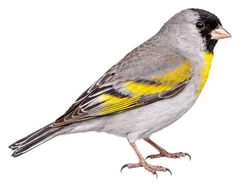 Lawrence's GoldfinchSpinus lawrencei
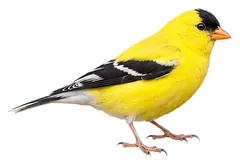 American GoldfinchSpinus tristis
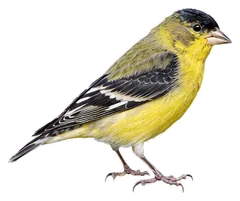 Lesser GoldfinchSpinus psaltria
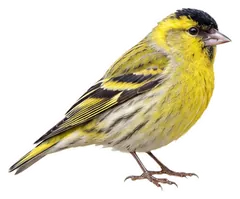 Eurasian SiskinSpinus spinus
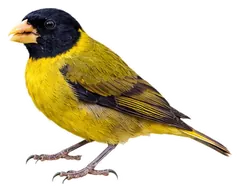 Antillean SiskinSpinus dominicensis
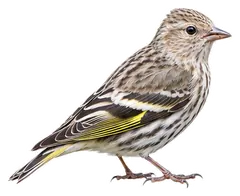 Pine SiskinSpinus pinus
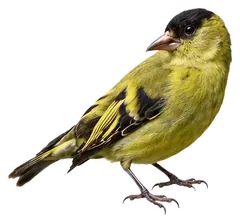 Black-capped SiskinSpinus atriceps
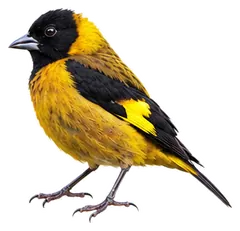 Black-headed SiskinSpinus notatus
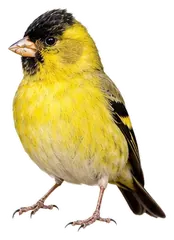 Black-chinned SiskinSpinus barbatus
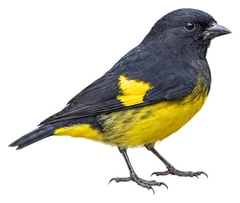 Yellow-bellied SiskinSpinus xanthogastrus
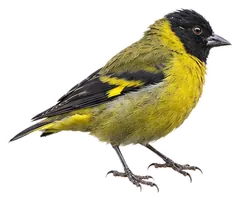 Olivaceous SiskinSpinus olivaceus
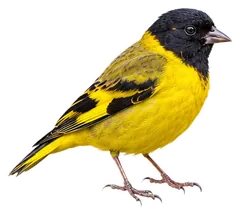 Hooded SiskinSpinus magellanicus
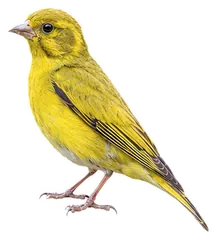
Download illustration
Free to use with credit: “Illustration: Bird Album (birdalbum.com)”. Drawn by AI from a reference photo by matthewkwan. ↗
Heard it but can't see it? Mingji identifies birds by sound and photo, on your phone.