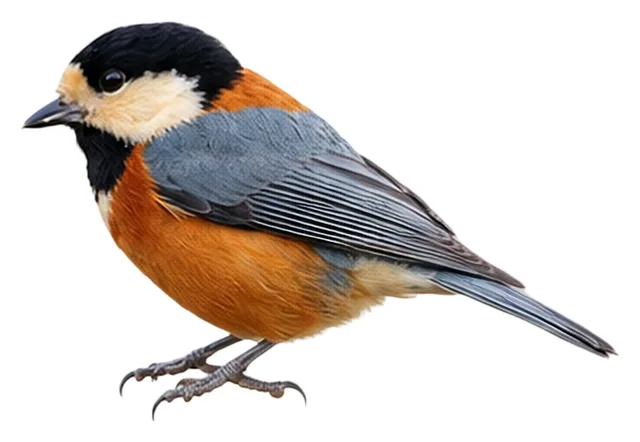
Varied Tit
Sittiparus varius (Temminck & Schlegel, 1847)
12–14 cmLength17 gWeight
This tit has a black crown, white face, chestnut flanks and a blue-gray back, wings and tail.
Busiest months: December–February and October · Most records: Japan, South Korea, China
How to identify
Field marks
- Forehead, face and cheeks white
- Crown, throat, upper breast and back of neck black
- Back, wings and tail blue-gray
- Flanks chestnut in nominate subspecies
Voice
Short notes sounding like “tzu”, “tzu”, “tzu”.
Where and when it's recorded
Busiest months: December–February and October · Most records: Japan, South Korea, China

Varied Tit has been recorded at 192 of the 8,276 birding hotspots we track, in 3 countries and regions.
Records by month Northern Hemisphere
Where it's recorded most
- Kyoto – Kyoto Gyoen Garden / Kyoto Imperial Palace ParkJapan573 records
- Shibuya Ward – Meiji Jingu ShrineJapan492 records
- Seoul – ChanggyeonggungSouth Korea478 records
More places
- Seoul – Olympic ParkSouth Korea452 records
- Karuizawa – Karuizawa Wild Bird SanctuaryJapan435 records
- Pocheon – Korea National Arboretum/Gwangneung ForestSouth Korea374 records
- Okayama – Okayama Korakuen GardenJapan349 records
- Seoul – Namsan ParkSouth Korea337 records
- Seoul – Namsan Mountain ParkSouth Korea335 records
- Seoul – Children's Grand ParkSouth Korea296 records
Countries and regions with the most records
eBird records via GBIF up to 2024-12-31. A record means someone listed it; more records partly mean more birders, not more birds.
About
The varied tit (Sittiparus varius) is a perching bird from the tit family, Paridae. It occurs in the eastern Palearctic in Japan, Korea, and locally in northeastern China (southern Liaoning) and extreme southeastern Russia (southern Kurile Islands).
Excerpt from Wikipedia, CC BY-SA 4.0 · authors · Read more on Wikipedia
Questions
How big is the Varied Tit?
The Varied Tit is about 12–14 cm long and weighs around 17 g.
Where does the Varied Tit live?
Its breeding range: Palearctic: southern Kuril Islands, Japan, Korean Peninsula and northeastern China. It is most often recorded in Japan, South Korea and China.
When is the best time to see the Varied Tit?
At the hotspots we track, it is recorded most in January, February, October and December (Northern Hemisphere).
Is the Varied Tit endangered?
The IUCN Red List classifies the Varied Tit as Least Concern.
What does the Varied Tit eat?
Main food: Insects & other invertebrates.
What family is the Varied Tit in?
It belongs to the family Tits, Chickadees (Paridae), order Passerines (Passeriformes).
At a glance
- Length
- 12–14 cm
- Weight
- 17 g
- Habitat
- Forest
- Diet
- Insects & other invertebrates
- Lifestyle
- Perches in trees
- Migration
- Resident (barely migrates)
- Conservation
- Least Concern
More measurements
- Wing
- 74 mm
- Tail
- 51 mm
- Bill
- 12 mm
- Tarsus
- 18 mm
Averages from the AVONET dataset; length from field guides where available.
Range
Palearctic: southern Kuril Islands, Japan, Korean Peninsula and northeastern China
Breeding range, IOC World Bird List 15.2
Subspecies · 1
- Sittiparus varius varius s Kuril Is., Japan, Korean Pen. and ne China
Classification
- Order
- Passerines Passeriformes
- Family
- Tits, Chickadees Paridae
- Genus
- Sittiparus
Other birds in the genus Sittiparus
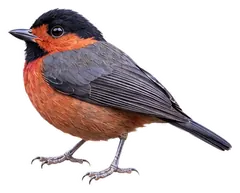 Owston's TitSittiparus owstoni
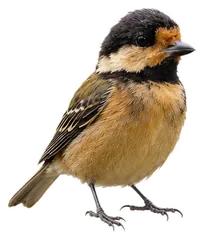 Iriomote TitSittiparus olivaceus
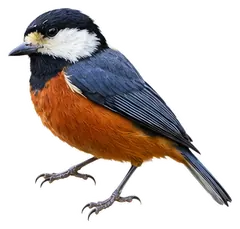 Chestnut-bellied TitSittiparus castaneoventris
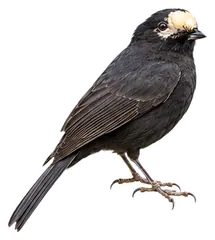 White-fronted TitSittiparus semilarvatus
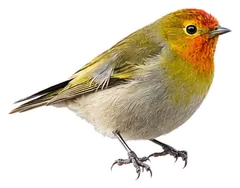 Fire-capped TitCephalopyrus flammiceps
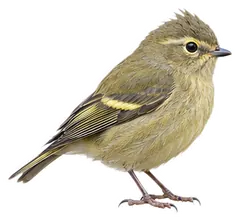 Yellow-browed TitSylviparus modestus
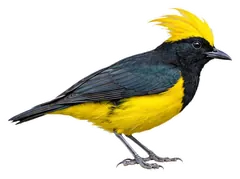 Sultan TitMelanochlora sultanea
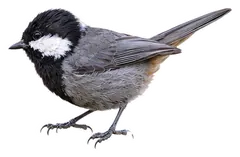 Rufous-naped TitPeriparus rufonuchalis
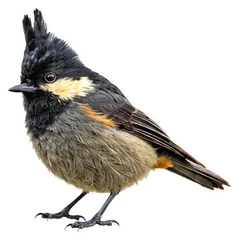 Rufous-vented TitPeriparus rubidiventris
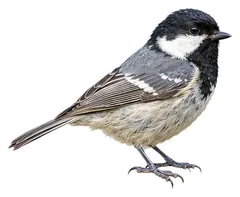 Coal TitPeriparus ater
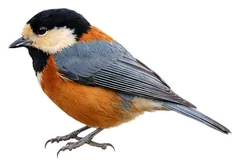
Download illustration
Free to use with credit: “Illustration: Bird Album (birdalbum.com)”. Drawn by AI from a reference photo by Bird Explorers. ↗
Heard it but can't see it? Mingji identifies birds by sound and photo, on your phone.