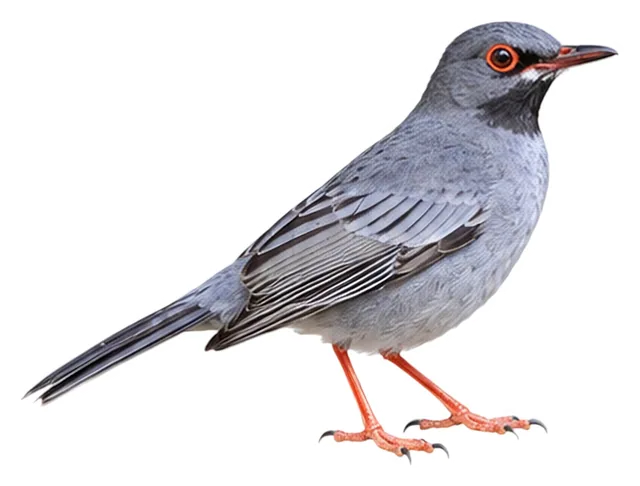
Western Red-legged Thrush
Turdus plumbeus Linnaeus, 1758
75 gWeight
The Western red-legged thrush (Turdus plumbeus) is a species of bird in the family Turdidae.
Busiest months: February–March · Most records: Puerto Rico, Cuba, Bahamas
Where and when it's recorded
Busiest months: February–March · Most records: Puerto Rico, Cuba, Bahamas

Western Red-legged Thrush has been recorded at 90 of the 8,276 birding hotspots we track, in 6 countries and regions.
Records by month Northern Hemisphere
Where it's recorded most
- PN Julio Enrique MonagaPuerto Rico1,752 records
- Bosque Estatal de CambalachePuerto Rico1,443 records
- Refugio de Fauna BermejaCuba1,288 records
More places
- Hacienda La EsperanzaPuerto Rico1,210 records
- Bosque Estatal de Río AbajoPuerto Rico1,098 records
- The Retreat National ParkBahamas1,073 records
- Bosque Estatal de MaricaoPuerto Rico1,042 records
- Garden of Grand Bahama Birders B&BBahamas1,039 records
- Grand Bahama - Garden of the GrovesBahamas1,035 records
- Cayo Coco – Cueva del JabaliCuba962 records
Countries and regions with the most records
eBird records via GBIF up to 2024-12-31. A record means someone listed it; more records partly mean more birders, not more birds.
About
The Western red-legged thrush (Turdus plumbeus) is a species of bird in the family Turdidae. Native to the Caribbean, it is found in the Bahamas, Cayman Islands, and Cuba. It formerly occurred on the Swan Islands, Honduras, but was extirpated there.
Excerpt from Wikipedia, CC BY-SA 4.0 · authors · Read more on Wikipedia
Questions
How big is the Western Red-legged Thrush?
The Western Red-legged Thrush weighs around 75 g.
Where does the Western Red-legged Thrush live?
Its breeding range: North America: Bahamas, Cuba, and Cayman Brac. It is most often recorded in Puerto Rico, Cuba and Bahamas.
When is the best time to see the Western Red-legged Thrush?
At the hotspots we track, it is recorded most in February and March (Northern Hemisphere).
Is the Western Red-legged Thrush endangered?
The IUCN Red List classifies the Western Red-legged Thrush as Least Concern.
What does the Western Red-legged Thrush eat?
Main food: Omnivore.
What family is the Western Red-legged Thrush in?
It belongs to the family Thrushes (Turdidae), order Passerines (Passeriformes).
At a glance
- Weight
- 75 g
- Habitat
- Woodland
- Diet
- Omnivore
- Lifestyle
- Active on the ground
- Migration
- Resident (barely migrates)
- Conservation
- Least Concern
More measurements
- Wing
- 121 mm
- Tail
- 109 mm
- Bill
- 30 mm
- Tarsus
- 37 mm
Averages from the AVONET dataset; length from field guides where available.
Range
North America: Bahamas, Cuba, and Cayman Brac
Breeding range, IOC World Bird List 15.2
Classification
- Order
- Passerines Passeriformes
- Family
- Thrushes Turdidae
- Genus
- Turdus
Other birds in the genus Turdus
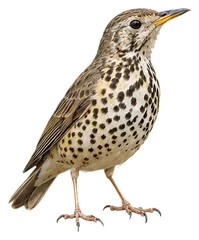 Ethiopian ThrushTurdus simensis
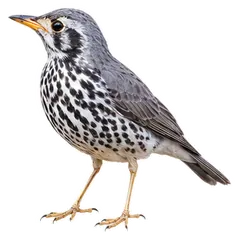 Groundscraper ThrushTurdus litsitsirupa
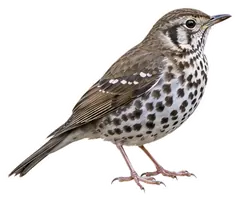 Chinese ThrushTurdus mupinensis
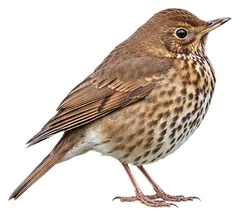 Song ThrushTurdus philomelos
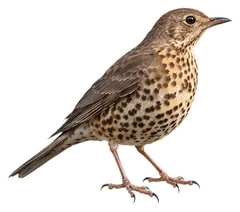 Mistle ThrushTurdus viscivorus
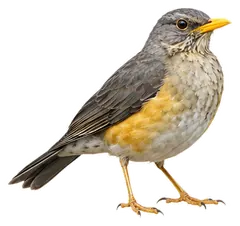 African ThrushTurdus pelios
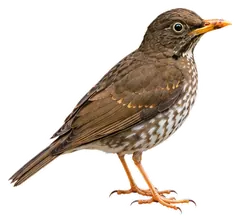 Principe ThrushTurdus xanthorhynchus
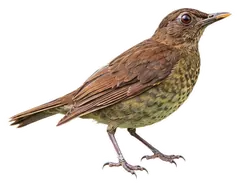 Sao Tome ThrushTurdus olivaceofuscus
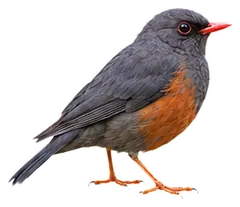 Abyssinian ThrushTurdus abyssinicus
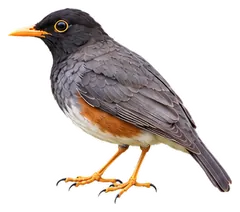 Taita ThrushTurdus helleri
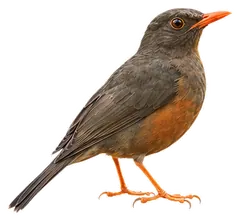 Usambara ThrushTurdus roehli
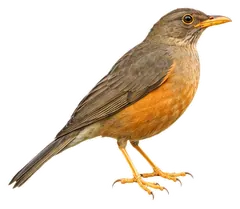 Olive ThrushTurdus olivaceus
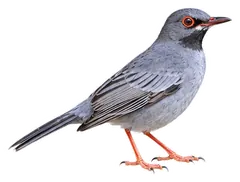
Download illustration
Free to use with credit: “Illustration: Bird Album (birdalbum.com)”. Drawn by AI from a reference photo by Christoph Moning. ↗
Heard it but can't see it? Mingji identifies birds by sound and photo, on your phone.