 Bird Album
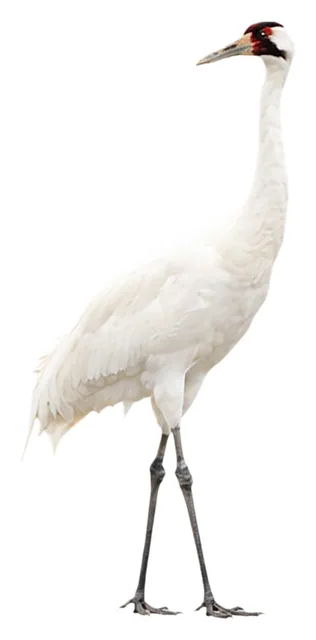
Whooping Crane
Grus americana (Linnaeus, 1758)
5.8 kgWeight
The whooping crane (Grus americana) is an endangered crane species, native to North America, named for its "whooping" calls.
Busiest months: January–February · Most records: United States, Canada
Where and when it's recorded

Whooping Crane has been recorded at 38 of the 8,171 birding hotspots we track, in 2 countries and regions.
Records by month Northern Hemisphere
Where it's recorded most
- Aransas NWR (CTC 037)United States2,432 records
- Leonabelle Turnbull Birding Ctr.United States1,696 records
- Goose Island SPUnited States1,136 records
More places
- Paynes Prairie Preserve SP – La Chua TrailUnited States688 records
- Joe Overstreet Rd. and LandingUnited States357 records
- Bosque del Apache NWRUnited States196 records
- Cheyenne Bottoms WAUnited States120 records
- Lake Apopka North Shore – Orange County sectionUnited States83 records
- Sweetwater Wetlands ParkUnited States49 records
- Greene Valley Forest PreserveUnited States25 records
Countries and regions with the most records
eBird records via GBIF up to 2024-12-31. A record means someone listed it; more records partly mean more birders, not more birds.
About
The whooping crane (Grus americana) is an endangered crane species, native to North America, named for its "whooping" calls. Along with the sandhill crane (Antigone canadensis), it is one of only two crane species native to North America, and it is also the tallest North American bird species, with an estimated 22–30+ year life expectancy in the wild. After being pushed to the brink of extinction by unregulated hunting and loss of habitat that left just 21 wild (and two captive) cranes by 1941, the whooping crane made a partial recovery through conservation efforts.
Excerpt from Wikipedia, CC BY-SA 4.0 · authors · Read more on Wikipedia
Questions
How big is the Whooping Crane?
The Whooping Crane weighs around 5.8 kg.
Where does the Whooping Crane live?
Its breeding range: North America: central Canada and central USA. It is most often recorded in United States and Canada.
When is the best time to see the Whooping Crane?
At the hotspots we track, it is recorded most in January and February (Northern Hemisphere).
Is the Whooping Crane endangered?
The IUCN Red List classifies the Whooping Crane as Endangered.
What does the Whooping Crane eat?
Main food: Omnivore.
What family is the Whooping Crane in?
It belongs to the family Cranes (Gruidae), order Gruiformes.
At a glance
- Weight
- 5.8 kg
- Habitat
- Wetland
- Diet
- Omnivore
- Lifestyle
- Active on the ground
- Migration
- Migratory
- Conservation
- Endangered
More measurements
- Wing
- 606 mm
- Tail
- 209 mm
- Bill
- 149 mm
- Tarsus
- 289 mm
Averages from the AVONET dataset; length from field guides where available.
Range
North America: central Canada and central USA
Breeding range, IOC World Bird List 15.2
Classification
- Order
- Gruiformes
- Family
- Cranes Gruidae
- Genus
- Grus
Other birds in the genus Grus
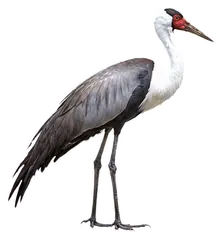 Wattled CraneGrus carunculata
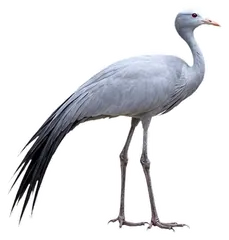 Blue CraneGrus paradisea
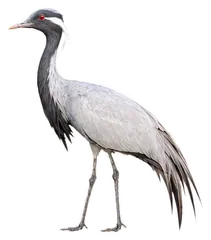 Demoiselle CraneGrus virgo
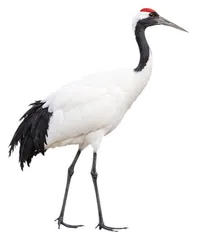 Red-crowned CraneGrus japonensis
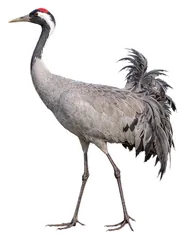 Common CraneGrus grus
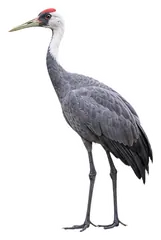 Hooded CraneGrus monacha
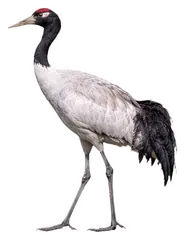 Black-necked CraneGrus nigricollis
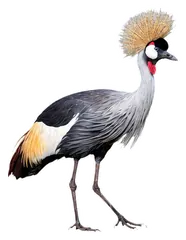 Grey Crowned CraneBalearica regulorum
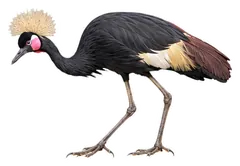 Black Crowned CraneBalearica pavonina
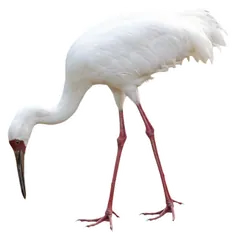 Siberian CraneLeucogeranus leucogeranus
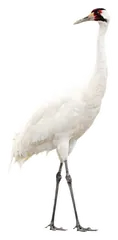
Download illustration
Free to use with credit: “Illustration: Bird Album (birdalbum.com)”. Drawn by AI from a reference photo by U.S. Fish and Wildlife Service Headquarters. ↗
Heard it but can't see it? Mingji identifies birds by sound and photo, on your phone.