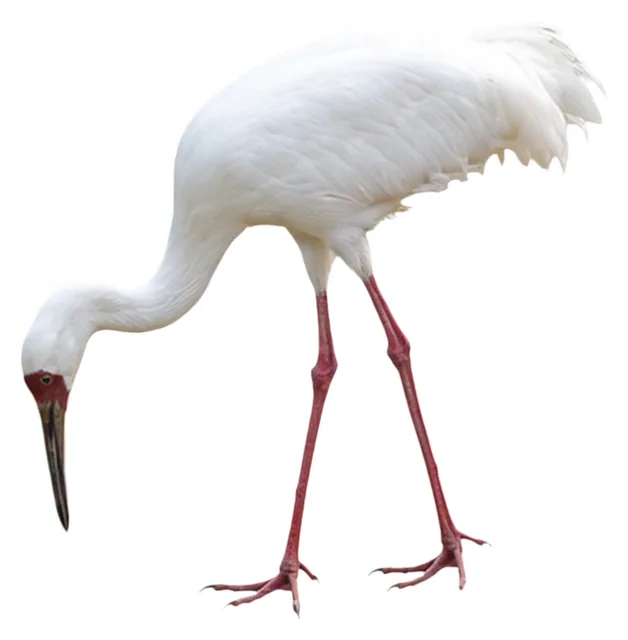
Siberian Crane
Leucogeranus leucogeranus (Pallas, 1773)
115–127 cmLength240 cmWingspan5.9 kgWeight
This large crane is snow-white overall with a red face and legs and feet, revealing black primaries in flight.
Busiest months: December–January · Most records: China, India, Japan
How to identify
Field marks
- White overall when standing
- Bare face brick-red; long legs pink
- Bill long, stout, straight and dark brown
- Black primaries exposed at the wingtips in flight
Male, female and young
Adult male slightly larger than female; juvenile has a golden-brown head and neck and a brown-and-white body.
Voice
High-pitched, goose-like “toyoya” whistles, very different from the trumpeting of most cranes.
Where and when it's recorded
Busiest months: December–January · Most records: China, India, Japan

Siberian Crane has been recorded at 105 of the 8,276 birding hotspots we track, in 7 countries and regions.
Records by month Northern Hemisphere
To protect this bird from disturbance, we don't list exact sites.
Countries and regions with the most records
eBird records via GBIF up to 2024-12-31. A record means someone listed it; more records partly mean more birders, not more birds.
About
The Siberian crane (Leucogeranus leucogeranus), also known as the Siberian white crane or the snow crane, is a bird of the family Gruidae, the cranes. They are distinctive among the cranes: adults are nearly all snowy white, except for their black primary feathers that are visible in flight, and with two breeding populations in the Arctic tundra of western and eastern Russia. The eastern populations migrate during winter to China, while the western population winters in Iran and (formerly) in Bharatpur, India.
Excerpt from Wikipedia, CC BY-SA 4.0 · authors · Read more on Wikipedia
Questions
How big is the Siberian Crane?
The Siberian Crane is about 115–127 cm long, with a wingspan of 240 cm and weighs around 5.9 kg.
Where does the Siberian Crane live?
Its breeding range: Palearctic: northwestern, east-central Siberia. It is most often recorded in China, India and Japan.
When is the best time to see the Siberian Crane?
At the hotspots we track, it is recorded most in January and December (Northern Hemisphere).
Is the Siberian Crane endangered?
The IUCN Red List classifies the Siberian Crane as Critically Endangered.
What does the Siberian Crane eat?
Main food: Omnivore.
What family is the Siberian Crane in?
It belongs to the family Cranes (Gruidae), order Gruiformes.
At a glance
- Length
- 115–127 cm
- Wingspan
- 240 cm
- Weight
- 5.9 kg
- Habitat
- Wetland
- Diet
- Omnivore
- Lifestyle
- Active on the ground
- Migration
- Migratory
- Conservation
- Critically Endangered
More measurements
- Wing
- 579 mm
- Tail
- 198 mm
- Bill
- 194 mm
- Tarsus
- 274 mm
Averages from the AVONET dataset; length from field guides where available.
Range
Palearctic: northwestern, east-central Siberia
Breeding range, IOC World Bird List 15.2
Classification
- Order
- Gruiformes
- Family
- Cranes Gruidae
- Genus
- Leucogeranus
More from the family Cranes
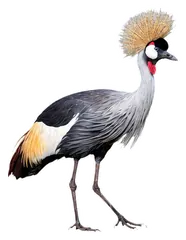 Grey Crowned CraneBalearica regulorum
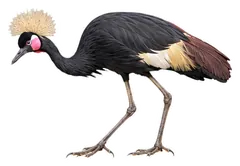 Black Crowned CraneBalearica pavonina
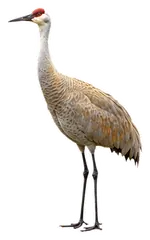 Sandhill CraneAntigone canadensis
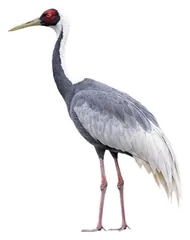 White-naped CraneAntigone vipio
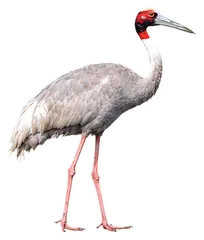 Sarus CraneAntigone antigone
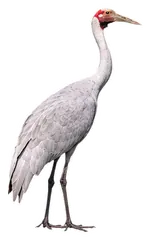 BrolgaAntigone rubicunda
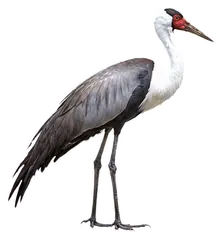 Wattled CraneGrus carunculata
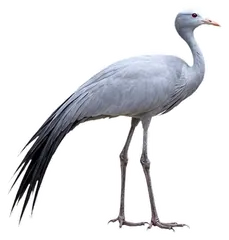 Blue CraneGrus paradisea
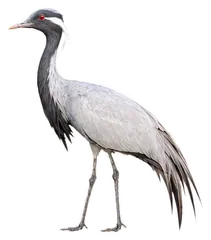 Demoiselle CraneGrus virgo
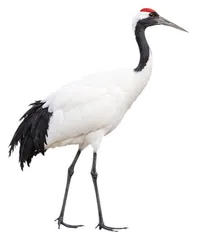 Red-crowned CraneGrus japonensis
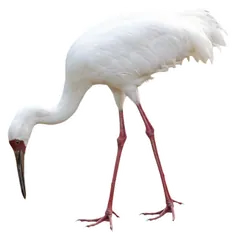
Download illustration
Free to use with credit: “Illustration: Bird Album (birdalbum.com)”. Drawn by AI from a reference photo by BS Thurner Hof. ↗

Heard it but can't see it? Mingji identifies birds by sound and photo, on your phone.