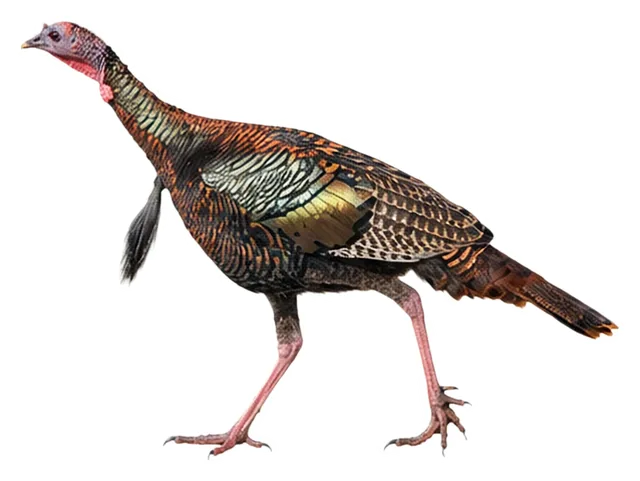
Wild Turkey
Meleagris gallopavo Linnaeus, 1758
100–125 cmLength120 cmWingspan5.8 kgWeight
The male fans its tail and has a tufted “beard” hanging from the breast.
Busiest months: May · Most records: United States, Canada, New Zealand
How to identify
Field marks
- Male has a bare, reddish head and a wattle on the throat
- Male has a long tail that spreads into a fan
- Male often has a tuft of coarse bristles hanging from the breast
- Primaries have white barring
Male, female and young
Male markedly larger, with various iridescent colors in the plumage; female duller and brownish-gray.
Voice
Gives clucking and cooing calls; male also produces low drumming and puffing sounds.
Where and when it's recorded
Busiest months: May · Most records: United States, Canada, New Zealand

Wild Turkey has been recorded at 598 of the 8,276 birding hotspots we track, in 19 countries and regions.
Records by month Northern Hemisphere
Where it's recorded most
- Madera Canyon – Santa Rita LodgeUnited States25,371 records
- Point Pelee National ParkCanada14,087 records
- Parker River NWRUnited States10,608 records
More places
- Mount Auburn CemeteryUnited States7,992 records
- UW Madison ArboretumUnited States7,813 records
- Schlitz Audubon Nature CenterUnited States6,223 records
- Wellfleet Bay Wildlife SanctuaryUnited States5,683 records
- Ash Canyon Bird SanctuaryUnited States5,510 records
- Palmyra Cove Nature ParkUnited States5,343 records
- Ramsey Canyon PreserveUnited States5,201 records
Countries and regions with the most records
eBird records via GBIF up to 2024-12-31. A record means someone listed it; more records partly mean more birders, not more birds.
About
The wild turkey (Meleagris gallopavo) is an upland game bird native to North America, one of two extant species of turkey and the heaviest member of the order Galliformes. It is the ancestor to the domestic turkey (M. g. domesticus), which was originally derived from a southern Mexican subspecies of wild turkey (not the related ocellated turkey).
Excerpt from Wikipedia, CC BY-SA 4.0 · authors · Read more on Wikipedia
Questions
How big is the Wild Turkey?
The Wild Turkey is about 100–125 cm long, with a wingspan of 120 cm and weighs around 5.8 kg.
Where does the Wild Turkey live?
Its breeding range: North America, Middle America: southern Canada, USA and northern Mexico. It is most often recorded in United States, Canada and New Zealand.
When is the best time to see the Wild Turkey?
At the hotspots we track, it is recorded most in May (Northern Hemisphere).
Is the Wild Turkey endangered?
The IUCN Red List classifies the Wild Turkey as Least Concern.
What does the Wild Turkey eat?
Main food: Omnivore.
What family is the Wild Turkey in?
It belongs to the family Pheasants & Allies (Phasianidae), order Galliformes.
At a glance
- Length
- 100–125 cm
- Wingspan
- 120 cm
- Weight
- 5.8 kg
- Habitat
- Forest
- Diet
- Omnivore
- Lifestyle
- Active on the ground
- Migration
- Resident (barely migrates)
- Conservation
- Least Concern
More measurements
- Wing
- 449 mm
- Tail
- 351 mm
- Bill
- 49 mm
- Tarsus
- 149 mm
Averages from the AVONET dataset; length from field guides where available.
Range
North America, Middle America: southern Canada, USA and northern Mexico
Breeding range, IOC World Bird List 15.2
Classification
- Order
- Galliformes
- Family
- Pheasants & Allies Phasianidae
- Genus
- Meleagris
Other birds in the genus Meleagris
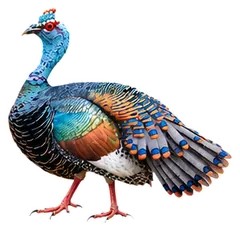 Ocellated TurkeyMeleagris ocellata
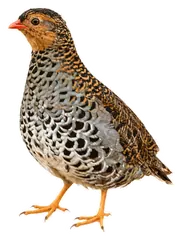 Udzungwa Forest PartridgeXenoperdix udzungwensis
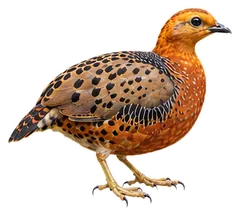 Ferruginous PartridgeCaloperdix oculeus
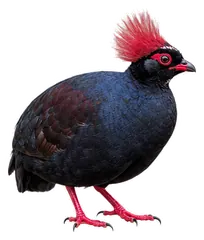 Crested PartridgeRollulus rouloul
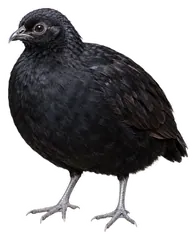 Black PartridgeMelanoperdix niger
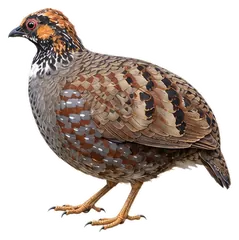 Hill PartridgeArborophila torqueola
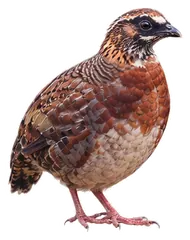 Sichuan PartridgeArborophila rufipectus
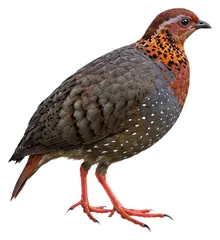 Chestnut-breasted PartridgeArborophila mandellii
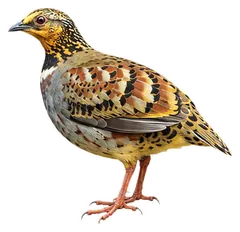 White-necklaced PartridgeArborophila gingica
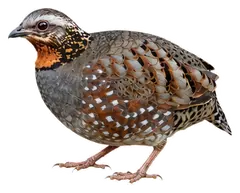 Rufous-throated PartridgeArborophila rufogularis
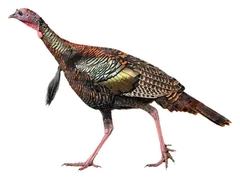
Download illustration
Free to use with credit: “Illustration: Bird Album (birdalbum.com)”. Drawn by AI from a reference photo by rebelgirl73. ↗
Heard it but can't see it? Mingji identifies birds by sound and photo, on your phone.