 Bird Album
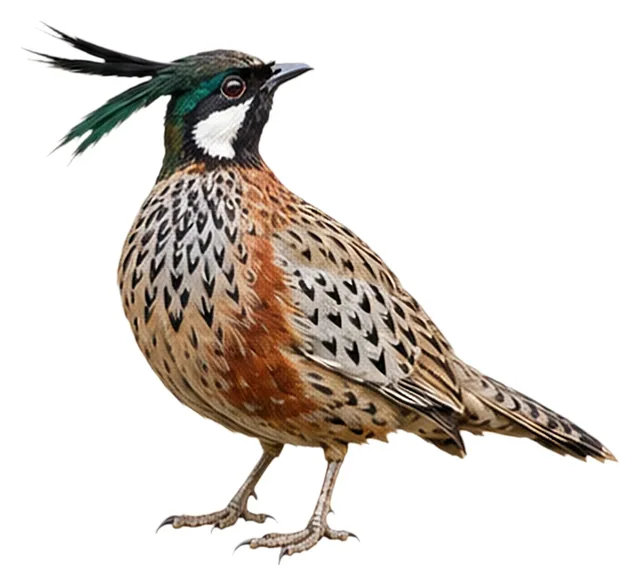
Koklass Pheasant
Pucrasia macrolopha (Lesson, RP, 1829)
55 cmLength1.1 kgWeight
The male has gray body feathers, each with a black V-shaped marking, and a long black occipital crest trailing behind the head.
Busiest months: May · Most records: China, India, Nepal
How to identify
Field marks
- Long black occipital crest behind the head
- Body feathers mostly gray, with black V-shaped markings
- Male has a conspicuous white patch on the side of neck
Male, female and young
Female has a shorter occipital crest and tail than the male.
Voice
In the breeding season and in autumn, it gives loud, chorus-like vocalizations before dawn.
Where and when it's recorded
Busiest months: May · Most records: China, India, Nepal

Koklass Pheasant has been recorded at 77 of the 8,276 birding hotspots we track, in 3 countries and regions.
Records by month Northern Hemisphere
Where it's recorded most
- PangotIndia324 records
- Balang Shan – Tunnel AreaChina136 records
- Emei Peak NNRChina97 records
More places
- Balang Shan [General Area]China95 records
- Wuling Mountain NNRChina65 records
- Balang Shan PassChina38 records
- SattalIndia37 records
- West Tianmu Mountain NNRChina30 records
- Lingshan Scenic AreaChina26 records
- Xiaolongmen National Forest ParkChina24 records
Countries and regions with the most records
eBird records via GBIF up to 2024-12-31. A record means someone listed it; more records partly mean more birders, not more birds.
About
The koklass pheasant (Pucrasia macrolopha) is a species of gamebird, being closely related to progenitive grouse that lived during the Miocene. They are distantly related to pheasants and are most closely related to grouse and turkeys. Koklass are the only species in the monotypic genus Pucrasia.
Excerpt from Wikipedia, CC BY-SA 4.0 · authors · Read more on Wikipedia
Questions
How big is the Koklass Pheasant?
The Koklass Pheasant is about 55 cm long and weighs around 1.1 kg.
Where does the Koklass Pheasant live?
Its breeding range: Oriental: Himalayas to south-central China. It is most often recorded in China, India and Nepal.
When is the best time to see the Koklass Pheasant?
At the hotspots we track, it is recorded most in May (Northern Hemisphere).
Is the Koklass Pheasant endangered?
The IUCN Red List classifies the Koklass Pheasant as Least Concern.
What does the Koklass Pheasant eat?
Main food: Omnivore.
What family is the Koklass Pheasant in?
It belongs to the family Pheasants & Allies (Phasianidae), order Galliformes.
At a glance
- Length
- 55 cm
- Weight
- 1.1 kg
- Habitat
- Forest
- Diet
- Omnivore
- Lifestyle
- Active on the ground
- Migration
- Resident (barely migrates)
- Conservation
- Least Concern
More measurements
- Wing
- 222 mm
- Tail
- 190 mm
- Bill
- 30 mm
- Tarsus
- 61 mm
Averages from the AVONET dataset; length from field guides where available.
Range
Oriental: Himalayas to south-central China
Breeding range, IOC World Bird List 15.2
Subspecies · 5
- Pucrasia macrolopha meyeri w Sichuan to nw Yunnan (sc China)
- Pucrasia macrolopha ruficollis wc Sichuan to sw Gansu and s Shaanxi (c China)
- Pucrasia macrolopha xanthospila n Shaanxi and Shaanxi to w Hebei (ne China)
- Pucrasia macrolopha joretiana sw Anhui (ec China)
- Pucrasia macrolopha darwini Hubei and se Sichuan to Fujian (c China)
Classification
- Order
- Galliformes
- Family
- Pheasants & Allies Phasianidae
- Genus
- Pucrasia
More from the family Pheasants & Allies
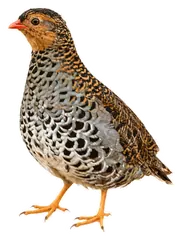 Udzungwa Forest PartridgeXenoperdix udzungwensis
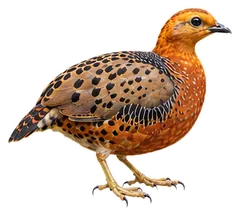 Ferruginous PartridgeCaloperdix oculeus
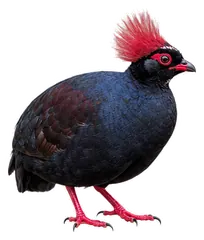 Crested PartridgeRollulus rouloul
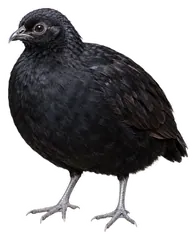 Black PartridgeMelanoperdix niger
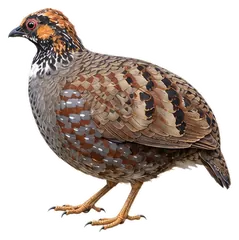 Hill PartridgeArborophila torqueola
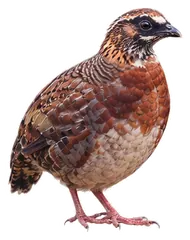 Sichuan PartridgeArborophila rufipectus
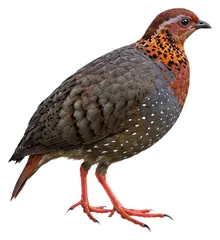 Chestnut-breasted PartridgeArborophila mandellii
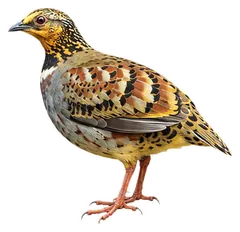 White-necklaced PartridgeArborophila gingica
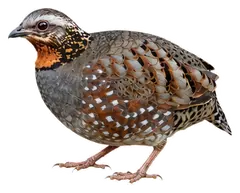 Rufous-throated PartridgeArborophila rufogularis
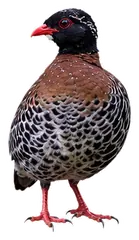 Red-billed PartridgeArborophila rubrirostris
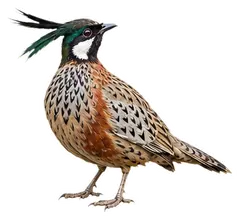
Download illustration
Free to use with credit: “Illustration: Bird Album (birdalbum.com)”. Drawn by AI from a reference photo by Asif N Khan. ↗

Heard it but can't see it? Mingji identifies birds by sound and photo, on your phone.