 Bird Album
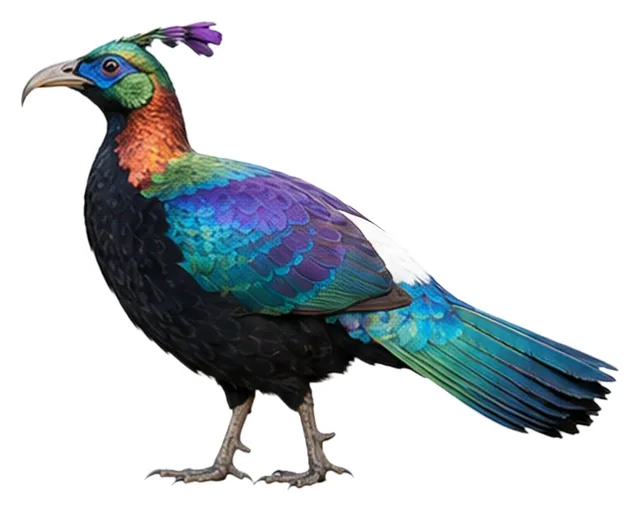
Chinese Monal
Lophophorus lhuysii Geoffroy Saint-Hilaire, A, 1866
76–80 cmLength3 kgWeight
The male is blue-purple with a metallic gloss and a coppery-rufous mantle, revealing a snow-white back when it spreads its wings.
Busiest months: May · Most records: China
Looks like Sclater's Monal
How to identify
Field marks
- Crown and face metallic green, with a blue-purple crest
- Coppery-rufous mantle across the side of neck, nape and scapulars
- Back and uppertail-coverts snow-white, often hidden by the wings
- Bill long and decurved
Male, female and young
Female mainly brown and dull, with a ring of blue bare skin around the eye; back and uppertail-coverts also snow-white.
Similar species
Where and when it's recorded
Busiest months: May · Most records: China

Chinese Monal has been recorded at 14 of the 8,276 birding hotspots we track, in 1 country or region.
Records by month Northern Hemisphere
To protect this bird from disturbance, we don't list exact sites.
Countries and regions with the most records
eBird records via GBIF up to 2024-12-31. A record means someone listed it; more records partly mean more birders, not more birds.
About
The Chinese monal or Chinese impeyan (Lophophorus lhuysii) is a species in the pheasant family Phasianidae native to west-central China, where it is restricted to the mountains of western Sichuan and southern Gansu.
Excerpt from Wikipedia, CC BY-SA 4.0 · authors · Read more on Wikipedia
Questions
How big is the Chinese Monal?
The Chinese Monal is about 76–80 cm long and weighs around 3 kg.
Where does the Chinese Monal live?
Its breeding range: Oriental: central China. It is most often recorded in China.
When is the best time to see the Chinese Monal?
At the hotspots we track, it is recorded most in May (Northern Hemisphere).
Is the Chinese Monal endangered?
The IUCN Red List classifies the Chinese Monal as Vulnerable.
What does the Chinese Monal eat?
Main food: Land plants.
What family is the Chinese Monal in?
It belongs to the family Pheasants & Allies (Phasianidae), order Galliformes.
At a glance
- Length
- 76–80 cm
- Weight
- 3 kg
- Habitat
- Shrubland
- Diet
- Land plants
- Lifestyle
- Active on the ground
- Migration
- Resident (barely migrates)
- Conservation
- Vulnerable
More measurements
- Wing
- 337 mm
- Tail
- 291 mm
- Bill
- 60 mm
- Tarsus
- 76 mm
Averages from the AVONET dataset; length from field guides where available.
Range
Oriental: central China
Breeding range, IOC World Bird List 15.2
Classification
- Order
- Galliformes
- Family
- Pheasants & Allies Phasianidae
- Genus
- Lophophorus
Other birds in the genus Lophophorus
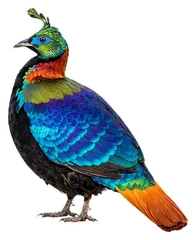 Himalayan MonalLophophorus impejanus
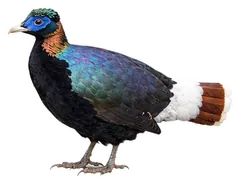 Sclater's MonalLophophorus sclateri
 Udzungwa Forest PartridgeXenoperdix udzungwensis
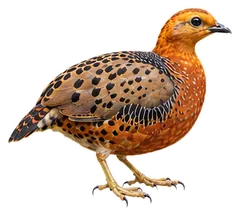 Ferruginous PartridgeCaloperdix oculeus
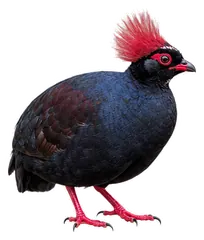 Crested PartridgeRollulus rouloul
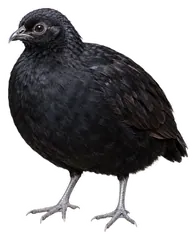 Black PartridgeMelanoperdix niger
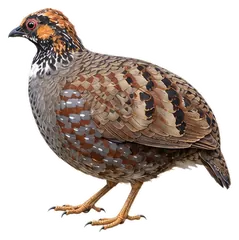 Hill PartridgeArborophila torqueola
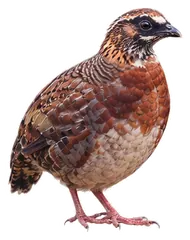 Sichuan PartridgeArborophila rufipectus
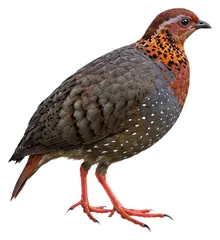 Chestnut-breasted PartridgeArborophila mandellii
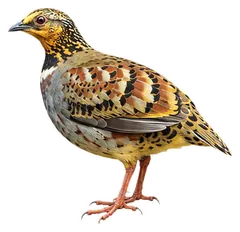 White-necklaced PartridgeArborophila gingica
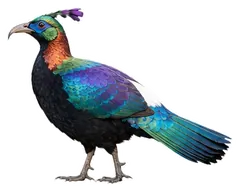
Download illustration
Free to use with credit: “Illustration: Bird Album (birdalbum.com)”. Drawn by AI from a reference photo by wangqg. ↗

Heard it but can't see it? Mingji identifies birds by sound and photo, on your phone.