 Bird Album
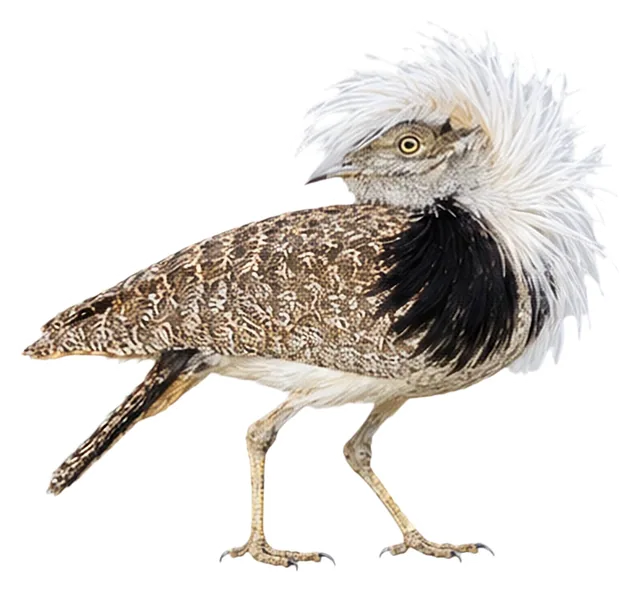
African Houbara
Chlamydotis undulata (Jacquin, 1784)
1.5 kgWeight
The African houbara (Chlamydotis undulata), also known as the houbara bustard (houbara from Arabic: حُبَارَى, romanized: ḥubārā for bustards in general), is a relatively small bustard native to North Africa, where it lives in arid habitats.
Most records: Morocco
Where and when it's recorded

African Houbara has been recorded at 5 of the 8,171 birding hotspots we track, in 1 country or region.
Records by month Northern Hemisphere
Where it's recorded most
- Erg Chebbi – MerzougaMorocco10 records
- Tagdilt TrackMorocco9 records
- Erg Chebbi – nordMorocco5 records
More places
- Vallée des Oiseaux (Tagdilt Track) – ancienne pisteMorocco2 records
- Dayet SrijMorocco2 records
Countries and regions with the most records
eBird records via GBIF up to 2024-12-31. A record means someone listed it; more records partly mean more birders, not more birds.
About
The African houbara (Chlamydotis undulata), also known as the houbara bustard (houbara from Arabic: حُبَارَى, romanized: ḥubārā for bustards in general), is a relatively small bustard native to North Africa, where it lives in arid habitats. The global population is listed as Vulnerable on the IUCN Red List since 2014. There is a population in the Canary Islands which was assessed as Near Threatened in 2015, but has since also been assessed as Vulnerable.
Excerpt from Wikipedia, CC BY-SA 4.0 · authors · Read more on Wikipedia
Questions
How big is the African Houbara?
The African Houbara weighs around 1.5 kg.
Where does the African Houbara live?
Its breeding range: Africa: northern. It is most often recorded in Morocco.
Is the African Houbara endangered?
The IUCN Red List classifies the African Houbara as Vulnerable.
What does the African Houbara eat?
Main food: Omnivore.
What family is the African Houbara in?
It belongs to the family Bustards (Otididae), order Otidiformes.
At a glance
- Weight
- 1.5 kg
- Habitat
- Desert
- Diet
- Omnivore
- Lifestyle
- Active on the ground
- Migration
- Resident (barely migrates)
- Conservation
- Vulnerable
More measurements
- Wing
- 364 mm
- Tail
- 222 mm
- Bill
- 50 mm
- Tarsus
- 92 mm
Averages from the AVONET dataset; length from field guides where available.
Range
Africa: northern
Breeding range, IOC World Bird List 15.2
Classification
- Order
- Otidiformes
- Family
- Bustards Otididae
- Genus
- Chlamydotis
Other birds in the genus Chlamydotis
 Asian HoubaraChlamydotis macqueenii
 Great BustardOtis tarda
 Arabian BustardArdeotis arabs
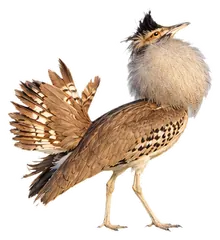 Kori BustardArdeotis kori
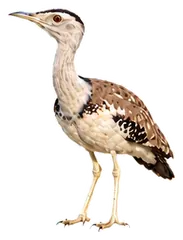 Great Indian BustardArdeotis nigriceps
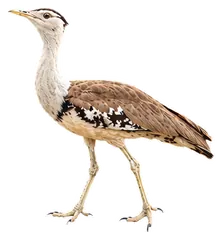 Australian BustardArdeotis australis
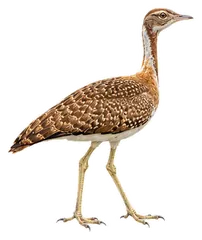 Ludwig's BustardNeotis ludwigii
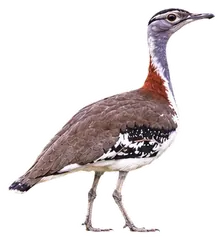 Denham's BustardNeotis denhami
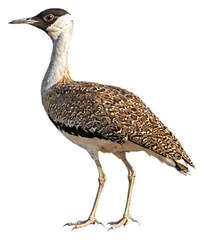 Heuglin's BustardNeotis heuglinii
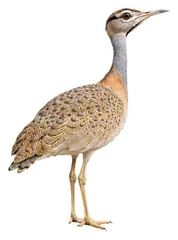 Nubian BustardNeotis nuba
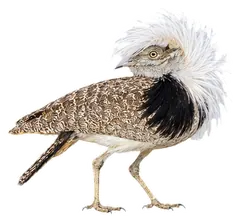
Download illustration
Free to use with credit: “Illustration: Bird Album (birdalbum.com)”. Drawn by AI from reference photos. ↗
Heard it but can't see it? Mingji identifies birds by sound and photo, on your phone.