 Bird Album
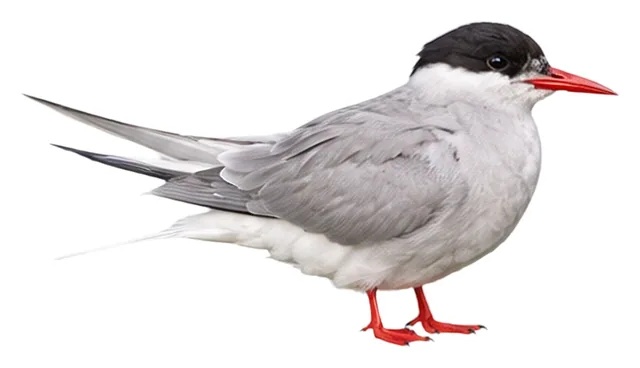
Antarctic Tern
Sterna vittata Gmelin, JF, 1789
139 gWeight
The Antarctic tern (Sterna vittata) is a seabird in the family Laridae.
Busiest months: November · Most records: Antarctica, South Georgia & South Sandwich Islands, St. Helena
Where and when it's recorded

Antarctic Tern has been recorded at 53 of the 8,171 birding hotspots we track, in 9 countries and regions.
Records by month Southern Hemisphere
Where it's recorded most
- GrytvikenSouth Georgia & South Sandwich Islands589 records
- Half Moon IslandAntarctica399 records
- Errera Channel – Cuverville IslandAntarctica372 records
More places
- Andvord Bay – Neko HarborAntarctica362 records
- Gold HarbourSouth Georgia & South Sandwich Islands345 records
- St Andrew's BaySouth Georgia & South Sandwich Islands318 records
- Salisbury PlainSouth Georgia & South Sandwich Islands303 records
- Cooper BaySouth Georgia & South Sandwich Islands249 records
- Deception Island – Whaler's BayAntarctica230 records
- Mikkelsen Harbor – D'Hainaut IslandAntarctica213 records
Countries and regions with the most records
eBird records via GBIF up to 2024-12-31. A record means someone listed it; more records partly mean more birders, not more birds.
About
The Antarctic tern (Sterna vittata) is a seabird in the family Laridae. It ranges throughout the southern oceans and is found on small islands around Antarctica as well as on the shores of the mainland. Its diet consists primarily of small fish and crustaceans.
Excerpt from Wikipedia, CC BY-SA 4.0 · authors · Read more on Wikipedia
Questions
How big is the Antarctic Tern?
The Antarctic Tern weighs around 139 g.
Where does the Antarctic Tern live?
Its breeding range: Southern Ocean: widespread, subantarctic and Antarctic islands, South Atlantic, South Indian, western South Pacific and Antarctic Peninsula. It is most often recorded in Antarctica, South Georgia & South Sandwich Islands and St. Helena.
When is the best time to see the Antarctic Tern?
At the hotspots we track, it is recorded most in November (Southern Hemisphere).
Is the Antarctic Tern endangered?
The IUCN Red List classifies the Antarctic Tern as Least Concern.
What does the Antarctic Tern eat?
Main food: Fish, shrimp & shellfish.
What family is the Antarctic Tern in?
It belongs to the family Gulls, Terns, Skimmers (Laridae), order Charadriiformes.
At a glance
- Weight
- 139 g
- Habitat
- Ocean
- Diet
- Fish, shrimp & shellfish
- Lifestyle
- Feeds in the air
- Migration
- Migratory
- Conservation
- Least Concern
More measurements
- Wing
- 260 mm
- Tail
- 133 mm
- Bill
- 39 mm
- Tarsus
- 18 mm
Averages from the AVONET dataset; length from field guides where available.
Range
Southern Ocean: widespread, subantarctic and Antarctic islands, South Atlantic, South Indian, western South Pacific and Antarctic Peninsula
Breeding range, IOC World Bird List 15.2
Classification
- Order
- Charadriiformes
- Family
- Gulls, Terns, Skimmers Laridae
- Genus
- Sterna
Other birds in the genus Sterna
 River TernSterna aurantia
 Forster's TernSterna forsteri
 Snowy-crowned TernSterna trudeaui
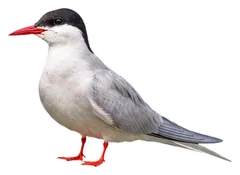 Arctic TernSterna paradisaea
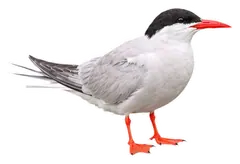 South American TernSterna hirundinacea
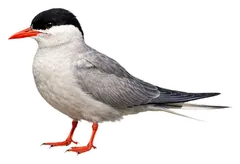 Kerguelen TernSterna virgata
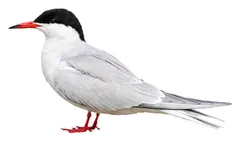 Common TernSterna hirundo
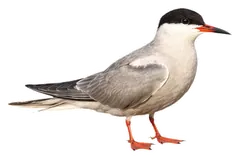 White-cheeked TernSterna repressa
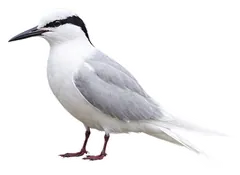 Black-naped TernSterna sumatrana
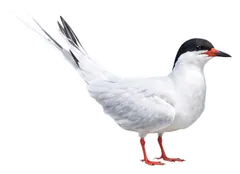 Roseate TernSterna dougallii
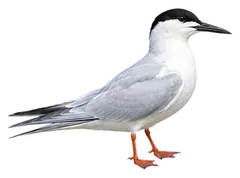 White-fronted TernSterna striata
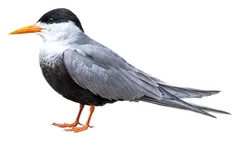 Black-bellied TernSterna acuticauda
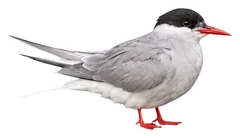
Download illustration
Free to use with credit: “Illustration: Bird Album (birdalbum.com)”. Drawn by AI from a reference photo by Oscar Thomas. ↗
Heard it but can't see it? Mingji identifies birds by sound and photo, on your phone.