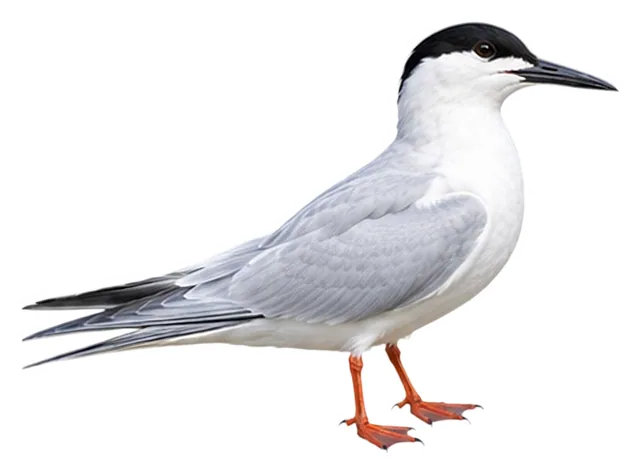
White-fronted Tern
Sterna striata Gmelin, JF, 1789
129 gWeight
The white-fronted tern (Sterna striata), also known as tara, sea swallow, black-billed tern, kahawai bird, southern tern, or swallow tail, was first described by Johann Friedrich Gmelin in 1789.
Busiest months: November · Most records: New Zealand, Australia
Where and when it's recorded
Busiest months: November · Most records: New Zealand, Australia

White-fronted Tern has been recorded at 100 of the 8,276 birding hotspots we track, in 2 countries and regions.
Records by month Southern Hemisphere
Where it's recorded most
- Kaikoura – offshore – Albatross Encounter pelagicNew Zealand5,318 records
- Tiritiri MatangiNew Zealand761 records
- Foveaux StraitNew Zealand757 records
More places
- Rakiura NP – Ulva IslandNew Zealand756 records
- Ashley Estuary south endNew Zealand717 records
- Miranda – main hide/LimeworksNew Zealand696 records
- Ashley River EstuaryNew Zealand681 records
- Eaglehawk Neck Pelagic TripAustralia611 records
- Kaikoura – Point Kean Seal ColonyNew Zealand570 records
- Muriwai Gannet ColonyNew Zealand564 records
Countries and regions with the most records
eBird records via GBIF up to 2024-12-31. A record means someone listed it; more records partly mean more birders, not more birds.
About
The white-fronted tern (Sterna striata), also known as tara, sea swallow, black-billed tern, kahawai bird, southern tern, or swallow tail, was first described by Johann Friedrich Gmelin in 1789. A medium-sized tern with an all-white body including underwing and forked tail, with pale grey hues on the mantle and upper side of the wing. In breeding adults a striking black cap covers the head from forehead to nape, leaving a small white strip above the black bill.
Excerpt from Wikipedia, CC BY-SA 4.0 · authors · Read more on Wikipedia
Questions
How big is the White-fronted Tern?
The White-fronted Tern weighs around 129 g.
Where does the White-fronted Tern live?
Its breeding range: Australasia: coasts and satellites of North, South, Stewart, Chatham (east of South Island) and Auckland islands (south of South Island; New Zealand); also (few) Furneaux group, eastern Bass Strait islands (Australia). It is most often recorded in New Zealand and Australia.
When is the best time to see the White-fronted Tern?
At the hotspots we track, it is recorded most in November (Southern Hemisphere).
Is the White-fronted Tern endangered?
The IUCN Red List classifies the White-fronted Tern as Near Threatened.
What does the White-fronted Tern eat?
Main food: Fish, shrimp & shellfish.
What family is the White-fronted Tern in?
It belongs to the family Gulls, Terns, Skimmers (Laridae), order Charadriiformes.
At a glance
- Weight
- 129 g
- Habitat
- Coast & tidal flats
- Diet
- Fish, shrimp & shellfish
- Lifestyle
- Feeds in the air
- Migration
- Partial migrant
- Conservation
- Near Threatened
More measurements
- Wing
- 274 mm
- Tail
- 170 mm
- Bill
- 51 mm
- Tarsus
- 21 mm
Averages from the AVONET dataset; length from field guides where available.
Range
Australasia: coasts and satellites of North, South, Stewart, Chatham (east of South Island) and Auckland islands (south of South Island; New Zealand); also (few) Furneaux group, eastern Bass Strait islands (Australia)
Breeding range, IOC World Bird List 15.2
Classification
- Order
- Charadriiformes
- Family
- Gulls, Terns, Skimmers Laridae
- Genus
- Sterna
Other birds in the genus Sterna
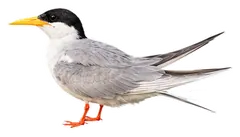 River TernSterna aurantia
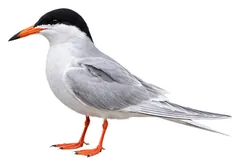 Forster's TernSterna forsteri
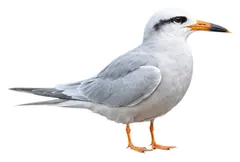 Snowy-crowned TernSterna trudeaui
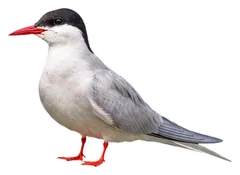 Arctic TernSterna paradisaea
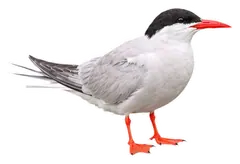 South American TernSterna hirundinacea
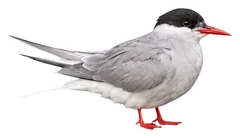 Antarctic TernSterna vittata
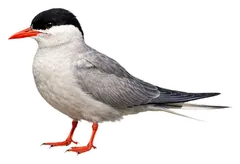 Kerguelen TernSterna virgata
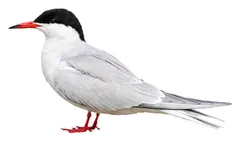 Common TernSterna hirundo
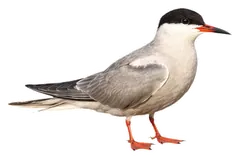 White-cheeked TernSterna repressa
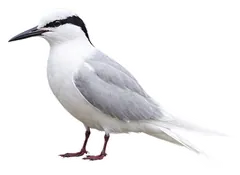 Black-naped TernSterna sumatrana
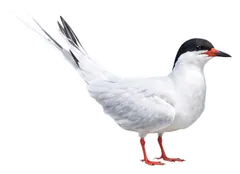 Roseate TernSterna dougallii
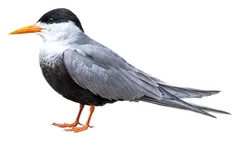 Black-bellied TernSterna acuticauda
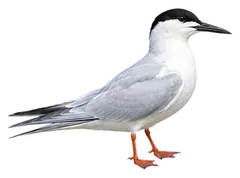
Download illustration
Free to use with credit: “Illustration: Bird Album (birdalbum.com)”. Drawn by AI from a reference photo by Ben Ackerley. ↗
Heard it but can't see it? Mingji identifies birds by sound and photo, on your phone.