 Bird Album
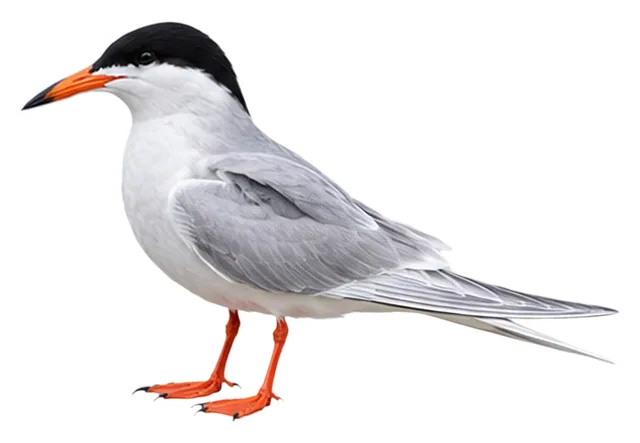
Forster's Tern
Sterna forsteri Nuttall, 1834
149 gWeight
Forster's tern (Sterna forsteri) is a tern in the family Laridae.
Busiest months: May · Most records: United States, Canada, Mexico
Where and when it's recorded
Busiest months: May · Most records: United States, Canada, Mexico

Forster's Tern has been recorded at 587 of the 8,276 birding hotspots we track, in 23 countries and regions.
Records by month Northern Hemisphere
Where it's recorded most
- Edwin B. Forsythe NWRUnited States15,074 records
- Bombay Hook National Wildlife RefugeUnited States12,574 records
- Cape Island – South Cape May MeadowsUnited States12,428 records
More places
- Fort De Soto ParkUnited States11,252 records
- Cape Island – Cape May Point SPUnited States10,505 records
- Edwin B. Forsythe NWR – Wildlife DriveUnited States9,918 records
- IRWD San Joaquin Marsh & Wildlife Sanctuary, IrvineUnited States9,905 records
- Bolsa Chica Ecological ReserveUnited States9,086 records
- Cape Island – CMP – Coral Ave. dune crossingUnited States6,426 records
- Chincoteague NWRUnited States6,254 records
Countries and regions with the most records
eBird records via GBIF up to 2024-12-31. A record means someone listed it; more records partly mean more birders, not more birds.
About
Forster's tern (Sterna forsteri) is a tern in the family Laridae. The genus name Sterna is derived from Old English "stearn", "tern", and forsteri commemorates the naturalist Johann Reinhold Forster.
Excerpt from Wikipedia, CC BY-SA 4.0 · authors · Read more on Wikipedia
Questions
How big is the Forster's Tern?
The Forster's Tern weighs around 149 g.
Where does the Forster's Tern live?
Its breeding range: North America, Middle America: inland central Alberta to central Manitoba (south-central Canada) patchily to California and northern Baja California (northwestern Mexico), Colorado, and the Great Lakes; coastal western North Atlantic from New Jersey to North Carolina; Gulf of Mexico coast from Alabama to northern Tamaulipas (northeastern Mexico). It is most often recorded in United States, Canada and Mexico.
When is the best time to see the Forster's Tern?
At the hotspots we track, it is recorded most in May (Northern Hemisphere).
Is the Forster's Tern endangered?
The IUCN Red List classifies the Forster's Tern as Least Concern.
What does the Forster's Tern eat?
Main food: Fish, shrimp & shellfish.
What family is the Forster's Tern in?
It belongs to the family Gulls, Terns, Skimmers (Laridae), order Charadriiformes.
At a glance
- Weight
- 149 g
- Habitat
- Wetland
- Diet
- Fish, shrimp & shellfish
- Lifestyle
- Feeds in the air
- Migration
- Migratory
- Conservation
- Least Concern
More measurements
- Wing
- 253 mm
- Tail
- 131 mm
- Bill
- 45 mm
- Tarsus
- 24 mm
Averages from the AVONET dataset; length from field guides where available.
Range
North America, Middle America: inland central Alberta to central Manitoba (south-central Canada) patchily to California and northern Baja California (northwestern Mexico), Colorado, and the Great Lakes; coastal western North Atlantic from New Jersey to North Carolina; Gulf of Mexico coast from Alabama to northern Tamaulipas (northeastern Mexico)
Breeding range, IOC World Bird List 15.2
Classification
- Order
- Charadriiformes
- Family
- Gulls, Terns, Skimmers Laridae
- Genus
- Sterna
Other birds in the genus Sterna
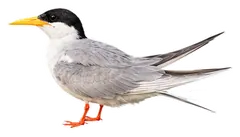 River TernSterna aurantia
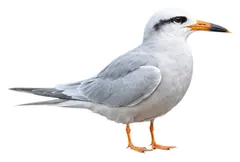 Snowy-crowned TernSterna trudeaui
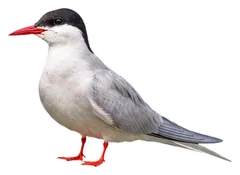 Arctic TernSterna paradisaea
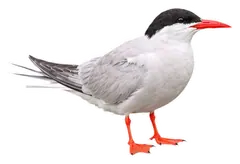 South American TernSterna hirundinacea
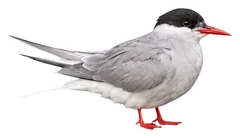 Antarctic TernSterna vittata
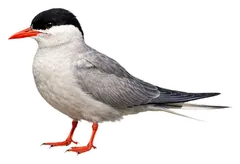 Kerguelen TernSterna virgata
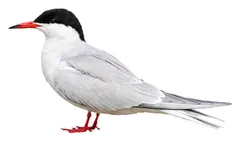 Common TernSterna hirundo
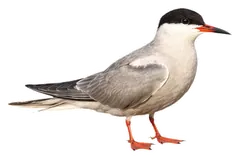 White-cheeked TernSterna repressa
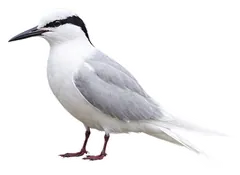 Black-naped TernSterna sumatrana
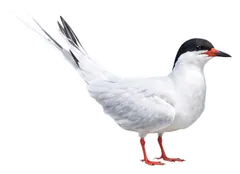 Roseate TernSterna dougallii
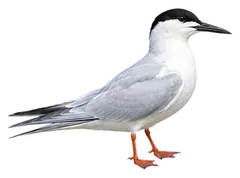 White-fronted TernSterna striata
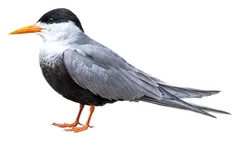 Black-bellied TernSterna acuticauda
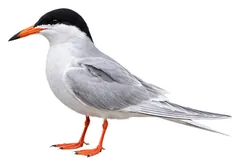
Download illustration
Free to use with credit: “Illustration: Bird Album (birdalbum.com)”. Drawn by AI from a reference photo by Bert Filemyr. ↗
Heard it but can't see it? Mingji identifies birds by sound and photo, on your phone.