 Bird Album
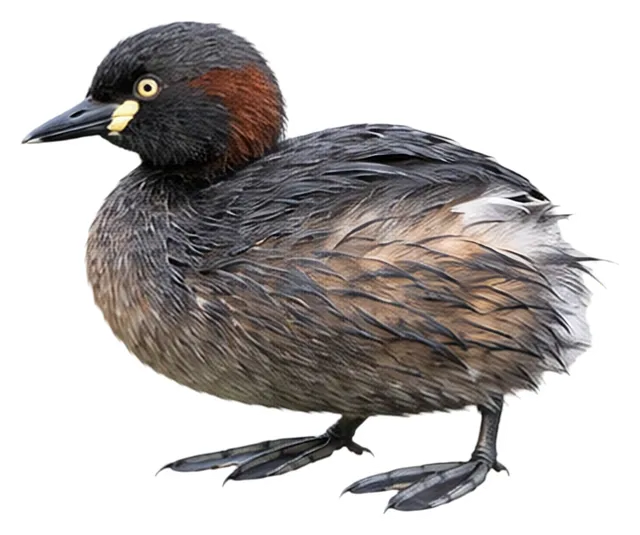
Australasian Grebe
Tachybaptus novaehollandiae (Stephens, 1826)
219 gWeight
The Australasian grebe (Tachybaptus novaehollandiae) is a small waterbird common on fresh water lakes and rivers in greater Australia, New Zealand and on nearby Pacific islands.
Busiest months: July–October · Most records: Australia, New Zealand, Papua New Guinea
Where and when it's recorded

Australasian Grebe has been recorded at 244 of the 8,171 birding hotspots we track, in 9 countries and regions.
Records by month Southern Hemisphere
Where it's recorded most
- Jerrabomberra Wetlands Nature ReserveAustralia5,992 records
- Western Treatment PlantAustralia4,638 records
- Royal ParkAustralia3,505 records
More places
- Herdsman LakeAustralia3,369 records
- Sandy Camp Road WetlandsAustralia3,313 records
- Dowse LagoonAustralia2,877 records
- Centennial ParkAustralia2,860 records
- Hasties Swamp National ParkAustralia2,503 records
- Banyule Flats ReserveAustralia2,353 records
- Royal Botanic Gardens MelbourneAustralia2,304 records
Countries and regions with the most records
eBird records via GBIF up to 2024-12-31. A record means someone listed it; more records partly mean more birders, not more birds.
About
The Australasian grebe (Tachybaptus novaehollandiae) is a small waterbird common on fresh water lakes and rivers in greater Australia, New Zealand and on nearby Pacific islands. At 25–27 cm (9.8–10.6 in) in length, it is one of the smallest members of the grebe family, along with the least grebe and little grebe.
Excerpt from Wikipedia, CC BY-SA 4.0 · authors · Read more on Wikipedia
Questions
How big is the Australasian Grebe?
The Australasian Grebe weighs around 219 g.
Where does the Australasian Grebe live?
Its breeding range: Oriental, Australasia: Java, Sangihe and Talaud islands (north of Sulawesi), Timor (eastern Lesser Sundas), New Guinea, southeastern Bismarck Archipelago, Australia, New Zealand, Vanuatu, New Caledonia and Rennell (southern Solomon Islands). It is most often recorded in Australia, New Zealand and Papua New Guinea.
When is the best time to see the Australasian Grebe?
At the hotspots we track, it is recorded most in July, August, September and October (Southern Hemisphere).
Is the Australasian Grebe endangered?
The IUCN Red List classifies the Australasian Grebe as Least Concern.
What does the Australasian Grebe eat?
Main food: Fish, shrimp & shellfish.
What family is the Australasian Grebe in?
It belongs to the family Grebes (Podicipedidae), order Podicipediformes.
At a glance
- Weight
- 219 g
- Habitat
- Wetland
- Diet
- Fish, shrimp & shellfish
- Lifestyle
- On the water surface
- Migration
- Resident (barely migrates)
- Conservation
- Least Concern
More measurements
- Wing
- 102 mm
- Tail
- 27 mm
- Bill
- 23 mm
- Tarsus
- 35 mm
Averages from the AVONET dataset; length from field guides where available.
Range
Oriental, Australasia: Java, Sangihe and Talaud islands (north of Sulawesi), Timor (eastern Lesser Sundas), New Guinea, southeastern Bismarck Archipelago, Australia, New Zealand, Vanuatu, New Caledonia and Rennell (southern Solomon Islands)
Breeding range, IOC World Bird List 15.2
Classification
- Order
- Podicipediformes
- Family
- Grebes Podicipedidae
- Genus
- Tachybaptus
Other birds in the genus Tachybaptus
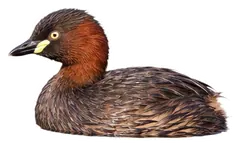 Little GrebeTachybaptus ruficollis
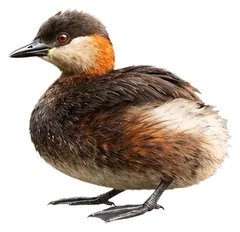 Madagascar GrebeTachybaptus pelzelnii
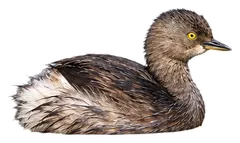 Least GrebeTachybaptus dominicus
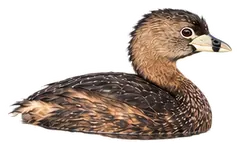 Pied-billed GrebePodilymbus podiceps
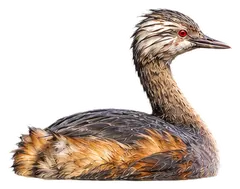 White-tufted GrebeRollandia rolland
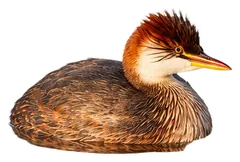 Titicaca GrebeRollandia microptera
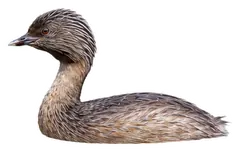 Hoary-headed GrebePoliocephalus poliocephalus
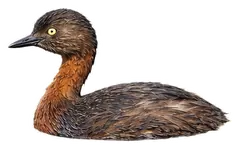 New Zealand GrebePoliocephalus rufopectus
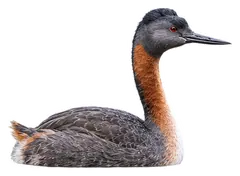 Great GrebePodiceps major
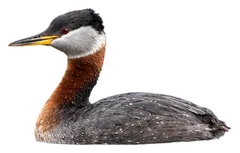 Red-necked GrebePodiceps grisegena
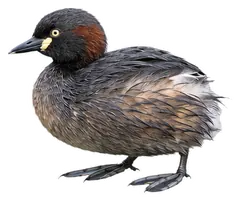
Download illustration
Free to use with credit: “Illustration: Bird Album (birdalbum.com)”. Drawn by AI from a reference photo by Ben Ackerley. ↗
Heard it but can't see it? Mingji identifies birds by sound and photo, on your phone.
In other languages
- EnglishAustralasian Grebe
- 简体中文黑喉小䴙䴘
- 繁體中文黑喉鸊鷈
- 日本語ノドグロカイツブリ
- DeutschAustralzwergtaucher
- FrançaisGrèbe australasien
- EspañolZampullín australiano
- Portuguêsmergulhão-australasiático
- ItalianoTuffetto australasiatico
- NederlandsAustralische Dodaars
- РусскийАвстралийская поганка
- Svenskaaustralisk smådopping
- DanskSortstrubet Lappedykker
- Polskiperkozek australijski