 Bird Album
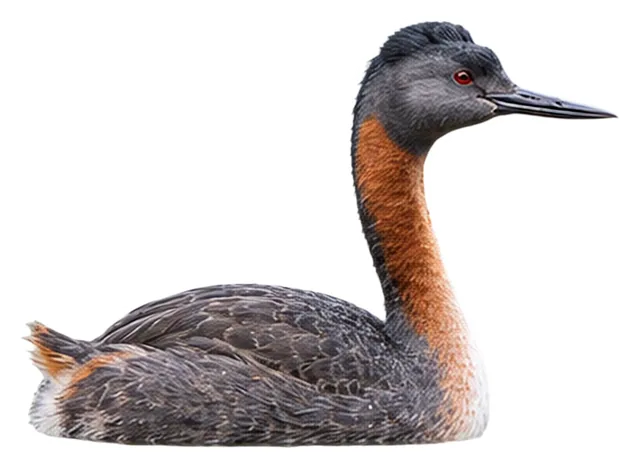
Great Grebe
Podiceps major (Boddaert, 1783)
67–80 cmLength1.6 kgWeight
The great grebe (Podiceps major) is the largest species of grebe in the world.
Busiest months: July and October–November · Most records: Argentina, Chile, Peru
Where and when it's recorded

Great Grebe has been recorded at 174 of the 8,171 birding hotspots we track, in 8 countries and regions.
Records by month Southern Hemisphere
Where it's recorded most
- Reserva Ecológica Costanera SurArgentina3,731 records
- SN Laguna BatucoChile2,187 records
- Refugio de Vida Silvestre Los Pantanos de VillaPeru1,117 records
More places
- Refugio de Vida Silvestre Los Pantanos de Villa – Laguna Costera y Playa MarvillaPeru1,101 records
- Faro Punta CarretasUruguay1,022 records
- SN Humedal Río Maipo – DesembocaduraChile900 records
- Parque Linear Nove de JulhoBrazil842 records
- Punta LoyolaArgentina835 records
- Río Aconcagua – Desembocadura Humedal UrbanoChile746 records
- PN Tierra del Fuego ÁreaArgentina727 records
Countries and regions with the most records
eBird records via GBIF up to 2024-12-31. A record means someone listed it; more records partly mean more birders, not more birds.
About
The great grebe (Podiceps major) is the largest species of grebe in the world. A disjunct population exists in northwestern Peru, while the main distribution is from extreme southeastern Brazil to Patagonia and central Chile. The population from southern Chile is considered a separate subspecies, P. m. navasi.
Excerpt from Wikipedia, CC BY-SA 4.0 · authors · Read more on Wikipedia
Questions
How big is the Great Grebe?
The Great Grebe is about 67–80 cm long and weighs around 1.6 kg.
Where does the Great Grebe live?
Its breeding range: South America: coastal western Peru; Paraguay and southeastern Brazil to southern Chile and Argentina. It is most often recorded in Argentina, Chile and Peru.
When is the best time to see the Great Grebe?
At the hotspots we track, it is recorded most in July, October and November (Southern Hemisphere).
Is the Great Grebe endangered?
The IUCN Red List classifies the Great Grebe as Least Concern.
What does the Great Grebe eat?
Main food: Fish, shrimp & shellfish.
What family is the Great Grebe in?
It belongs to the family Grebes (Podicipedidae), order Podicipediformes.
At a glance
- Length
- 67–80 cm
- Weight
- 1.6 kg
- Habitat
- Wetland
- Diet
- Fish, shrimp & shellfish
- Lifestyle
- On the water surface
- Migration
- Migratory
- Conservation
- Least Concern
More measurements
- Wing
- 181 mm
- Tail
- 41 mm
- Bill
- 82 mm
- Tarsus
- 68 mm
Averages from the AVONET dataset; length from field guides where available.
Range
South America: coastal western Peru; Paraguay and southeastern Brazil to southern Chile and Argentina
Breeding range, IOC World Bird List 15.2
Classification
- Order
- Podicipediformes
- Family
- Grebes Podicipedidae
- Genus
- Podiceps
Other birds in the genus Podiceps
 Red-necked GrebePodiceps grisegena
 Great Crested GrebePodiceps cristatus
 Horned GrebePodiceps auritus
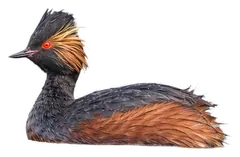 Black-necked GrebePodiceps nigricollis
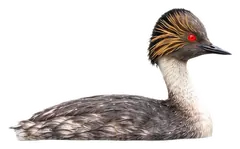 Silvery GrebePodiceps occipitalis
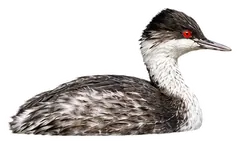 Junin GrebePodiceps taczanowskii
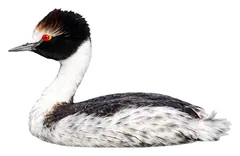 Hooded GrebePodiceps gallardoi
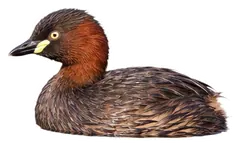 Little GrebeTachybaptus ruficollis
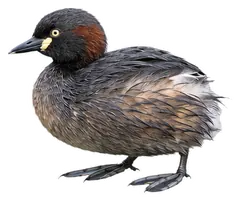 Australasian GrebeTachybaptus novaehollandiae
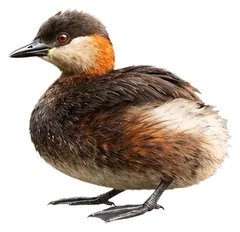 Madagascar GrebeTachybaptus pelzelnii
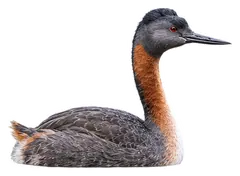
Download illustration
Free to use with credit: “Illustration: Bird Album (birdalbum.com)”. Drawn by AI from a reference photo by Daniele Colombo. ↗
Heard it but can't see it? Mingji identifies birds by sound and photo, on your phone.