 Bird Album
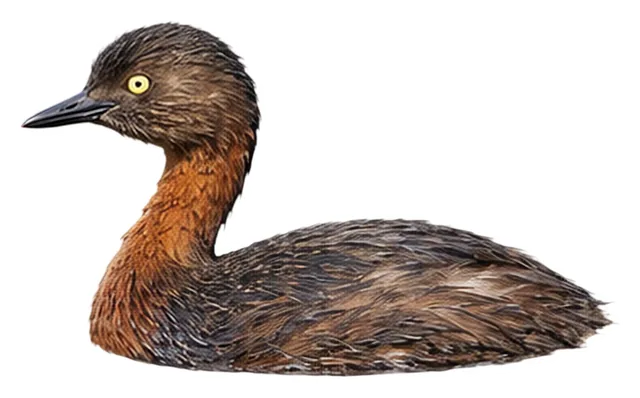
New Zealand Grebe
Poliocephalus rufopectus (Gray, GR, 1843)
249 gWeight
The New Zealand dabchick (Poliocephalus rufopectus), also known as the New Zealand grebe or by its Māori name weweia, is a member of the grebe family endemic to New Zealand.
Busiest months: November · Most records: New Zealand
Where and when it's recorded

New Zealand Grebe has been recorded at 46 of the 8,171 birding hotspots we track, in 1 country or region.
Records by month Southern Hemisphere
Where it's recorded most
- Mangere WTP – Puketutu CanalNew Zealand504 records
- Tokaanu Old Wharf RdNew Zealand398 records
- Rotorua – Sulphur PointNew Zealand351 records
More places
- Otaki Sewage PondsNew Zealand334 records
- Lake ElterwaterNew Zealand320 records
- Mangere WTP – main holding pondNew Zealand310 records
- Western Springs Lakeside ParkNew Zealand258 records
- Whangarei – Vinegar LakeNew Zealand245 records
- Auckland – Maungarei Springs WetlandNew Zealand196 records
- Foxton Beach – Palmer Rd pondsNew Zealand186 records
Countries and regions with the most records
eBird records via GBIF up to 2024-12-31. A record means someone listed it; more records partly mean more birders, not more birds.
About
The New Zealand dabchick (Poliocephalus rufopectus), also known as the New Zealand grebe or by its Māori name weweia, is a member of the grebe family endemic to New Zealand.
Excerpt from Wikipedia, CC BY-SA 4.0 · authors · Read more on Wikipedia
Questions
How big is the New Zealand Grebe?
The New Zealand Grebe weighs around 249 g.
Where does the New Zealand Grebe live?
Its breeding range: Australasia: North Island (New Zealand). It is most often recorded in New Zealand.
When is the best time to see the New Zealand Grebe?
At the hotspots we track, it is recorded most in November (Southern Hemisphere).
Is the New Zealand Grebe endangered?
The IUCN Red List classifies the New Zealand Grebe as Least Concern.
What does the New Zealand Grebe eat?
Main food: Fish, shrimp & shellfish.
What family is the New Zealand Grebe in?
It belongs to the family Grebes (Podicipedidae), order Podicipediformes.
At a glance
- Weight
- 249 g
- Habitat
- Wetland
- Diet
- Fish, shrimp & shellfish
- Lifestyle
- On the water surface
- Migration
- Resident (barely migrates)
- Conservation
- Least Concern
More measurements
- Wing
- 111 mm
- Tail
- 31 mm
- Bill
- 27 mm
- Tarsus
- 36 mm
Averages from the AVONET dataset; length from field guides where available.
Range
Australasia: North Island (New Zealand)
Breeding range, IOC World Bird List 15.2
Classification
- Order
- Podicipediformes
- Family
- Grebes Podicipedidae
- Genus
- Poliocephalus
Other birds in the genus Poliocephalus
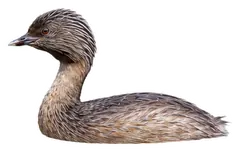 Hoary-headed GrebePoliocephalus poliocephalus
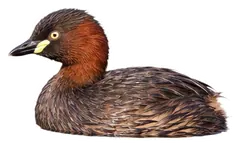 Little GrebeTachybaptus ruficollis
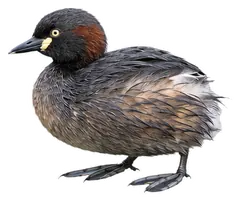 Australasian GrebeTachybaptus novaehollandiae
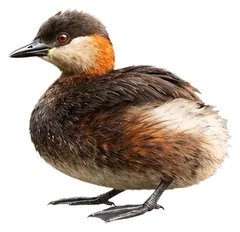 Madagascar GrebeTachybaptus pelzelnii
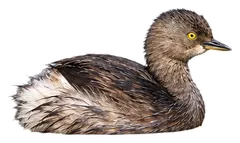 Least GrebeTachybaptus dominicus
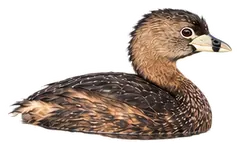 Pied-billed GrebePodilymbus podiceps
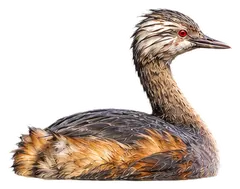 White-tufted GrebeRollandia rolland
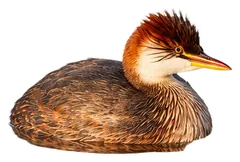 Titicaca GrebeRollandia microptera
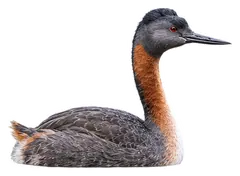 Great GrebePodiceps major
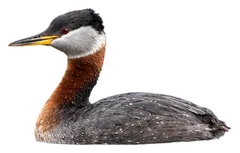 Red-necked GrebePodiceps grisegena
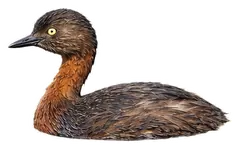
Download illustration
Free to use with credit: “Illustration: Bird Album (birdalbum.com)”. Drawn by AI from a reference photo by Caiden. ↗
Heard it but can't see it? Mingji identifies birds by sound and photo, on your phone.
In other languages
- EnglishNew Zealand Grebe
- 简体中文新西兰䴙䴘
- 繁體中文紐西蘭鸊鷈
- 日本語ニュージーランドカイツブリ
- DeutschMaoritaucher
- FrançaisGrèbe de Nouvelle-Zélande
- EspañolZampullín maorí
- Portuguêsmergulhão-neozelandês
- ItalianoSvasso di Nuova Zelanda
- NederlandsNieuw-Zeelandse Fuut
- РусскийНовозеландская поганка
- Svenskamaoridopping
- DanskNewzealandsk Lappedykker
- Polskiperkoz maoryski