 Bird Album
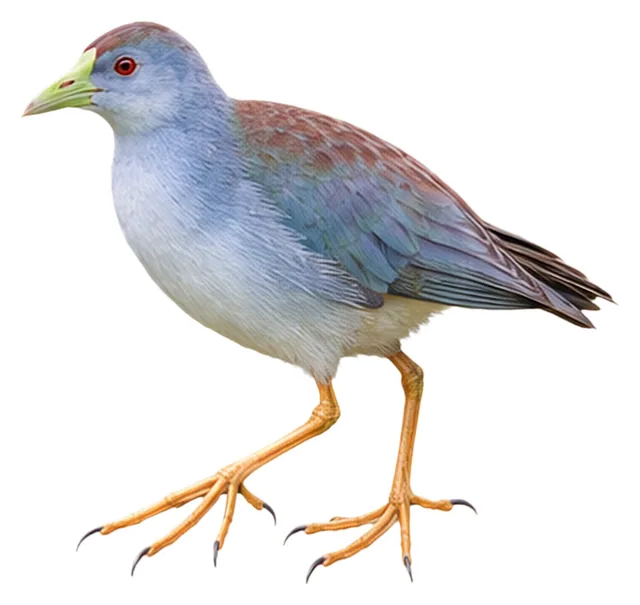
Azure Gallinule
Porphyrio flavirostris (Gmelin, JF, 1789)
23–26 cmLength93 gWeight
The azure gallinule (Porphyrio flavirostris) is a species of bird in subfamily Rallinae of family Rallidae, the rails, gallinules, and coots.
Busiest months: January and November · Most records: Ecuador, Brazil, Peru
Where and when it's recorded

Azure Gallinule has been recorded at 96 of the 8,171 birding hotspots we track, in 13 countries and regions.
Records by month Southern Hemisphere
Where it's recorded most
- Reserva Biológica LimoncochaEcuador432 records
- Hato El CedralVenezuela96 records
- Barba Azul Nature ReserveBolivia74 records
More places
- Sani LodgeEcuador74 records
- La Selva LodgeEcuador71 records
- Nariva SwampTrinidad & Tobago51 records
- Poconé – Pousada PiuvalBrazil49 records
- Cocha BlancoPeru46 records
- Napo Wildlife CenterEcuador37 records
- Refúgio Ecológico CaimanBrazil36 records
Countries and regions with the most records
eBird records via GBIF up to 2024-12-31. A record means someone listed it; more records partly mean more birders, not more birds.
About
The azure gallinule (Porphyrio flavirostris) is a species of bird in subfamily Rallinae of family Rallidae, the rails, gallinules, and coots. It is found in Argentina, Bolivia, Brazil, Colombia, Ecuador, French Guiana, Guyana, Paraguay, Peru, Suriname, Trinidad and Tobago, and Venezuela.
Excerpt from Wikipedia, CC BY-SA 4.0 · authors · Read more on Wikipedia
Questions
How big is the Azure Gallinule?
The Azure Gallinule is about 23–26 cm long and weighs around 93 g.
Where does the Azure Gallinule live?
Its breeding range: South America: northern, Amazonia, south-central. It is most often recorded in Ecuador, Brazil and Peru.
When is the best time to see the Azure Gallinule?
At the hotspots we track, it is recorded most in January and November (Southern Hemisphere).
Is the Azure Gallinule endangered?
The IUCN Red List classifies the Azure Gallinule as Least Concern.
What does the Azure Gallinule eat?
Main food: Omnivore.
What family is the Azure Gallinule in?
It belongs to the family Rails, Crakes & Coots (Rallidae), order Gruiformes.
At a glance
- Length
- 23–26 cm
- Weight
- 93 g
- Habitat
- Wetland
- Diet
- Omnivore
- Lifestyle
- Active on the ground
- Migration
- Partial migrant
- Conservation
- Least Concern
More measurements
- Wing
- 132 mm
- Tail
- 69 mm
- Bill
- 25 mm
- Tarsus
- 37 mm
Averages from the AVONET dataset; length from field guides where available.
Range
South America: northern, Amazonia, south-central
Breeding range, IOC World Bird List 15.2
Classification
- Order
- Gruiformes
- Family
- Rails, Crakes & Coots Rallidae
- Genus
- Porphyrio
Other birds in the genus Porphyrio
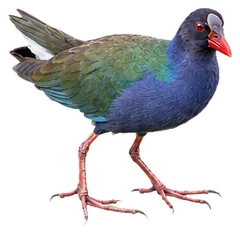 Allen's GallinulePorphyrio alleni
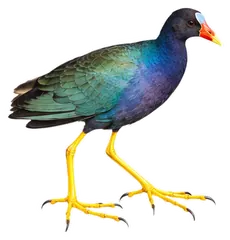 Purple GallinulePorphyrio martinica
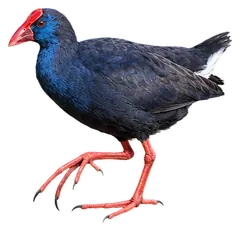 Western SwamphenPorphyrio porphyrio
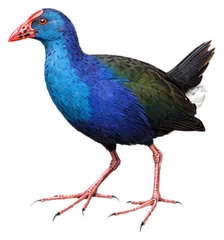 African SwamphenPorphyrio madagascariensis
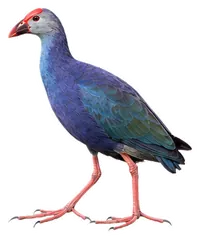 Grey-headed SwamphenPorphyrio poliocephalus
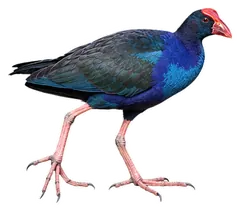 Black-backed SwamphenPorphyrio indicus
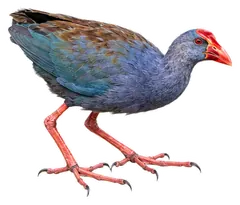 Philippine SwamphenPorphyrio pulverulentus
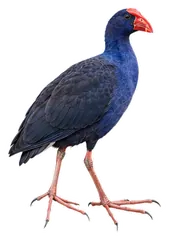 Australasian SwamphenPorphyrio melanotus
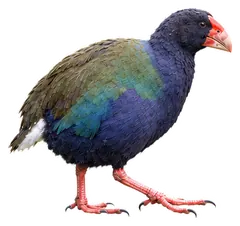 South Island TakahePorphyrio hochstetteri
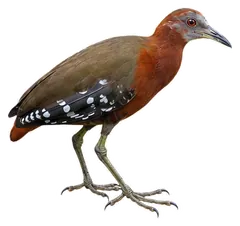 Grey-throated RailCanirallus oculeus
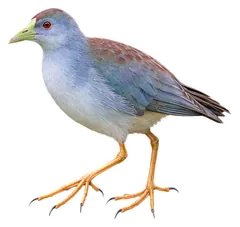
Download illustration
Free to use with credit: “Illustration: Bird Album (birdalbum.com)”. Drawn by AI from a reference photo by Vincent A. Vos. ↗
Heard it but can't see it? Mingji identifies birds by sound and photo, on your phone.
In other languages
- EnglishAzure Gallinule
- 简体中文淡青水鸡
- 繁體中文藍胸青水雞
- 日本語ナンベイバン(ナンベイムラサキバン)
- DeutschAzursultanshuhn
- FrançaisTalève favorite
- EspañolCalamoncillo celeste
- Portuguêsfrango-de-água-pequeno
- ItalianoPollo sultano azzurro
- NederlandsAzuurpurperhoen
- РусскийЛазурная султанка
- Svenskaazursultanhöna
- DanskGulnæbbet Sultanhøne
- Polskisułtanka żółtodzioba