 Bird Album
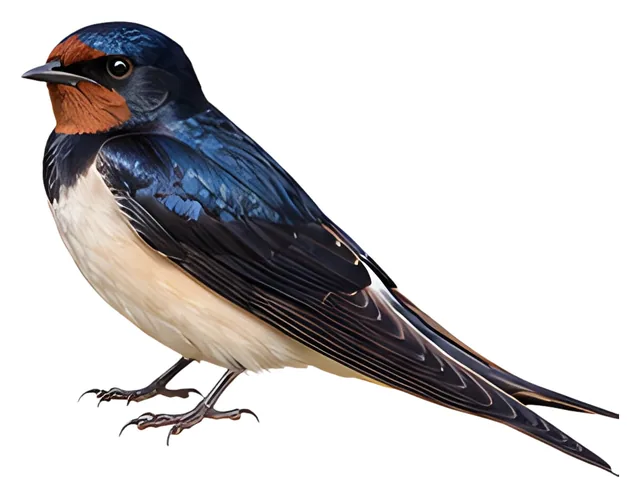
Barn Swallow
Hirundo rustica Linnaeus, 1758
17–19 cmLength32 cmWingspan18 gWeight
It has a red face, blue back and deeply forked tail, and catches insects in flight.
Busiest months: May · Most records: United States, Canada, China
How to identify
Field marks
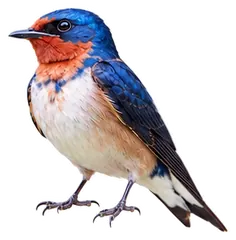
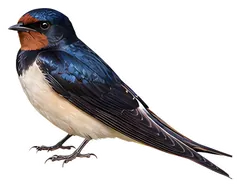
- Forehead, chin and throat rufous
- Upperparts steel-blue
- A single broad, dark blue band across the breast
- Deeply forked tail, with a row of white patches near the outer tips
Male, female and young
Female is similar, but has shorter tail feathers, weaker blue metallic gloss and a paler belly; juvenile is rufous-tinged, with paler rufous on the face and short tail feathers.
Voice
Usual call is “witt” or “witt-witt”, changing to a loud “splee-plink” when excited or driving off intruders.
Where and when it's recorded
Busiest months: May · Most records: United States, Canada, China

Barn Swallow has been recorded at 6,878 of the 8,276 birding hotspots we track, in 215 countries and regions.
Records by month Northern Hemisphere
Where it's recorded most
- Montrose Point Bird Sanctuary, Lincoln Park, ChicagoUnited States21,400 records
- Point Pelee National ParkCanada18,598 records
- John Heinz NWR – impoundmentUnited States13,014 records
More places
- Howard Marsh MetroparkUnited States12,111 records
- Parker River NWRUnited States11,538 records
- Billy Frank Jr. Nisqually NWRUnited States11,218 records
- Edwin B. Forsythe NWRUnited States10,865 records
- Hornsby BendUnited States10,859 records
- Prospect ParkUnited States10,616 records
- Magee Marsh – BoardwalkUnited States10,514 records
Countries and regions with the most records
eBird records via GBIF up to 2024-12-31. A record means someone listed it; more records partly mean more birders, not more birds.
About
The barn swallow (Hirundo rustica) is the most widespread species of swallow in the world, occurring on all continents, with vagrants reported even in Antarctica. It is a distinctive passerine bird with blue upperparts and a long, deeply forked tail. In Anglophone Europe, it is just called the swallow; in northern Europe, it is the only member of family Hirundinidae called a "swallow" rather than a "martin".
Excerpt from Wikipedia, CC BY-SA 4.0 · authors · Read more on Wikipedia
Questions
How big is the Barn Swallow?
The Barn Swallow is about 17–19 cm long, with a wingspan of 32 cm and weighs around 18 g.
Where does the Barn Swallow live?
Its breeding range: Worldwide: Eurasia and North America. It is most often recorded in United States, Canada and China.
When is the best time to see the Barn Swallow?
At the hotspots we track, it is recorded most in May (Northern Hemisphere).
Is the Barn Swallow endangered?
The IUCN Red List classifies the Barn Swallow as Least Concern.
What does the Barn Swallow eat?
Main food: Insects & other invertebrates.
What family is the Barn Swallow in?
It belongs to the family Swallows, Martins (Hirundinidae), order Passerines (Passeriformes).
At a glance
- Length
- 17–19 cm
- Wingspan
- 32 cm
- Weight
- 18 g
- Habitat
- Towns & farmland
- Diet
- Insects & other invertebrates
- Lifestyle
- Feeds in the air
- Migration
- Migratory
- Conservation
- Least Concern
More measurements
- Wing
- 116 mm
- Tail
- 70 mm
- Bill
- 12 mm
- Tarsus
- 12 mm
Averages from the AVONET dataset; length from field guides where available.
Range
Worldwide: Eurasia and North America
Breeding range, IOC World Bird List 15.2
Subspecies · 2
- Hirundo rustica gutturalis e Himalayas to Korean Pen. and Japan, e, s China and Taiwan (China) | non-breeding: to se Asia, Philippines, New Guinea and n coastal Australia
- Hirundo rustica mandschurica ne China | non-breeding: to se Asia?
Classification
- Order
- Passerines Passeriformes
- Family
- Swallows, Martins Hirundinidae
- Genus
- Hirundo
Other birds in the genus Hirundo
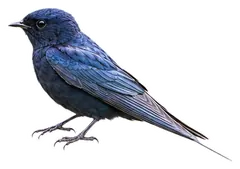 Blue SwallowHirundo atrocaerulea
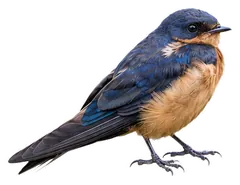 Black-and-rufous SwallowHirundo nigrorufa
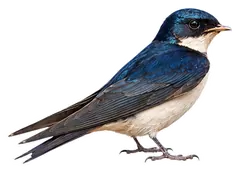 Pearl-breasted SwallowHirundo dimidiata
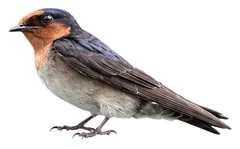 Hill SwallowHirundo domicola
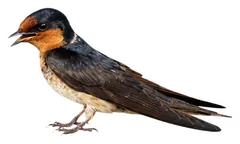 Pacific SwallowHirundo javanica
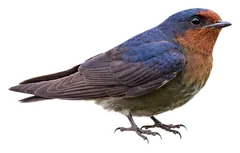 Tahiti SwallowHirundo tahitica
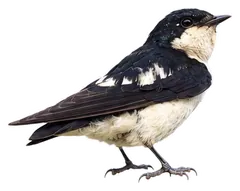 Pied-winged SwallowHirundo leucosoma
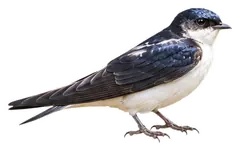 White-tailed SwallowHirundo megaensis
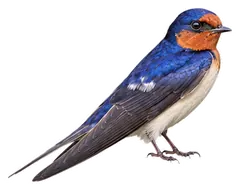 Welcome SwallowHirundo neoxena
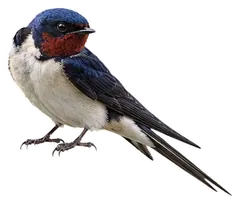 Red-chested SwallowHirundo lucida
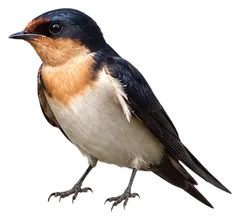 Ethiopian SwallowHirundo aethiopica
 Angola SwallowHirundo angolensis
Download illustration
Free to use with credit: “Illustration: Bird Album (birdalbum.com)”. Drawn by AI from a reference photo by Andreas Trepte. ↗

Heard it but can't see it? Mingji identifies birds by sound and photo, on your phone.