 Bird Album
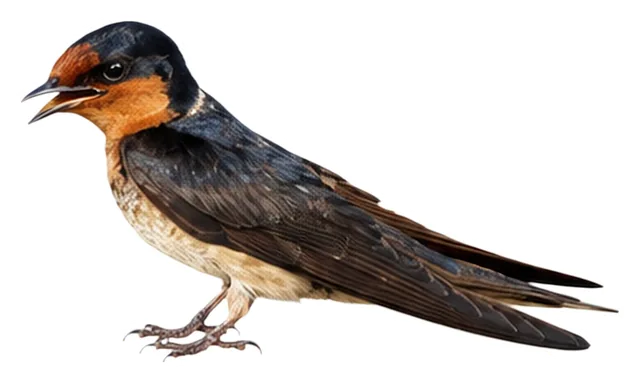
Pacific Swallow
Hirundo javanica Sparrman, 1789
13 cmLength18 gWeight
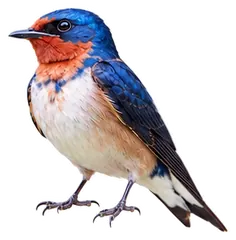
This small swallow has a blue-black back, red face and throat, and a shorter tail than Barn Swallow.
Busiest months: October · Most records: China, Singapore, Malaysia
Looks like Barn Swallow
How to identify
Field marks
- Face and throat red
- Back and crown blue-black
- Wings and tail rufous-tinged
- Tail rather short and shallowly forked
Similar species
Where and when it's recorded
Busiest months: October · Most records: China, Singapore, Malaysia

Pacific Swallow has been recorded at 579 of the 8,276 birding hotspots we track, in 20 countries and regions.
Records by month Northern Hemisphere
Where it's recorded most
- Taipei – Tianliaoyang WetlandTaiwan (China)3,677 records
- Singapore Botanic GardensSingapore1,905 records
- Taipei – National Taiwan University Main CampusTaiwan (China)1,783 records
More places
- Kenting NP – Sheding Lingxiao Pavilion (Raptors Observation Spot)Taiwan (China)1,715 records
- Sepilok – Rainforest Discovery CenterMalaysia1,671 records
- Aogu Wetland IBATaiwan (China)1,622 records
- Marina EastSingapore1,569 records
- Danum Valley Borneo Rainforest LodgeMalaysia1,566 records
- Sungei Buloh Wetland ReserveSingapore1,419 records
- Nantou – Puli Tzuchi FoundationTaiwan (China)1,416 records
Countries and regions with the most records
eBird records via GBIF up to 2024-12-31. A record means someone listed it; more records partly mean more birders, not more birds.
About
The Pacific swallow (Hirundo javanica) is a small passerine bird in the swallow family Hirundinidae. It breeds in tropical southern Asia and the islands of the south Pacific. It is resident apart from some local seasonal movements.
Excerpt from Wikipedia, CC BY-SA 4.0 · authors · Read more on Wikipedia
Questions
How big is the Pacific Swallow?
The Pacific Swallow is about 13 cm long and weighs around 18 g.
Where does the Pacific Swallow live?
Its breeding range: Oriental, Australasia, Pacific Ocean: Southeast Asia to New Guinea and western, central Micronesia. It is most often recorded in China, Singapore and Malaysia.
When is the best time to see the Pacific Swallow?
At the hotspots we track, it is recorded most in October (Northern Hemisphere).
Is the Pacific Swallow endangered?
The IUCN Red List classifies the Pacific Swallow as Least Concern.
What does the Pacific Swallow eat?
Main food: Insects & other invertebrates.
What family is the Pacific Swallow in?
It belongs to the family Swallows, Martins (Hirundinidae), order Passerines (Passeriformes).
At a glance
- Length
- 13 cm
- Weight
- 18 g
- Habitat
- Coast & tidal flats
- Diet
- Insects & other invertebrates
- Lifestyle
- Feeds in the air
- Migration
- Partial migrant
- Conservation
- Least Concern
More measurements
- Wing
- 106 mm
- Tail
- 48 mm
- Bill
- 12 mm
- Tarsus
- 10 mm
Averages from the AVONET dataset; length from field guides where available.
Range
Oriental, Australasia, Pacific Ocean: Southeast Asia to New Guinea and western, central Micronesia
Breeding range, IOC World Bird List 15.2
Subspecies · 1
- Hirundo javanica namiyei Ryukyu Is. (s Japan) and Taiwan (China)
Classification
- Order
- Passerines Passeriformes
- Family
- Swallows, Martins Hirundinidae
- Genus
- Hirundo
Other birds in the genus Hirundo
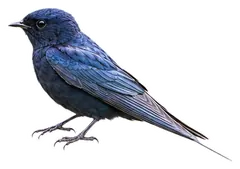 Blue SwallowHirundo atrocaerulea
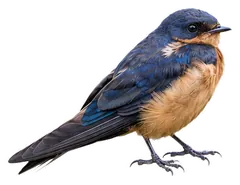 Black-and-rufous SwallowHirundo nigrorufa
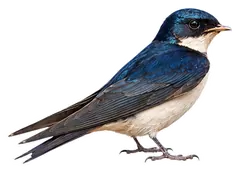 Pearl-breasted SwallowHirundo dimidiata
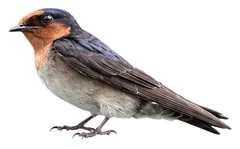 Hill SwallowHirundo domicola
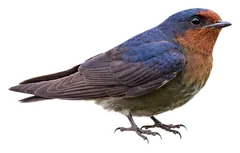 Tahiti SwallowHirundo tahitica
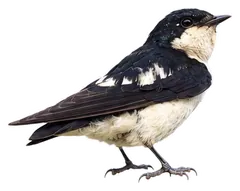 Pied-winged SwallowHirundo leucosoma
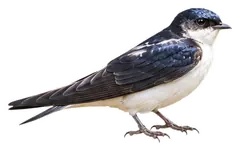 White-tailed SwallowHirundo megaensis
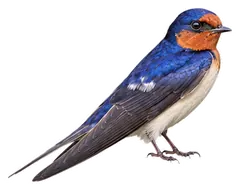 Welcome SwallowHirundo neoxena
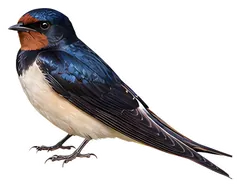 Barn SwallowHirundo rustica
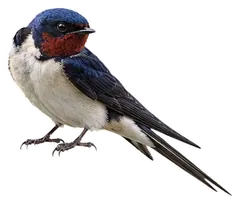 Red-chested SwallowHirundo lucida
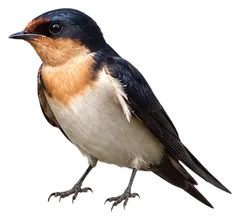 Ethiopian SwallowHirundo aethiopica
 Angola SwallowHirundo angolensis
Download illustration
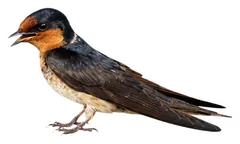
Free to use with credit: “Illustration: Bird Album (birdalbum.com)”. Drawn by AI from a reference photo by Chan Chee Keong. ↗
Heard it but can't see it? Mingji identifies birds by sound and photo, on your phone.