 Bird Album
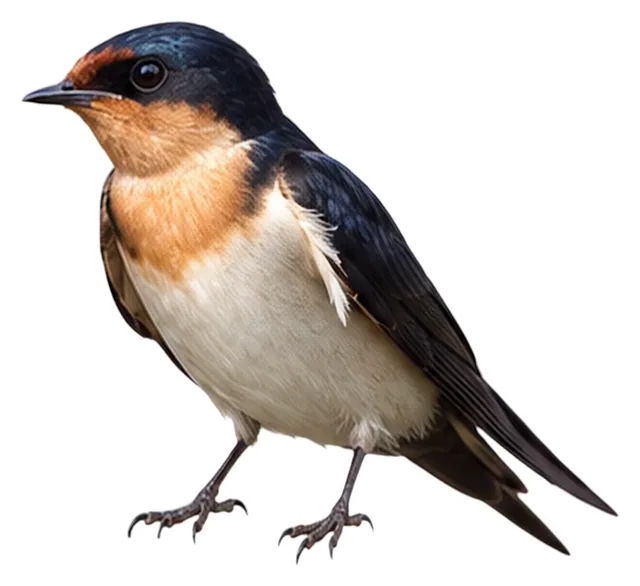
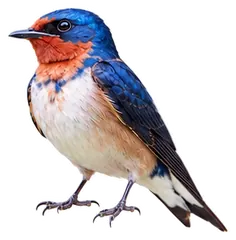
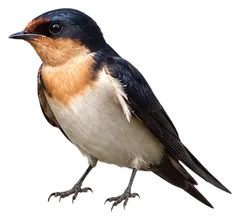
Ethiopian Swallow
Hirundo aethiopica Blanford, 1869
13 gWeight
The Ethiopian swallow (Hirundo aethiopica) is a species of bird in the family Hirundinidae.
Busiest months: March and October–November · Most records: Ghana, Kenya, Ethiopia
Where and when it's recorded
Busiest months: March and October–November · Most records: Ghana, Kenya, Ethiopia

Ethiopian Swallow has been recorded at 146 of the 8,276 birding hotspots we track, in 17 countries and regions.
Records by month Northern Hemisphere
Where it's recorded most
- Sakumono LagoonGhana140 records
- Brenu Beach – grasslandsGhana117 records
- Mpala Ranch and Research CentreKenya113 records
More places
- Nguuni Nature SanctuaryKenya99 records
- Antwikwaa – forest edge & farm scrubGhana97 records
- Sabaki River EstuaryKenya90 records
- Ebekawopa (Abrafo) – 'farm scrub' habitatGhana71 records
- Winneba LagoonGhana63 records
- Kakum National ParkGhana58 records
- Mpala Research Centre – LabsKenya58 records
Countries and regions with the most records
eBird records via GBIF up to 2024-12-31. A record means someone listed it; more records partly mean more birders, not more birds.
About
The Ethiopian swallow (Hirundo aethiopica) is a species of bird in the family Hirundinidae. Although it is non-migratory, its range is wide, extending from Benin to Burkina Faso, Cameroon, Central African Republic, Chad, Democratic Republic of the Congo, Ivory Coast, Eritrea, Ethiopia, Ghana, Guinea, Israel, Kenya, Mali, Niger, Nigeria, Senegal, Somalia, Sudan, Tanzania, Togo, Uganda.
Excerpt from Wikipedia, CC BY-SA 4.0 · authors · Read more on Wikipedia
Questions
How big is the Ethiopian Swallow?
The Ethiopian Swallow weighs around 13 g.
Where does the Ethiopian Swallow live?
Its breeding range: Africa: northeastern, central. It is most often recorded in Ghana, Kenya and Ethiopia.
When is the best time to see the Ethiopian Swallow?
At the hotspots we track, it is recorded most in March, October and November (Northern Hemisphere).
Is the Ethiopian Swallow endangered?
The IUCN Red List classifies the Ethiopian Swallow as Least Concern.
What does the Ethiopian Swallow eat?
Main food: Insects & other invertebrates.
What family is the Ethiopian Swallow in?
It belongs to the family Swallows, Martins (Hirundinidae), order Passerines (Passeriformes).
At a glance
- Weight
- 13 g
- Habitat
- Grassland
- Diet
- Insects & other invertebrates
- Lifestyle
- Feeds in the air
- Migration
- Resident (barely migrates)
- Conservation
- Least Concern
More measurements
- Wing
- 105 mm
- Tail
- 60 mm
- Bill
- 11 mm
- Tarsus
- 11 mm
Averages from the AVONET dataset; length from field guides where available.
Range
Africa: northeastern, central
Breeding range, IOC World Bird List 15.2
Classification
- Order
- Passerines Passeriformes
- Family
- Swallows, Martins Hirundinidae
- Genus
- Hirundo
Other birds in the genus Hirundo
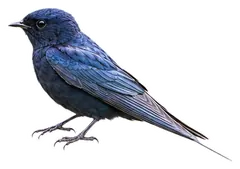 Blue SwallowHirundo atrocaerulea
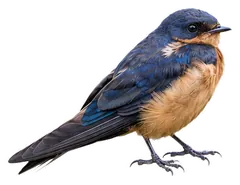 Black-and-rufous SwallowHirundo nigrorufa
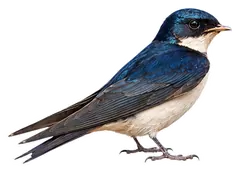 Pearl-breasted SwallowHirundo dimidiata
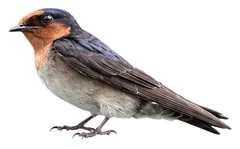 Hill SwallowHirundo domicola
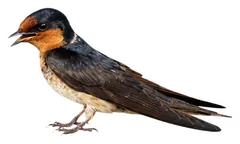 Pacific SwallowHirundo javanica
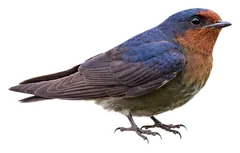 Tahiti SwallowHirundo tahitica
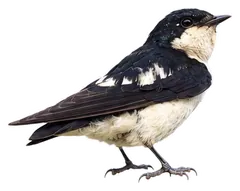 Pied-winged SwallowHirundo leucosoma
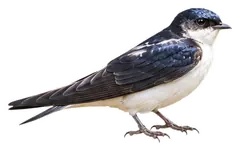 White-tailed SwallowHirundo megaensis
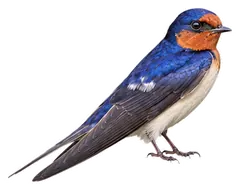 Welcome SwallowHirundo neoxena
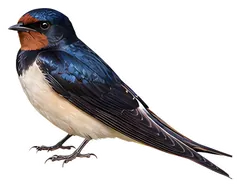 Barn SwallowHirundo rustica
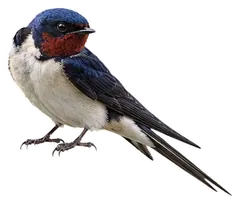 Red-chested SwallowHirundo lucida
 Angola SwallowHirundo angolensis
Download illustration
Free to use with credit: “Illustration: Bird Album (birdalbum.com)”. Drawn by AI from a reference photo by mlanguy. ↗
Heard it but can't see it? Mingji identifies birds by sound and photo, on your phone.