 Bird Album
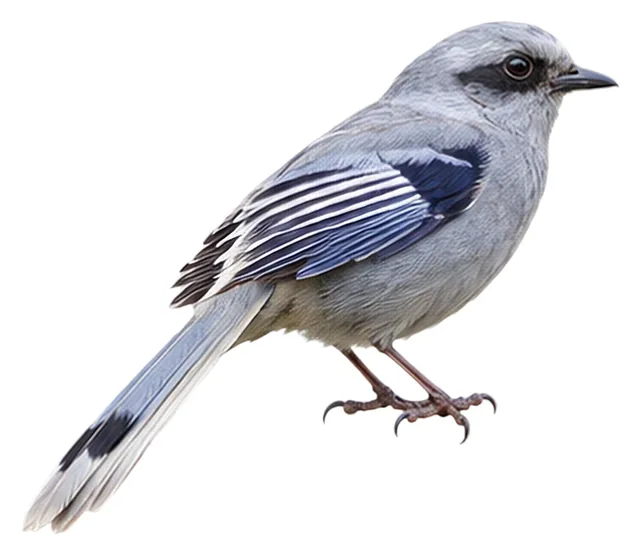
Beautiful Sibia
Heterophasia pulchella (Godwin-Austen, 1874)
≈22 cmLength41 gWeight
The beautiful sibia (Heterophasia pulchella) is a species of bird in the family Leiothrichidae.
Busiest months: January · Most records: China
How to identify
Where and when it's recorded

Beautiful Sibia has been recorded at 39 of the 8,171 birding hotspots we track, in 1 country or region.
Records by month Northern Hemisphere
Where it's recorded most
- Baihualing [General Area]China468 records
- Dulong River ValleyChina68 records
- Pianma Snow PassChina62 records
More places
- JiangjiazhaiChina39 records
- Rinchenpung MonasteryChina28 records
- Baihualing – Jiujiezi SaddleChina27 records
- Gaoligongshan Nature Park at NankangChina21 records
- SudianChina18 records
- Baihualing – Hide 11China13 records
- Baihualing – Hot Spring LoopChina12 records
Countries and regions with the most records
eBird records via GBIF up to 2024-12-31. A record means someone listed it; more records partly mean more birders, not more birds.
About
The beautiful sibia (Heterophasia pulchella) is a species of bird in the family Leiothrichidae. It is found in China, India, and Myanmar.
Excerpt from Wikipedia, CC BY-SA 4.0 · authors · Read more on Wikipedia
Questions
How big is the Beautiful Sibia?
The Beautiful Sibia is about ≈22 cm long and weighs around 41 g.
Where does the Beautiful Sibia live?
Its breeding range: Oriental: northeastern India to southeastern Tibet, northern Myanmar and south-central China. It is most often recorded in China.
When is the best time to see the Beautiful Sibia?
At the hotspots we track, it is recorded most in January (Northern Hemisphere).
Is the Beautiful Sibia endangered?
The IUCN Red List classifies the Beautiful Sibia as Least Concern.
What does the Beautiful Sibia eat?
Main food: Insects & other invertebrates.
What family is the Beautiful Sibia in?
It belongs to the family Laughingthrushes & Allies (Leiothrichidae), order Passerines (Passeriformes).
At a glance
- Length
- ≈22 cm
- Weight
- 41 g
- Habitat
- Forest
- Diet
- Insects & other invertebrates
- Lifestyle
- Perches in trees
- Migration
- Resident (barely migrates)
- Conservation
- Least Concern
More measurements
- Wing
- 98 mm
- Tail
- 108 mm
- Bill
- 25 mm
- Tarsus
- 31 mm
Averages from the AVONET dataset; length from field guides where available.
Range
Oriental: northeastern India to southeastern Tibet, northern Myanmar and south-central China
Breeding range, IOC World Bird List 15.2
Subspecies · 2
- Heterophasia pulchella nigroaurita ne India (w, c Arunachal Pradesh) and se Tibet
- Heterophasia pulchella pulchella ne India (e Arunachal Pradesh to Nagaland), n Myanmar and sc China (w Yunnan)
Classification
- Order
- Passerines Passeriformes
- Family
- Laughingthrushes & Allies Leiothrichidae
- Genus
- Heterophasia
Other birds in the genus Heterophasia
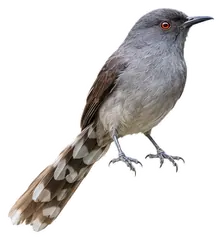 Long-tailed SibiaHeterophasia picaoides
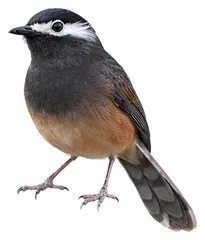 White-eared SibiaHeterophasia auricularis
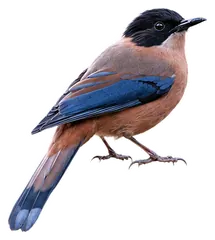 Rufous SibiaHeterophasia capistrata
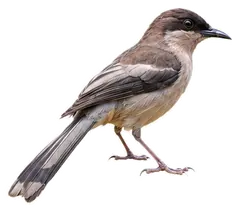 Grey SibiaHeterophasia gracilis
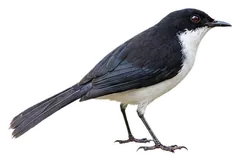 Dark-backed SibiaHeterophasia melanoleuca
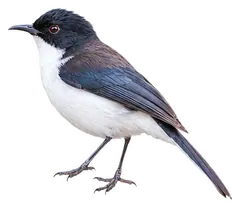 Black-headed SibiaHeterophasia desgodinsi
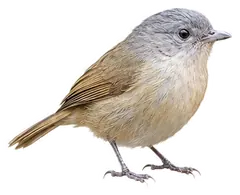 Brown-cheeked FulvettaAlcippe poioicephala
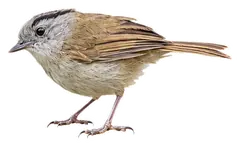 Black-browed FulvettaAlcippe grotei
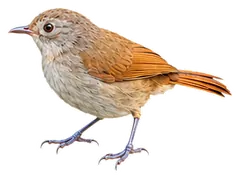 Brown FulvettaAlcippe brunneicauda
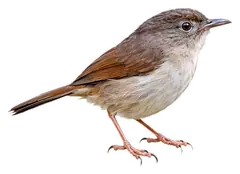 Javan FulvettaAlcippe pyrrhoptera
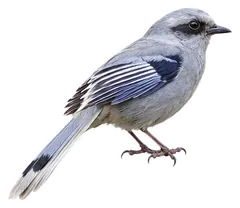
Download illustration
Free to use with credit: “Illustration: Bird Album (birdalbum.com)”. Drawn by AI from a reference photo by Dibyendu Ash. ↗

Heard it but can't see it? Mingji identifies birds by sound and photo, on your phone.