Rufous Sibia
Heterophasia capistrata (Vigors, 1831)
≈22 cmLength39 gWeight
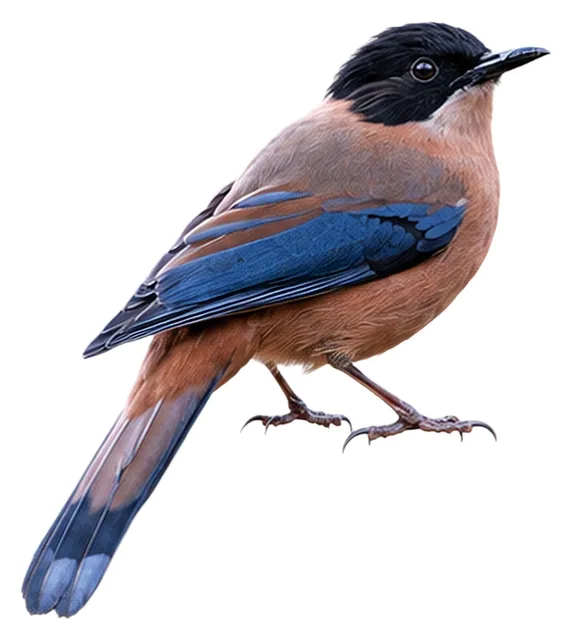
This bird has a rufous body and a black head, and often raises its crest.
Busiest months: April · Most records: India, Bhutan, Nepal
How to identify
Field marks
- Black head
- Body mainly rufous
- Often raises its crest
Voice
The song is melodious and delivered with vigor.
Where and when it's recorded
Busiest months: April · Most records: India, Bhutan, Nepal

Rufous Sibia has been recorded at 79 of the 8,276 birding hotspots we track, in 4 countries and regions.
Records by month Northern Hemisphere
Where it's recorded most
- Munsyari – Bheema WodeyarIndia1,282 records
- SattalIndia938 records
- PangotIndia769 records
More places
- Mt. PhulchowkiNepal530 records
- Mt. Phulchowki - Lowest Few Miles of RoadNepal484 records
- Mahananda WLS – LatpancharIndia474 records
- Dochula – Royal Botanical ParkBhutan382 records
- Yongkhola campBhutan234 records
- Hike to Tiger's Nest MonasteryBhutan225 records
- Mahananda WLS – Rongtong and Shivakhola ForestIndia214 records
Countries and regions with the most records
eBird records via GBIF up to 2024-12-31. A record means someone listed it; more records partly mean more birders, not more birds.
About
The rufous sibia (Heterophasia capistrata) is a species of bird in the family Leiothrichidae. It feeds on berries and insects.
Excerpt from Wikipedia, CC BY-SA 4.0 · authors · Read more on Wikipedia
Questions
How big is the Rufous Sibia?
The Rufous Sibia is about ≈22 cm long and weighs around 39 g.
Where does the Rufous Sibia live?
Its breeding range: Oriental: Himalayas. It is most often recorded in India, Bhutan and Nepal.
When is the best time to see the Rufous Sibia?
At the hotspots we track, it is recorded most in April (Northern Hemisphere).
Is the Rufous Sibia endangered?
The IUCN Red List classifies the Rufous Sibia as Least Concern.
What does the Rufous Sibia eat?
Main food: Omnivore.
What family is the Rufous Sibia in?
It belongs to the family Laughingthrushes & Allies (Leiothrichidae), order Passerines (Passeriformes).
At a glance
- Length
- ≈22 cm
- Weight
- 39 g
- Habitat
- Forest
- Diet
- Omnivore
- Lifestyle
- Perches in trees
- Migration
- Resident (barely migrates)
- Conservation
- Least Concern
More measurements
- Wing
- 101 mm
- Tail
- 112 mm
- Bill
- 21 mm
- Tarsus
- 29 mm
Averages from the AVONET dataset; length from field guides where available.
Range
Oriental: Himalayas
Breeding range, IOC World Bird List 15.2
Classification
- Order
- Passerines Passeriformes
- Family
- Laughingthrushes & Allies Leiothrichidae
- Genus
- Heterophasia
Other birds in the genus Heterophasia
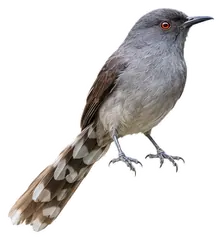 Long-tailed SibiaHeterophasia picaoides
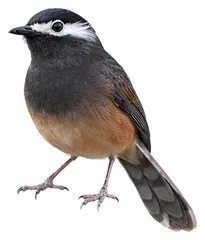 White-eared SibiaHeterophasia auricularis
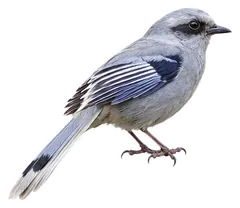 Beautiful SibiaHeterophasia pulchella
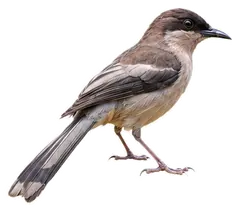 Grey SibiaHeterophasia gracilis
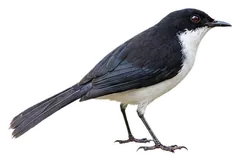 Dark-backed SibiaHeterophasia melanoleuca
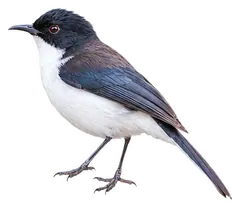 Black-headed SibiaHeterophasia desgodinsi
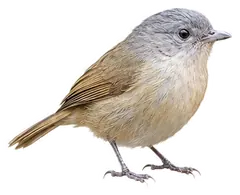 Brown-cheeked FulvettaAlcippe poioicephala
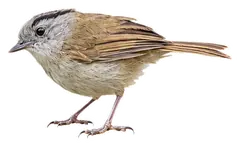 Black-browed FulvettaAlcippe grotei
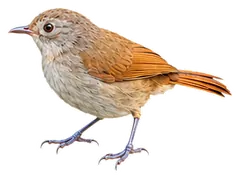 Brown FulvettaAlcippe brunneicauda
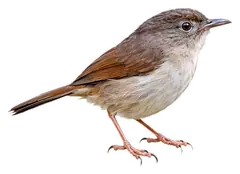 Javan FulvettaAlcippe pyrrhoptera
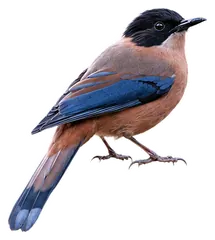
Download illustration
Free to use with credit: “Illustration: Bird Album (birdalbum.com)”. Drawn by AI from a reference photo by Pål A. Olsvik. ↗
Heard it but can't see it? Mingji identifies birds by sound and photo, on your phone.