 Bird Album
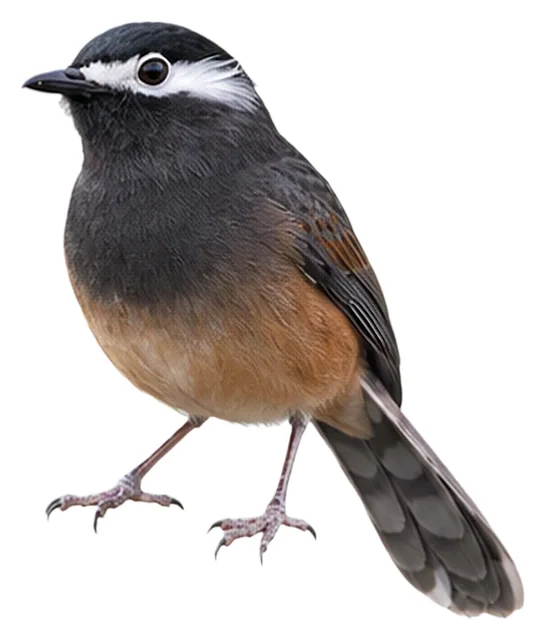
White-eared Sibia
Heterophasia auricularis (Swinhoe, 1864)
≈21 cmLength42 gWeight
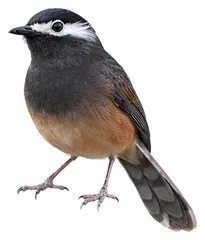
This bird has a black head, white markings around the eyes extending into long, white filamentous feathers, and a long tail.
Busiest months: May and December · Most records: China
How to identify
Field marks
- Black head, with white markings around the eyes extending into white filamentous feathers
- Deep blue-black wings and tail, with white wing patches
- Dark gray upper back and breast, with deep reddish-brown belly and vent
- Black bill and rufous-flesh-colored legs and feet
Male, female and young
Sexes similar in appearance.
Where and when it's recorded

White-eared Sibia has been recorded at 34 of the 8,171 birding hotspots we track, in 1 country or region.
Records by month Northern Hemisphere
Where it's recorded most
- Nantou – Meifeng Highland Experimental Farm of NTUTaiwan (China)1,916 records
- Dasyueshan IBA – Dasyueshan Forest-Road 23.5KTaiwan (China)1,727 records
- Nantou – Xitou Nature Education AreaTaiwan (China)1,622 records
More places
- Dasyueshan IBA – Xiaoxueshan Lodge (50K)Taiwan (China)340 records
- Yushan NP – TatakaTaiwan (China)299 records
- Taipei – Xindian SikanshuiTaiwan (China)271 records
- Dasyueshan IBA – Hengliu Creek (15K)Taiwan (China)270 records
- Taipei – WulaiTaiwan (China)206 records
- Yilan – Nan'ao ChaoyangTaiwan (China)160 records
- Yilan – Nan'ao River Mouth South BankTaiwan (China)96 records
Countries and regions with the most records
eBird records via GBIF up to 2024-12-31. A record means someone listed it; more records partly mean more birders, not more birds.
About
The white-eared sibia (Heterophasia auricularis) is a bird in the laughingthrush family Leiothrichidae. The species is sometimes placed in the monotypic genus Malacias. It was first described by Robert Swinhoe in 1864.
Excerpt from Wikipedia, CC BY-SA 4.0 · authors · Read more on Wikipedia
Questions
How big is the White-eared Sibia?
The White-eared Sibia is about ≈21 cm long and weighs around 42 g.
Where does the White-eared Sibia live?
Its breeding range: Oriental: Taiwan (China). It is most often recorded in China.
When is the best time to see the White-eared Sibia?
At the hotspots we track, it is recorded most in May and December (Northern Hemisphere).
Is the White-eared Sibia endangered?
The IUCN Red List classifies the White-eared Sibia as Least Concern.
What does the White-eared Sibia eat?
Main food: Omnivore.
What family is the White-eared Sibia in?
It belongs to the family Laughingthrushes & Allies (Leiothrichidae), order Passerines (Passeriformes).
At a glance
- Length
- ≈21 cm
- Weight
- 42 g
- Habitat
- Forest
- Diet
- Omnivore
- Lifestyle
- Perches in trees
- Migration
- Resident (barely migrates)
- Conservation
- Least Concern
More measurements
- Wing
- 102 mm
- Tail
- 106 mm
- Bill
- 21 mm
- Tarsus
- 31 mm
Averages from the AVONET dataset; length from field guides where available.
Range
Oriental: Taiwan (China)
Breeding range, IOC World Bird List 15.2
Classification
- Order
- Passerines Passeriformes
- Family
- Laughingthrushes & Allies Leiothrichidae
- Genus
- Heterophasia
Other birds in the genus Heterophasia
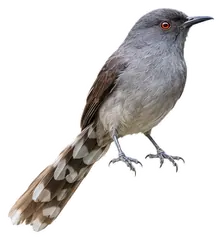 Long-tailed SibiaHeterophasia picaoides
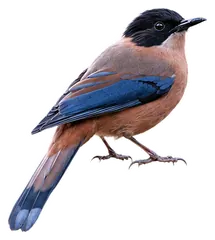 Rufous SibiaHeterophasia capistrata
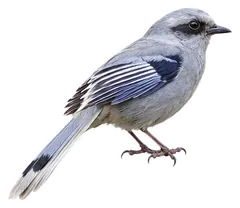 Beautiful SibiaHeterophasia pulchella
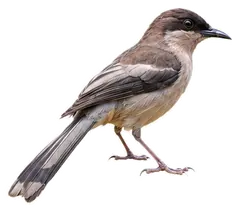 Grey SibiaHeterophasia gracilis
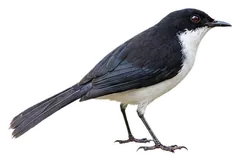 Dark-backed SibiaHeterophasia melanoleuca
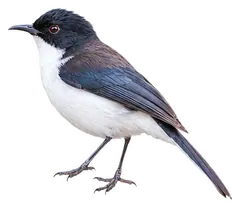 Black-headed SibiaHeterophasia desgodinsi
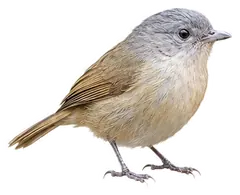 Brown-cheeked FulvettaAlcippe poioicephala
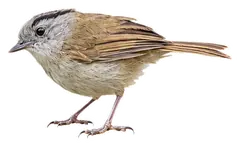 Black-browed FulvettaAlcippe grotei
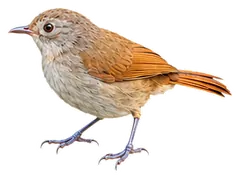 Brown FulvettaAlcippe brunneicauda
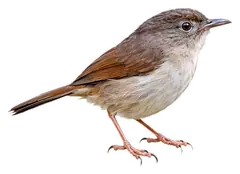 Javan FulvettaAlcippe pyrrhoptera
Download illustration
Free to use with credit: “Illustration: Bird Album (birdalbum.com)”. Drawn by AI from a reference photo by Kuan-Chieh (Chuck) Hung. ↗
Heard it but can't see it? Mingji identifies birds by sound and photo, on your phone.