 Bird Album
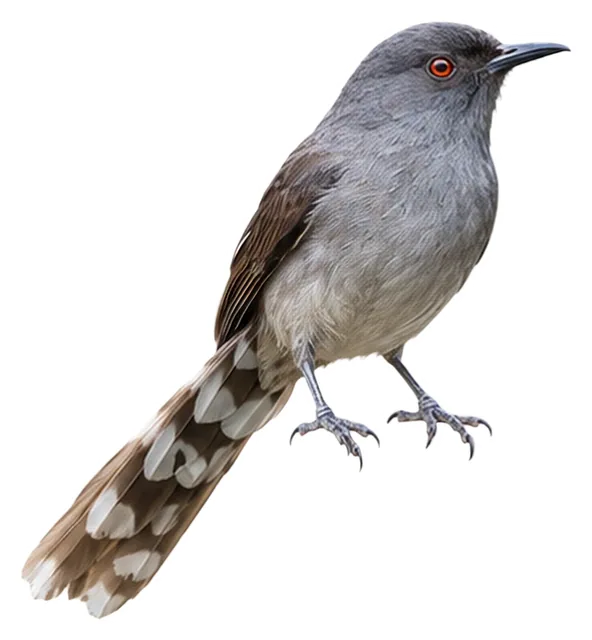
Long-tailed Sibia
Heterophasia picaoides (Hodgson, 1839)
≈26 cmLength42 gWeight
This sibia inhabits evergreen forest, oak forest, pine forest, secondary forest and forest edges.
Busiest months: January–March · Most records: Malaysia, China, Thailand
How to identify
Where and when it's recorded
Busiest months: January–March · Most records: Malaysia, China, Thailand

Long-tailed Sibia has been recorded at 106 of the 8,276 birding hotspots we track, in 7 countries and regions.
Records by month Northern Hemisphere
Where it's recorded most
- Bukit FraserMalaysia2,032 records
- Bukit Fraser – Telekom LoopMalaysia348 records
- Baihualing [General Area]China324 records
More places
- Bukit Fraser – Former Jelai Highland Resort AreaMalaysia270 records
- Bukit Fraser – Mager TrailMalaysia237 records
- Doi Pha Hom Pok NP – Doi Lang (W), AKA Doi San JuThailand225 records
- Bukit Fraser – Jalan RichmondMalaysia213 records
- Bukit Fraser – Bishop TrailMalaysia189 records
- Bukit Fraser – Jalan Lady GuillemardMalaysia158 records
- Fraser's HillMalaysia135 records
Countries and regions with the most records
eBird records via GBIF up to 2024-12-31. A record means someone listed it; more records partly mean more birders, not more birds.
About
The long-tailed sibia (Heterophasia picaoides) is a species of Leiothrichidae from Southeast Asia. The species was once placed in the large family Timaliidae, but that family is sometimes split with this species being placed with the laughingthrushes in the family Leiothrichidae. The species is sometimes treated as the only species in the genus Heterophasia, with the other species being placed in the genus Malacias.
Excerpt from Wikipedia, CC BY-SA 4.0 · authors · Read more on Wikipedia
Questions
How big is the Long-tailed Sibia?
The Long-tailed Sibia is about ≈26 cm long and weighs around 42 g.
Where does the Long-tailed Sibia live?
Its breeding range: Oriental: Himalayas to Sumatra. It is most often recorded in Malaysia, China and Thailand.
When is the best time to see the Long-tailed Sibia?
At the hotspots we track, it is recorded most in January, February and March (Northern Hemisphere).
Is the Long-tailed Sibia endangered?
The IUCN Red List classifies the Long-tailed Sibia as Least Concern.
What does the Long-tailed Sibia eat?
Main food: Omnivore.
What family is the Long-tailed Sibia in?
It belongs to the family Laughingthrushes & Allies (Leiothrichidae), order Passerines (Passeriformes).
At a glance
- Length
- ≈26 cm
- Weight
- 42 g
- Habitat
- Forest
- Diet
- Omnivore
- Lifestyle
- Perches in trees
- Migration
- Resident (barely migrates)
- Conservation
- Least Concern
More measurements
- Wing
- 120 mm
- Tail
- 207 mm
- Bill
- 24 mm
- Tarsus
- 28 mm
Averages from the AVONET dataset; length from field guides where available.
Range
Oriental: Himalayas to Sumatra
Breeding range, IOC World Bird List 15.2
Subspecies · 1
- Heterophasia picaoides picaoides c Himalayas to n Myanmar and s China
Classification
- Order
- Passerines Passeriformes
- Family
- Laughingthrushes & Allies Leiothrichidae
- Genus
- Heterophasia
Other birds in the genus Heterophasia
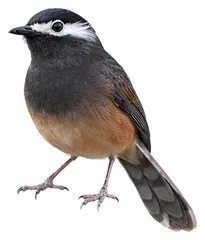 White-eared SibiaHeterophasia auricularis
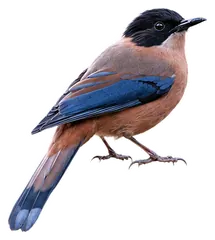 Rufous SibiaHeterophasia capistrata
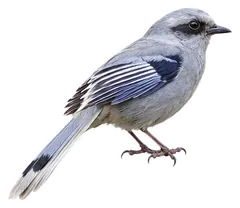 Beautiful SibiaHeterophasia pulchella
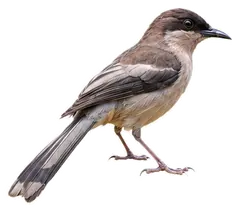 Grey SibiaHeterophasia gracilis
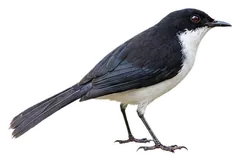 Dark-backed SibiaHeterophasia melanoleuca
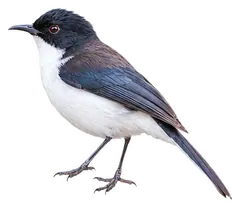 Black-headed SibiaHeterophasia desgodinsi
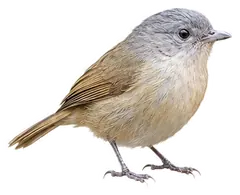 Brown-cheeked FulvettaAlcippe poioicephala
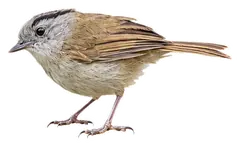 Black-browed FulvettaAlcippe grotei
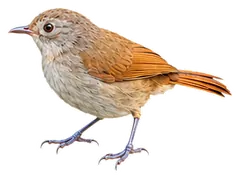 Brown FulvettaAlcippe brunneicauda
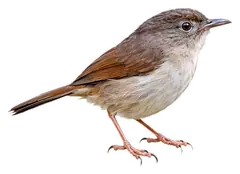 Javan FulvettaAlcippe pyrrhoptera
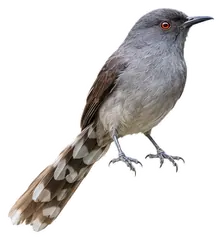
Download illustration
Free to use with credit: “Illustration: Bird Album (birdalbum.com)”. Drawn by AI from a reference photo by johnlerond. ↗
Heard it but can't see it? Mingji identifies birds by sound and photo, on your phone.