 Bird Album
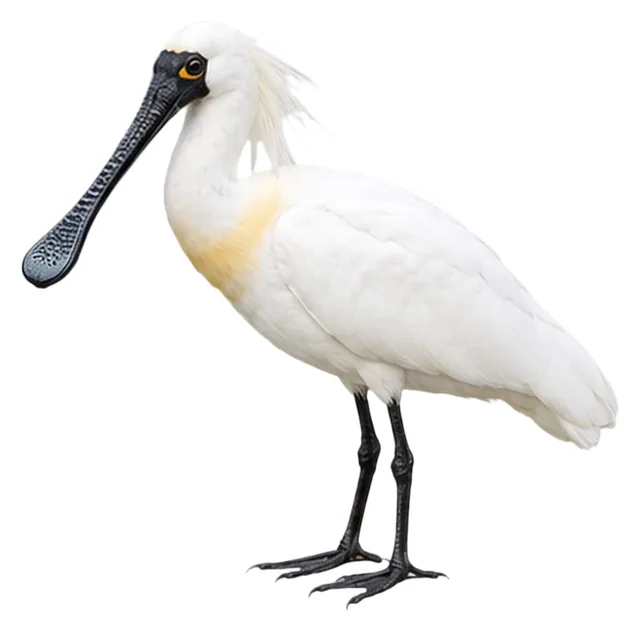
Black-faced Spoonbill
Platalea minor Temminck & Schlegel, 1850
74–85 cmLength110 cmWingspan1.2 kgWeight
It has a long, flat, spoon-shaped bill and black bare facial skin extending behind the eyes.
Busiest months: November–January · Most records: China, South Korea, Japan
Looks like Eurasian Spoonbill
How to identify
Field marks
- Long, flat bill shaped like a spoon
- Black bare facial skin extends behind the eyes
- Mainly white overall, with black legs and feet
- Crest and breast distinctly yellow in the breeding season
Male, female and young
Immatures have a paler, smaller bill with a smoother surface; chicks are all white, paler than immatures.
Voice
Males give low calls to attract females during the breeding season.
Similar species
Where and when it's recorded

Black-faced Spoonbill has been recorded at 324 of the 8,171 birding hotspots we track, in 8 countries and regions.
Records by month Northern Hemisphere
To protect this bird from disturbance, we don't list exact sites.
Countries and regions with the most records
eBird records via GBIF up to 2024-12-31. A record means someone listed it; more records partly mean more birders, not more birds.
About
The black-faced spoonbill (Platalea minor) is a species of wading bird in the ibis and spoonbill family Threskiornithidae, found in eastern Asia. This species has the most restricted distribution of the six spoonbill species, and is the only one regarded as vulnerable. Spoonbills are large water birds with dorso-ventrally flattened, spatulate bills; they use a tactile method of feeding, wading in the water and sweeping their beaks from side-to-side to detect prey.
Excerpt from Wikipedia, CC BY-SA 4.0 · authors · Read more on Wikipedia
Questions
How big is the Black-faced Spoonbill?
The Black-faced Spoonbill is about 74–85 cm long, with a wingspan of 110 cm and weighs around 1.2 kg.
Where does the Black-faced Spoonbill live?
Its breeding range: Palearctic: northeastern Russia, Korean Peninsula and northeastern China. It is most often recorded in China, South Korea and Japan.
When is the best time to see the Black-faced Spoonbill?
At the hotspots we track, it is recorded most in January, November and December (Northern Hemisphere).
Is the Black-faced Spoonbill endangered?
The IUCN Red List classifies the Black-faced Spoonbill as Vulnerable.
What does the Black-faced Spoonbill eat?
Main food: Fish, shrimp & shellfish.
What family is the Black-faced Spoonbill in?
It belongs to the family Ibises, Spoonbills (Threskiornithidae), order Pelecaniformes.
At a glance
- Length
- 74–85 cm
- Wingspan
- 110 cm
- Weight
- 1.2 kg
- Habitat
- Coast & tidal flats
- Diet
- Fish, shrimp & shellfish
- Lifestyle
- Active on the ground
- Migration
- Partial migrant
- Conservation
- Vulnerable
More measurements
- Wing
- 357 mm
- Tail
- 100 mm
- Bill
- 180 mm
- Tarsus
- 126 mm
Averages from the AVONET dataset; length from field guides where available.
Range
Palearctic: northeastern Russia, Korean Peninsula and northeastern China
Breeding range, IOC World Bird List 15.2
Classification
- Order
- Pelecaniformes
- Family
- Ibises, Spoonbills Threskiornithidae
- Genus
- Platalea
Other birds in the genus Platalea
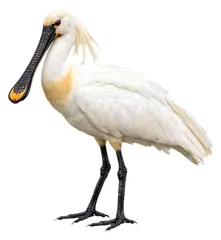 Eurasian SpoonbillPlatalea leucorodia
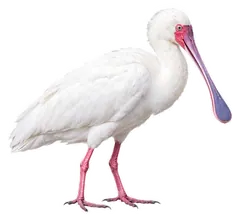 African SpoonbillPlatalea alba
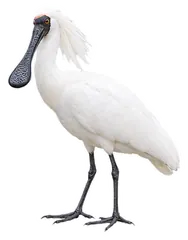 Royal SpoonbillPlatalea regia
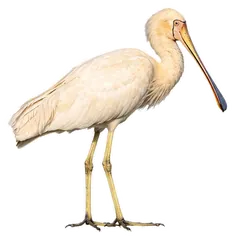 Yellow-billed SpoonbillPlatalea flavipes
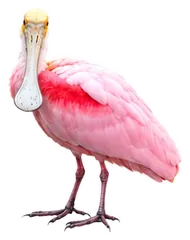 Roseate SpoonbillPlatalea ajaja
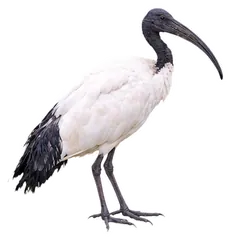 African Sacred IbisThreskiornis aethiopicus
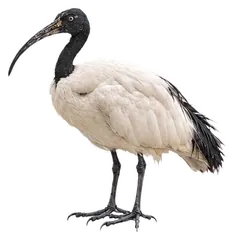 Malagasy Sacred IbisThreskiornis bernieri
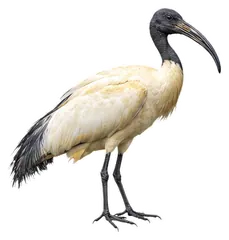 Black-headed IbisThreskiornis melanocephalus
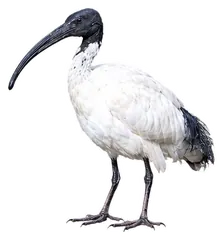 Australian White IbisThreskiornis molucca
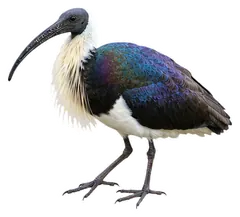 Straw-necked IbisThreskiornis spinicollis
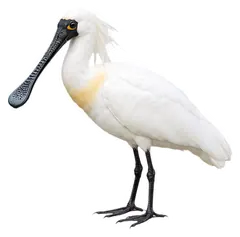
Download illustration
Free to use with credit: “Illustration: Bird Album (birdalbum.com)”. Drawn by AI from a reference photo by Cp9asngf. ↗

Heard it but can't see it? Mingji identifies birds by sound and photo, on your phone.