 Bird Album
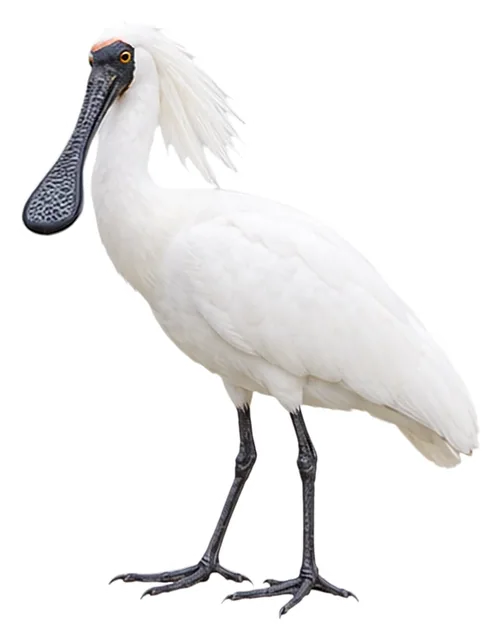
Royal Spoonbill
Platalea regia Gould, 1838
1.7 kgWeight
Busiest months: January and October–November · Most records: Australia, New Zealand, Timor-Leste
Where and when it's recorded

Royal Spoonbill has been recorded at 308 of the 8,171 birding hotspots we track, in 6 countries and regions.
Records by month Southern Hemisphere
Where it's recorded most
- Western Treatment PlantAustralia6,547 records
- Sandy Camp Road WetlandsAustralia3,360 records
- Townsville Town Common Conservation ParkAustralia2,100 records
More places
- Jerrabomberra Wetlands Nature ReserveAustralia2,015 records
- Broome South Wastewater Treatment PlantAustralia1,812 records
- Oxley Creek CommonAustralia1,761 records
- Dowse LagoonAustralia1,588 records
- Jawbone Flora and Fauna ReserveAustralia1,482 records
- Western Treatment Plant – T Section PondsAustralia1,360 records
- Lake Samsonvale – Golds Scrub LaneAustralia1,322 records
Countries and regions with the most records
eBird records via GBIF up to 2024-12-31. A record means someone listed it; more records partly mean more birders, not more birds.
About
The royal spoonbill (Platalea regia), also known as the black-billed spoonbill lives in intertidal flats and shallows of fresh and saltwater wetlands in Australia, New Zealand, Indonesia, Papua New Guinea, and the Solomon Islands. (In New Zealand, it is also known by the Māori name kōtuku ngutupapa.) It has also been recorded as a vagrant in New Caledonia. It is one of 6 spoonbill species world wide.
Excerpt from Wikipedia, CC BY-SA 4.0 · authors · Read more on Wikipedia
Questions
How big is the Royal Spoonbill?
The Royal Spoonbill weighs around 1.7 kg.
Where does the Royal Spoonbill live?
Its breeding range: Australasia: south-central New Guinea, Australia, Tasmania, coastal North and South Islands (New Zealand). It is most often recorded in Australia, New Zealand and Timor-Leste.
When is the best time to see the Royal Spoonbill?
At the hotspots we track, it is recorded most in January, October and November (Southern Hemisphere).
Is the Royal Spoonbill endangered?
The IUCN Red List classifies the Royal Spoonbill as Least Concern.
What does the Royal Spoonbill eat?
Main food: Fish, shrimp & shellfish.
What family is the Royal Spoonbill in?
It belongs to the family Ibises, Spoonbills (Threskiornithidae), order Pelecaniformes.
At a glance
- Weight
- 1.7 kg
- Habitat
- Wetland
- Diet
- Fish, shrimp & shellfish
- Lifestyle
- Active on the ground
- Migration
- Partial migrant
- Conservation
- Least Concern
More measurements
- Wing
- 353 mm
- Tail
- 109 mm
- Bill
- 174 mm
- Tarsus
- 120 mm
Averages from the AVONET dataset; length from field guides where available.
Range
Australasia: south-central New Guinea, Australia, Tasmania, coastal North and South Islands (New Zealand)
Breeding range, IOC World Bird List 15.2
Classification
- Order
- Pelecaniformes
- Family
- Ibises, Spoonbills Threskiornithidae
- Genus
- Platalea
Other birds in the genus Platalea
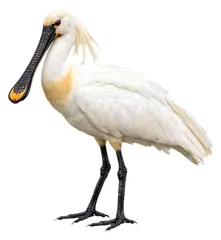 Eurasian SpoonbillPlatalea leucorodia
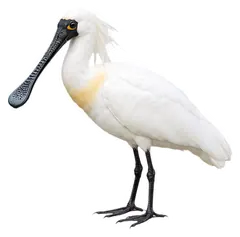 Black-faced SpoonbillPlatalea minor
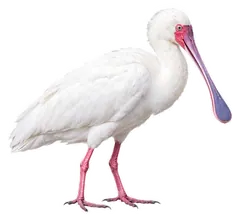 African SpoonbillPlatalea alba
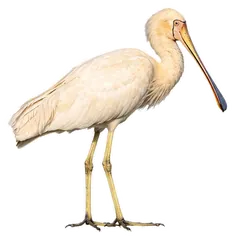 Yellow-billed SpoonbillPlatalea flavipes
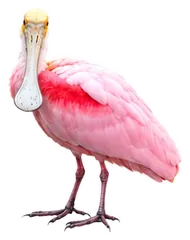 Roseate SpoonbillPlatalea ajaja
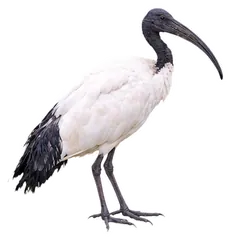 African Sacred IbisThreskiornis aethiopicus
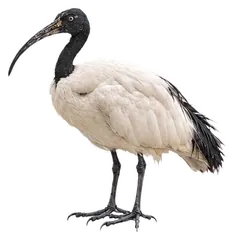 Malagasy Sacred IbisThreskiornis bernieri
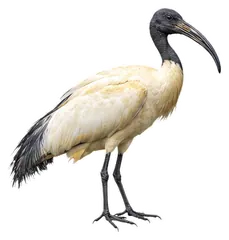 Black-headed IbisThreskiornis melanocephalus
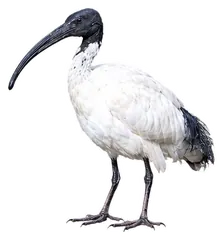 Australian White IbisThreskiornis molucca
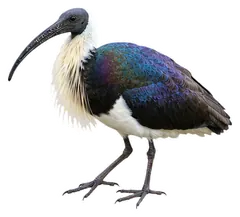 Straw-necked IbisThreskiornis spinicollis
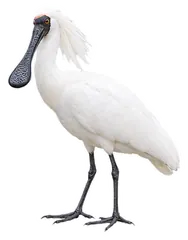
Download illustration
Free to use with credit: “Illustration: Bird Album (birdalbum.com)”. Drawn by AI from a reference photo by Ben Ackerley. ↗
Heard it but can't see it? Mingji identifies birds by sound and photo, on your phone.