 Bird Album
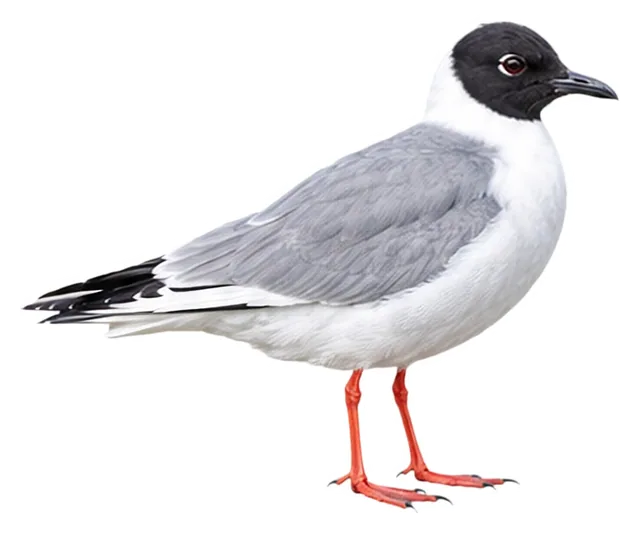
Bonaparte's Gull
Chroicocephalus philadelphia (Ord, 1815)
211 gWeight
Bonaparte's gull (Chroicocephalus philadelphia) is a gull found mainly in northern North America.
Busiest months: May · Most records: United States, Canada, Mexico
Where and when it's recorded
Busiest months: May · Most records: United States, Canada, Mexico

Bonaparte's Gull has been recorded at 765 of the 8,276 birding hotspots we track, in 33 countries and regions.
Records by month Northern Hemisphere
Where it's recorded most
- Point Pelee National ParkCanada12,818 records
- Tawas Point SPUnited States5,867 records
- Point No PointUnited States5,535 records
More places
- Point Pelee NP – TipCanada5,033 records
- Pt. Pinos – seawatch onlyUnited States4,900 records
- Hillman Marsh CACanada4,386 records
- Pte. Mouillee SGAUnited States3,890 records
- Long Point – TipCanada3,545 records
- Huntington Beach SPUnited States3,349 records
- Rondeau Provincial ParkCanada3,259 records
Countries and regions with the most records
eBird records via GBIF up to 2024-12-31. A record means someone listed it; more records partly mean more birders, not more birds.
About
Bonaparte's gull (Chroicocephalus philadelphia) is a gull found mainly in northern North America. At 28 to 38 cm (11 to 15 in) in length, it is one of the smallest species of gull. Its plumage is mainly white with grey upperparts.
Excerpt from Wikipedia, CC BY-SA 4.0 · authors · Read more on Wikipedia
Questions
How big is the Bonaparte's Gull?
The Bonaparte's Gull weighs around 211 g.
Where does the Bonaparte's Gull live?
Its breeding range: North America: boreal forest zone from southwestern Alaska mainland and northwestern, southwestern Canada to eastern Quebec (southeastern Canada). It is most often recorded in United States, Canada and Mexico.
When is the best time to see the Bonaparte's Gull?
At the hotspots we track, it is recorded most in May (Northern Hemisphere).
What does the Bonaparte's Gull eat?
Main food: Omnivore.
What family is the Bonaparte's Gull in?
It belongs to the family Gulls, Terns, Skimmers (Laridae), order Charadriiformes.
At a glance
- Weight
- 211 g
- Habitat
- Wetland
- Diet
- Omnivore
- Lifestyle
- Feeds in the air
- Migration
- Partial migrant
More measurements
- Wing
- 259 mm
- Tail
- 96 mm
- Bill
- 35 mm
- Tarsus
- 32 mm
Averages from the AVONET dataset; length from field guides where available.
Range
North America: boreal forest zone from southwestern Alaska mainland and northwestern, southwestern Canada to eastern Quebec (southeastern Canada)
Breeding range, IOC World Bird List 15.2
Classification
- Order
- Charadriiformes
- Family
- Gulls, Terns, Skimmers Laridae
- Genus
- Chroicocephalus
Other birds in the genus Chroicocephalus
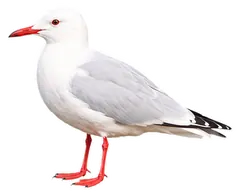 Slender-billed GullChroicocephalus genei
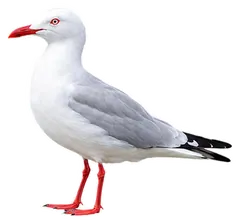 Silver GullChroicocephalus novaehollandiae
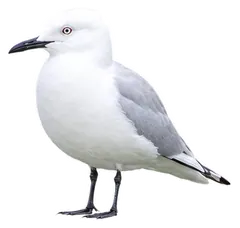 Black-billed GullChroicocephalus bulleri
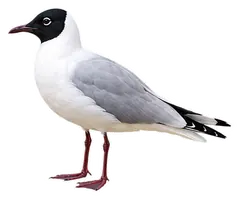 Andean GullChroicocephalus serranus
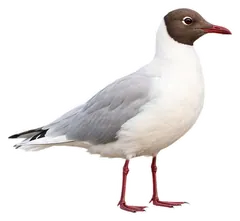 Brown-hooded GullChroicocephalus maculipennis
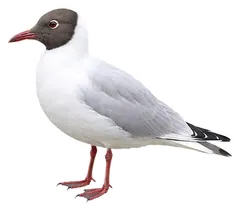 Black-headed GullChroicocephalus ridibundus
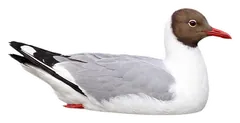 Brown-headed GullChroicocephalus brunnicephalus
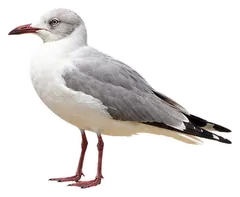 Grey-headed GullChroicocephalus cirrocephalus
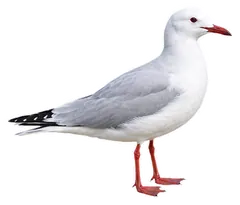 Hartlaub's GullChroicocephalus hartlaubii
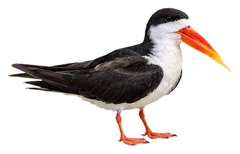 African SkimmerRynchops flavirostris
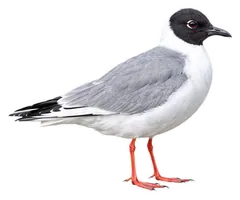
Download illustration
Free to use with credit: “Illustration: Bird Album (birdalbum.com)”. Drawn by AI from a reference photo by Declan Troy. ↗
Heard it but can't see it? Mingji identifies birds by sound and photo, on your phone.