 Bird Album
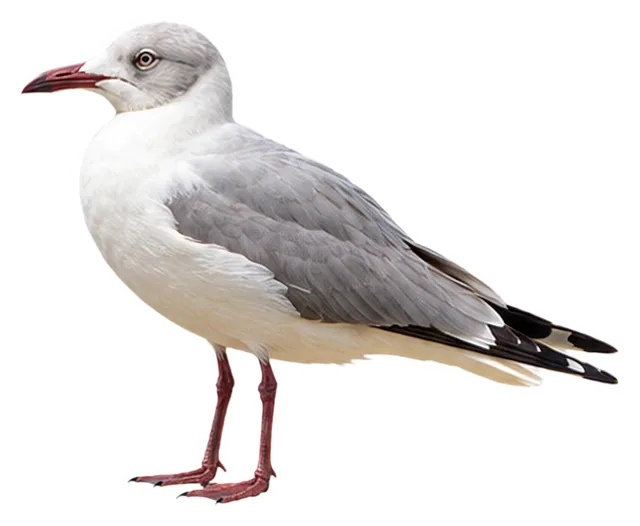
Grey-headed Gull
Chroicocephalus cirrocephalus (Vieillot, 1818)
42 cmLength375 gWeight
The grey-headed gull (Chroicocephalus cirrocephalus), also known as the grey-hooded gull, is a small species of gull which breeds patchily in South America and Africa south of the Sahara.
Busiest months: September–November · Most records: Peru, South Africa, Argentina
Where and when it's recorded
Busiest months: September–November · Most records: Peru, South Africa, Argentina

Grey-headed Gull has been recorded at 404 of the 8,276 birding hotspots we track, in 40 countries and regions.
Records by month Southern Hemisphere
Where it's recorded most
- Refugio de Vida Silvestre Los Pantanos de Villa – Laguna Costera y Playa MarvillaPeru2,483 records
- Strandfontein WTPSouth Africa1,715 records
- Lake Nakuru NPKenya1,335 records
More places
- Refugio de Vida Silvestre Los Pantanos de VillaPeru1,235 records
- Marievale Bird SanctuarySouth Africa773 records
- Humedal de ChilcaPeru728 records
- Reserva Ecológica Costanera SurArgentina679 records
- St Lucia – iMfolozi River mouthSouth Africa631 records
- Ngorongoro Conservation Area – Ngorongoro CraterTanzania554 records
- Lake NaivashaKenya554 records
Countries and regions with the most records
eBird records via GBIF up to 2024-12-31. A record means someone listed it; more records partly mean more birders, not more birds.
About
The grey-headed gull (Chroicocephalus cirrocephalus), also known as the grey-hooded gull, is a small species of gull which breeds patchily in South America and Africa south of the Sahara. It is not truly migratory, but is dispersive, becoming more widespread in winter. This species has occurred as a rare vagrant to the United States, Italy, and Spain.
Excerpt from Wikipedia, CC BY-SA 4.0 · authors · Read more on Wikipedia
Questions
How big is the Grey-headed Gull?
The Grey-headed Gull is about 42 cm long and weighs around 375 g.
Where does the Grey-headed Gull live?
Its breeding range: South America, Africa: coastal and inland Africa south of the Sahara and Madagascar; coastal Ecuador and Peru; southern Uruguay and northeastern Argentina to Santa Fe (north-central Argentina). It is most often recorded in Peru, South Africa and Argentina.
When is the best time to see the Grey-headed Gull?
At the hotspots we track, it is recorded most in September, October and November (Southern Hemisphere).
What does the Grey-headed Gull eat?
Main food: Fish, shrimp & shellfish.
What family is the Grey-headed Gull in?
It belongs to the family Gulls, Terns, Skimmers (Laridae), order Charadriiformes.
At a glance
- Length
- 42 cm
- Weight
- 375 g
- Habitat
- Wetland
- Diet
- Fish, shrimp & shellfish
- Lifestyle
- Feeds in the air
- Migration
- Resident (barely migrates)
More measurements
- Wing
- 319 mm
- Tail
- 125 mm
- Bill
- 48 mm
- Tarsus
- 50 mm
Averages from the AVONET dataset; length from field guides where available.
Range
South America, Africa: coastal and inland Africa south of the Sahara and Madagascar; coastal Ecuador and Peru; southern Uruguay and northeastern Argentina to Santa Fe (north-central Argentina)
Breeding range, IOC World Bird List 15.2
Classification
- Order
- Charadriiformes
- Family
- Gulls, Terns, Skimmers Laridae
- Genus
- Chroicocephalus
Other birds in the genus Chroicocephalus
 Slender-billed GullChroicocephalus genei
 Bonaparte's GullChroicocephalus philadelphia
 Silver GullChroicocephalus novaehollandiae
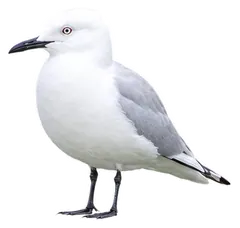 Black-billed GullChroicocephalus bulleri
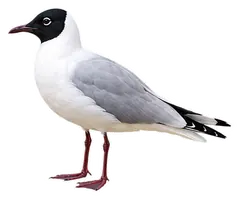 Andean GullChroicocephalus serranus
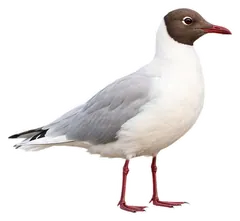 Brown-hooded GullChroicocephalus maculipennis
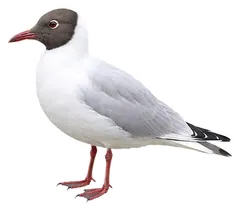 Black-headed GullChroicocephalus ridibundus
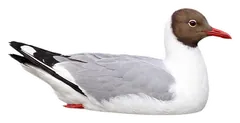 Brown-headed GullChroicocephalus brunnicephalus
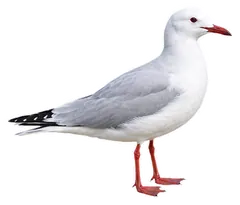 Hartlaub's GullChroicocephalus hartlaubii
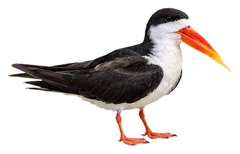 African SkimmerRynchops flavirostris
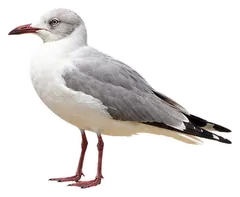
Download illustration
Free to use with credit: “Illustration: Bird Album (birdalbum.com)”. Drawn by AI from a reference photo by John Beetham. ↗
Heard it but can't see it? Mingji identifies birds by sound and photo, on your phone.