 Bird Album
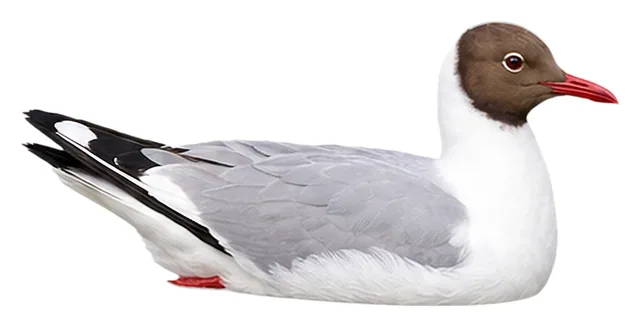
Brown-headed Gull
Chroicocephalus brunnicephalus (Jerdon, 1840)
≈50 cmLength569 gWeight
It is a small gull with a pale rufous hood and red bill and legs in summer.
Busiest months: January–February · Most records: India, Thailand, China
Looks like Black-headed Gull
How to identify
Field marks
- Head pale rufous in summer plumage, paler than Black-headed Gull
- Body pale gray; bill and legs red
- Wingtips black with conspicuous white mirrors
- Rufous hood disappears in winter, leaving only dark streaks
Male, female and young
First-year juvenile has a black band at the tail tip, more dark areas on the wings and a less even hood in summer.
Voice
Very noisy, especially in breeding colonies.
Similar species
Where and when it's recorded

Brown-headed Gull has been recorded at 348 of the 8,276 birding hotspots we track, in 16 countries and regions.
Records by month Northern Hemisphere
Where it's recorded most
- Pak Thale Nature ReserveThailand2,120 records
- Bang Pu – Recreation CenterThailand1,473 records
- Changaram Wetlands – EzhupunnaIndia1,170 records
More places
- Ujani Dam – Kumbhargaon Bird SanctuaryIndia910 records
- Okhla Bird SanctuaryIndia690 records
- Khok Kham – Bird Center vicinityThailand639 records
- Laem Phak Bia – sandspitThailand606 records
- Laem Phak Bia – salt pans E of Hwy. 4028Thailand550 records
- Bhandup Pumping StationIndia512 records
- Pulicat Lake – [TN Section]India491 records
Countries and regions with the most records
eBird records via GBIF up to 2024-12-31. A record means someone listed it; more records partly mean more birders, not more birds.
About
The brown-headed gull (Chroicocephalus brunnicephalus) is a small gull which breeds in the high plateaus of central Asia from Tajikistan to Ordos in Inner Mongolia. It is migratory, wintering on the coasts and large inland lakes of the Indian subcontinent. As is the case with many gulls, was traditionally placed in the genus Larus.
Excerpt from Wikipedia, CC BY-SA 4.0 · authors · Read more on Wikipedia
Questions
How big is the Brown-headed Gull?
The Brown-headed Gull is about ≈50 cm long and weighs around 569 g.
Where does the Brown-headed Gull live?
Its breeding range: Palearctic: inland Tibetan Plateau of Tajikistan, Xinjiang (western China), Ladakh (far northwestern India) and Tibet. It is most often recorded in India, Thailand and China.
When is the best time to see the Brown-headed Gull?
At the hotspots we track, it is recorded most in January and February (Northern Hemisphere).
Is the Brown-headed Gull endangered?
The IUCN Red List classifies the Brown-headed Gull as Least Concern.
What does the Brown-headed Gull eat?
Main food: Fish, shrimp & shellfish.
What family is the Brown-headed Gull in?
It belongs to the family Gulls, Terns, Skimmers (Laridae), order Charadriiformes.
At a glance
- Length
- ≈50 cm
- Weight
- 569 g
- Habitat
- Wetland
- Diet
- Fish, shrimp & shellfish
- Lifestyle
- Varied
- Migration
- Resident (barely migrates)
- Conservation
- Least Concern
More measurements
- Wing
- 334 mm
- Tail
- 126 mm
- Bill
- 47 mm
- Tarsus
- 50 mm
Averages from the AVONET dataset; length from field guides where available.
Range
Palearctic: inland Tibetan Plateau of Tajikistan, Xinjiang (western China), Ladakh (far northwestern India) and Tibet
Breeding range, IOC World Bird List 15.2
Classification
- Order
- Charadriiformes
- Family
- Gulls, Terns, Skimmers Laridae
- Genus
- Chroicocephalus
Other birds in the genus Chroicocephalus
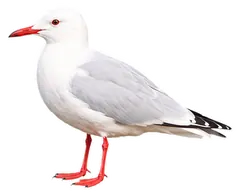 Slender-billed GullChroicocephalus genei
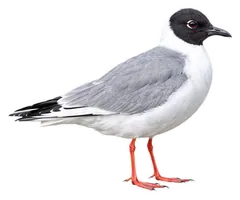 Bonaparte's GullChroicocephalus philadelphia
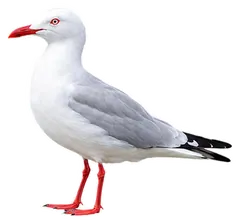 Silver GullChroicocephalus novaehollandiae
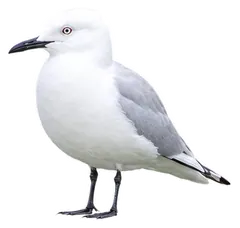 Black-billed GullChroicocephalus bulleri
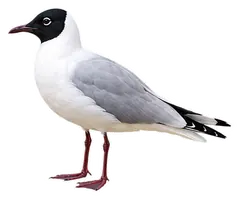 Andean GullChroicocephalus serranus
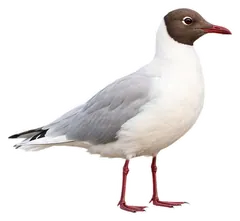 Brown-hooded GullChroicocephalus maculipennis
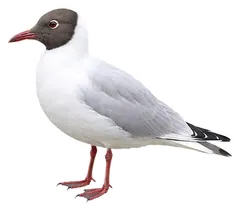 Black-headed GullChroicocephalus ridibundus
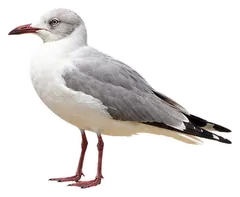 Grey-headed GullChroicocephalus cirrocephalus
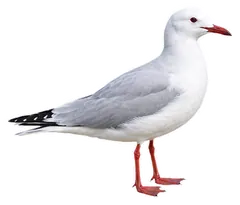 Hartlaub's GullChroicocephalus hartlaubii
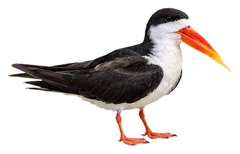 African SkimmerRynchops flavirostris
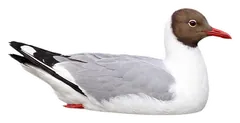
Download illustration
Free to use with credit: “Illustration: Bird Album (birdalbum.com)”. Drawn by AI from a reference photo by Mvshreeram. ↗

Heard it but can't see it? Mingji identifies birds by sound and photo, on your phone.